EVOL .30 from American Air Arms

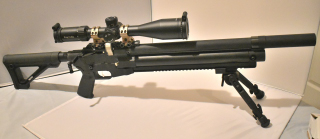
This .30 caliber air rifle is the little brother carbine to the longer Magpul PRS-stocked version with minor give ups for the benefit of the lighter weight and portability in the field. It’s a tactically-styled beauty that is all business with obvious AR-15 DNA, it is no wonder that the grip and “Fixed Carbine” stock are Magpul MOE on the Magnon. Therefore, modding is the name of the game for those that want to swap parts with aftermarket AR-15 compatible components.

Thin and sporty and lightweight, the Magnon is one of several models of PCP air rifles produced by American Air Arms out of southern California. A small company started by an engineer who is an avid airgunner and airgun hunter, Tom Costan, they produce limited numbers each year. This smaller yearly output is a causal effect of the company’s mission and extreme quality. Their mission is to design and create airguns that meet specific vision, purpose and performance goals and are almost 100 percent American made. Except for the barrels, grips and bolts, all other components are designed, manufactured, and assembled in-house, allowing AAA complete control over quality. The outstanding fit and finish makes it easy to see the company is meeting its lofty goals. This airgun exudes quality with the main chassis parts and many components being made from the highest-grade aluminum and finished in matte black. The Magnon model weighs in at a mere six pounds without optics, thanks to the weight-saving benefits of a titanium air reservoir. The 250cc reservoir was made slimmer and thinner without sacrificing structural strength or safety.

Side view of the EVOL .30 with the magazine in place

Overall, the EVOL Magnon reaches a length of 32.5 inches with 15 inches of that being the shrouded, rifled steel barrel and an additional 5.75 inches for the housing containing the forcing cone air stripper which helps reduce the report. The EVOLs were built from the ground up around the available diabolo pellets and the barrels are optimized at the power levels and caliber weights to provide the best accuracy. The muzzle end is threaded to accept the proprietary air stripper unit (which will not fit other makes of airguns) and the breech end is threaded to screw into a massive lug as part of the breech block. Combined with the shroud, this produces a tensioned barrel system, far superior to barrels secured by set screws and Lock-Tite™. In combination with a chamber insert system that ensures consistent transition of pellets into engagement with the rifling, the result is a high level of accuracy due to the consistent repeatability.

Taking a tour starting from the top – the upper picatinny rail is a two-section design that spans the magazine slot with a 2.5-inch rear section and 3.25-inch section in front for a total of 6.25 inches for mounting optics. Additionally, the upper rail incorporates a 40 m.o.a. incline to aid the long-range shooter. An all-metal, 9-round, self-indexing rotary magazine is included with the Magnon, and next up is the buttery-smooth side lever that gives good mechanical advantage for cocking the heavy hammer spring (which is adjustable). The cocking lever is held closed until needed by a neodymium magnet. Sorry lefties, but this one is not swappable. Underneath the barrel is the 14-inch titanium air cylinder incorporating a black (nice touch) QD foster hose fitting on the right side, just opposite of the easily readable one-inch, color-coded pressure gauge marked only in PSI. A fill is to 4000psi. Beneath the air cylinder is a sturdy 10.25-inch picatinny rail to which I immediately attached a UTG folding bipod with extendable legs and 360° swivel capability.  Between the bottom pic rail and the trigger guard sits the regulator pressure gauge. Factory set for optimized results, it is user adjustable and will require a YouTube search for instructions. Just above the pistol grip in a convenient location for either-handed shooters is the ambidextrous safety switch. A sliding switch, it is easily engaged by pressing upward to “Safe”, which blocks the trigger movement. Next comes the curved metal trigger blade that has been left in the white as a nice contrast to the all-black finish. A sweet, adjustable two-stage match trigger, the sample gun had more takeup than I like, but the second stage broke like glass at a feathery 11.3 ounces out of the box.  In order to adjust the trigger, the lower must be separated from the upper and an easy-to-follow YouTube video by Tom Costan is on the web. Lastly, there is the Magpul MOE fixed stock. It provides a 14-inch length-of-pull and incorporates a hole where a QD swivel for a sling can be attached.
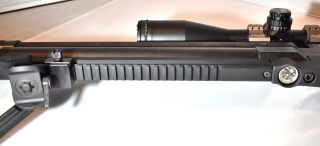
Look at all that space on the bottom pic rail!

The EVOL comes with a three-year warranty that is transferrable. AofA is an authorized repair facility for the entire AAA line so you’d be in good hands should you need warranty service.

Building airguns really is a labor of love for AAA and I imagine that is how they came up with the name for this model (read it backwards…).  In the next installment I’ll report my results behind the EVOL .30 and hope to include some long-range results using NSA slugs depending on the weather and ability to get to the range. In the interim, check out the EVOL lineup on the AofA website.

It's A Classic! The Weihrauch HW90

The Weihrauch HW90 is a beautiful, powerful and consistent air rifle. It offers an excellent, light trigger, plenty of power and superb quality of construction.

Traditionalists will love the comprehensive iron sights and the beautiful woodwork. While the limited lifetime warranty from Airguns of Arizona gives the comfort of long-term security.

But potential owners need to know that this is a big, heavy air rifle that’s best suited for a big, strong owner. That cocking effort is a real work-out!

It's A Classic! The Weihrauch HW90

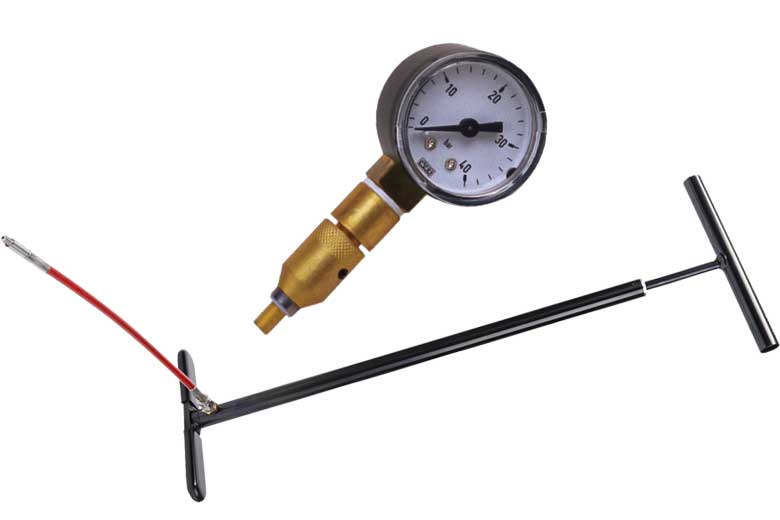
The Weihrauch HW90 air rifle is the German manufacturer’s only airgun with a gas ram powerplant. Unlike any other gas ram airgun, it has the built-in capability to change the pressure inside the gas ram – and therefore the power. True, it requires the use of a separate, additional cost, pump and gauge, but it can be done and AoA has them in stock.

The .177 caliber Weihrauch HW90 air rifle I tested delivered a maximum Muzzle Velocity of 1,320 FPS with 5.0 Grain Predator GTO lead-free pellets. As with most gas ram-powered airguns, the lightest pellets also produced the highest Muzzle Energy of 21.35 Ft/Lbs.

As expected, FPS steadily declined with increasing pellet weight. However, the heaviest – 10.65 Grain – H&N Baracuda Match pellets still generated a strong 17.86 Ft/Lbs of Muzzle Energy. They also produced the best accuracy.

At 25 Yards, this HW90 achieved sub-1-inch groups for 10 shots. But the gun feels as if it has more accuracy to give. Weihrauch emphasizes that the HW90 requires a break-in period of several hundred shots before peak performance is attained. So accuracy could well improve with time…

Unlike other Weihrauch break barrels, the HW90 does not use the company’s famed “Rekord” trigger. Instead there’s an “Elite” trigger, with the automatic safety in front of the trigger guard.

The trigger was very smooth and easy to use. There was a clear two-stage feel and the release was very consistent and predictable. This is good!

Then the average Trigger Pull Weight (TPW) was just 1 Lb 11.5 Oz. That’s probably the lowest pull weight that I have ever recorded for a breakbarrel air rifle!

However, that light, easy trigger was offset by the extremely high effort required to cock the gun.

Having a gas ram action, the cocking effort did not increase through the stroke of rotating the barrel. It was high right from the start and continued there. I measured a cocking effort of no less than 45 Lbs!


But – there’s a big but! This test gun was tested at maximum pressure in the gas ram. While that gives the most power, it also causes the cocking effort to be highest, too.

As the Weihrauch HW90 air rifle has that unique adjustable gas ram feature, the cocking effort would be reduced – possibly significantly – if the gun was tuned to perform best with mid-weight lead pellets – say the 8.64 Grain H&N Field Target Trophies.

That’s something I hope to investigate in future…

There are plenty of airgunners who like to shoot using iron sights. For these people, the Weihrauch HW90 air rifle is a joy because it’s fitted with a serious set of traditional open sights. There’s not a fiber optic element to be seen!

The front sight comprises a hooded housing with interchangeable elements. In fact, the manufacturer includes no less than six different interchangeable elements. These are easily interchanged and give the owner a wide variety of options for open-sight shooting.

The rear sight is click-adjustable for elevation and windage, of course.

In addition, the Weihrauch HW90 air rifle can also be fitted with a scope.
The rear of the compression tube is machined with standard airgun rails and there’s no less than three deep scope stop holes. These allow for flexibility in scope mount positioning based on scope size and the user’s eye relief requirements.


It's A Classic! The Weihrauch HW90

For my review, I mounted a Hawke 4-12 x 40 AO scope on the HW90 using a solid, one-piece Leapers UTG mount. This scopes fairly light but has good optical quality and an Adjustable Objective (AO) for focusing down to 10 Yards.

At 12.9-Inches overall length, this is far from the longest scope that it’s possible to mount on the HW90. There was still 1.5 inches gap between the front of the scope and the rear of the barrel, giving plenty of flexibility for scope placement or installing a longer scope.

To obtain a nice low eyeline, we combined a Medium height mount with this one-Inch tube scope. Everything worked-out perfectly, with minimum clearances all round, yet no contact from the scope’s turret box or focusing ring.

The Weihrauch HW90 air rifle is a solidly-built air gun and the weight reflects that. The all-up weight of the test gun and scope was 11 Lbs 5 Oz. This, combined with the heavy weight and long overall length of 45.25 Inches, means that the HW90 is best-suited to a strongly-built shooter. This is not a kid’s gun!

The HW90 air rifle has a simple, classic design. The stock is simple yet comfortable. Although there’s no modern touches such as an adjustable comb to the stock, it was comfortable to shoot.

Note that the HW90 has a stock design that favors right-handed shooters with it’s cheek rest. However it can be shot by left-handers also.

At a price of $669.99, it’s clearly in the upper range of pricing for guns of this type, but if you have the physical strength and physique to manage it, the Weirauch HW90 can be a great classic choice for the connoisseur.

Now There’s  A High Capacity Magazine For Daystate Air Rifles

For all those of you who have been asking for a high capacity magazine to fit Daystate air rifles, here’s the answer…

Airguns of Arizona is now stocking Midwest Elite Airgun high capacity magazines. These fit the Daystate Red Wolf, Pulsar, Renegade and Wolverine 2 air rifles. And they’ve been field-tested in action at the 2022 Speed Silhouette competition at Extreme Benchrest and passed with flying colors

True, high capacity magazines can be bulky add-ons. But for specialist applications – for example Speed Silhouette competition – they can be a life-saver!

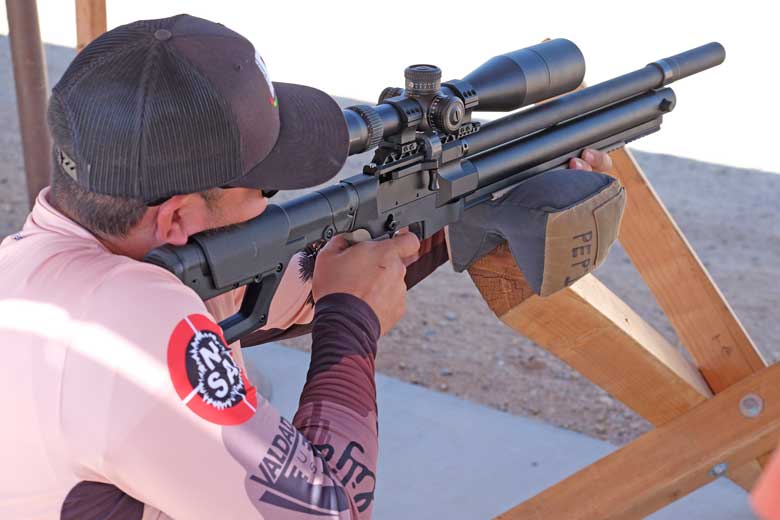
There’s no doubting the capabilities of Midwest Elite Airgun’s high capacity magazine for Daystate air rifles as John Bagakis placed second in the Open Class for Speed Silhouette at Extreme Benchrest in 2022 using one. That’s John with Red Wolf and magazine in our heading photograph above.

Indeed, there were several others using Midwest’s mags in their guns at EBR 2022, including Lauren Parsons (below).


This high capacity magazine has been expertly designed provide you with the highest quality possible, while still fitting perfectly in your gun when using high scope mounts.

It’s a tight fit under the scope, but it DOES fit, so long as the scope turret is avoided.

Now There’s  A High Capacity Magazine For Daystate Air Rifles

So let’s have a closer look at Midwest Elite Airgun’s high capacity Daystate magazines…

These mags hold a total of 34 shots in .22 caliber. In .25 cal it’s 29 shots and – even in .30 caliber – it’s 22 shots. That’s a lot of lead!

Midwest’s magazine use a high-tech additive manufacturing process for the main parts. Additive manufacturing is also known as 3D printing and it’s a great way to manufacture precise, robust parts using a variety of raw materials.

Now There’s  A High Capacity Magazine For Daystate Air Rifles

The magazine works by using a flexible belt to hold the pellets. This is pre-tensioned using a knob. The knob is locked into position for loading, so that you don’t need three hands!

Now There’s  A High Capacity Magazine For Daystate Air Rifles

After the belt is loaded, the lid is flipped down again and you’re ready to load it into the air rifle.

Now There’s  A High Capacity Magazine For Daystate Air Rifles

One of the many outstanding capabilities of Midwest Elite Airgun’s high capacity magazine for Daystate air rifles is that it can be mounted on either side of the gun. Installing from the left would be a big advantage for left-handed shooters, although it would obviously not be compatible with a big scope wheel!

Midwest Elite Airgun has produced an excellent instructional video for these magazines. In it you will see an explanation of the system, together with a demonstration of functionality.

Plus you get to hear about all the extremely clever extra features that have been designed-into it by the inventor Chris Smith.

You can buy these high capacity magazines directly from Airguns of Arizona, so you can order one with your next Daystate air rifle!

They’re available in .22 caliber and .25 cal as well.

One of the few disadvantages of Daystate and Brocock (make that BRK) airguns is the relatively limited mag capacity. However that has now been addressed by this high capacity magazine for Daystate air rifles from Midwest Elite Airgun.

Extreme Benchrest 2022

The eleventh Extreme Benchrest event has now come and gone. As always, it saw some spectacular shooting, combined with outstanding organization, dedication and prefessionalism by the whole Airguns of Arizona team.

EBR remains THE outstanding airgun shooting event of the season. Thanks to all the AoA folk who make this possible!

So – if you weren’t there (and even if you were), here’s a round-up of the 2022 event…

The overall winner was Jeffrey Hernandez – that’s him looking slightly “shell shocked” in our heading photograph above.

Jeffery placed first in the prestige 100 Yards Benchrest competition in Pro Class with a score of 229 7X. Congratulations to him for some outstanding shooting!!!

Seen At Extreme Benchrest 2022

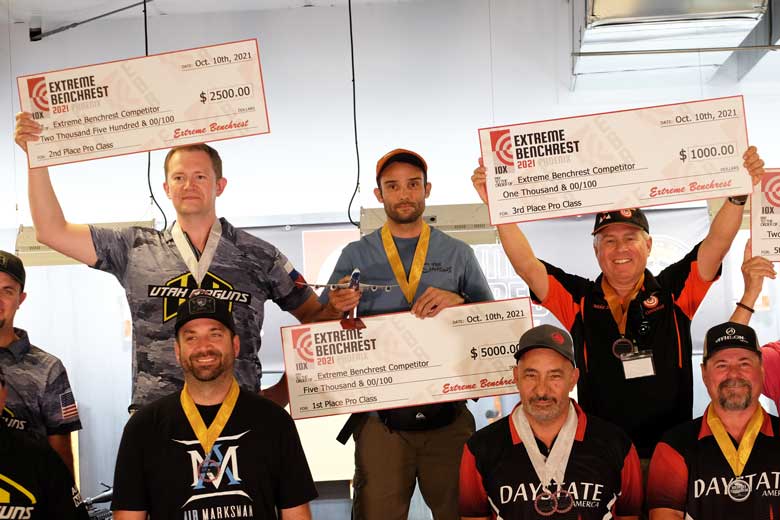
In the photograph at top, Jeffrey takes center stage in the top row with Nikolai Boldov (left) who placed second with 225 4X while Mike Bricker (right) was third in Pro Class with a score of 216 1X.

Below, Lauren Parsons was shooting a Daystate Red Wolf with this very stylish red anodized PRS chassis stock and matching 0dB moderator.

Seen At Extreme Benchrest 2022

Competitors came from around the world to shoot at EBR. I personally spoke to shooters from Lebanon, Denmark, Great Britain, Russia, Mexico, Peru, Spain and more.

Representing the international contingent, we see Soren Drost from Denmark, below. Thanks also to all those who took so much time and effort to travel to Arizona for the event!

The Action Armour Steel Scramble was a new Course of Fire for 2022’s EBR. This was an exciting test of versatility, accuracy and speed, with shooting from a variety of positions.

Seen At Extreme Benchrest 2022

The winner was Justin Welch (center), with Dave Thornton (left) second and Pete Papathemetrios third. Congratulations to all!

Seen At Extreme Benchrest 2022

The Speed Silhouette is another exciting competition, with some real speed shooting taking place. Pro Class winner Tom Adams is always amazing to watch as he loads, aims and fires, seemingly all at the same time.

That’s Tom in action, below. If you look closely, you can see that he has modified the cocking lever of his Daystate Red Wolf for faster operation.

Below, another highly-successful Daystate Wolf Pack shooter – John Bagakis – has also modified his Red Wolf for rapid fire use in Speed Silhouette competition.

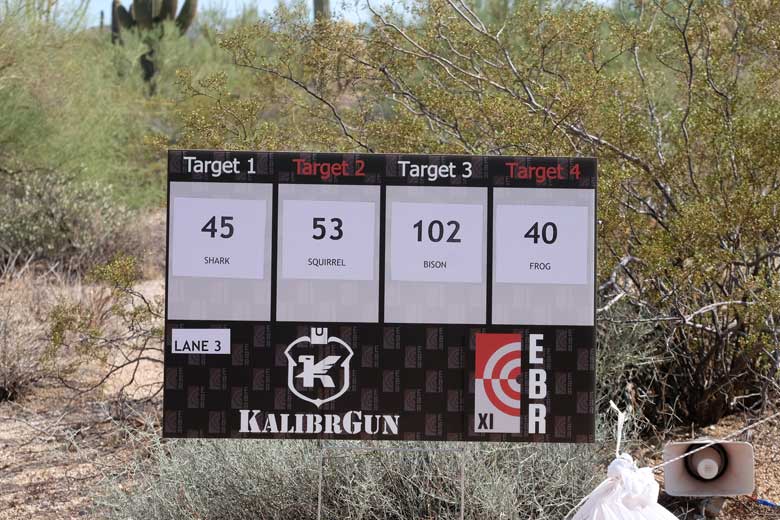
For Extreme Benchrest 2022, KalibrGun sponsored the very popular Extreme Field Target competition.

Seen At Extreme Benchrest 2022

This is another tough competition with flat, long-range shooting being a major requirement from the competitor’s air rifle

And watch out for the cacti!!!

Seen At Extreme Benchrest 2022

The big bore competition is a class that’s growing steadily, year-on-year. Below we see Tom Costan, owner of American Air Arms, competing with one of his own very fine airguns

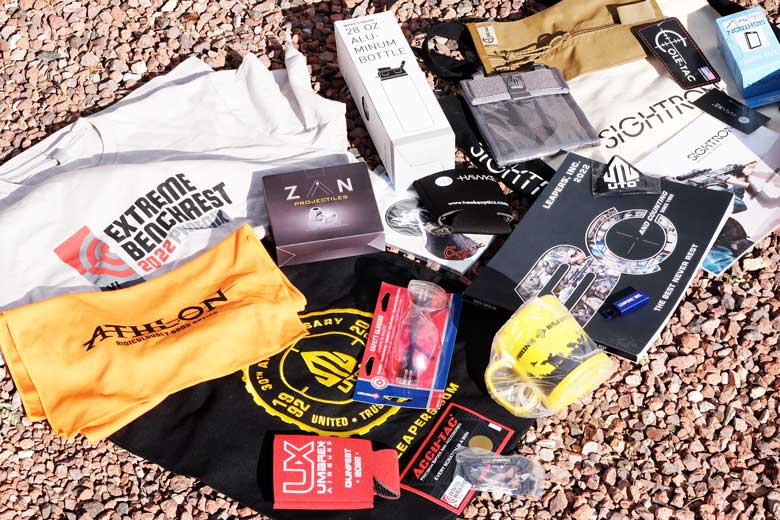
And – of course – all the competitors receive a “Goodie Bag”! The Extreme Benchrest 2022 bag contained a huge amount of useful stuff, as we can see below…

See you at Extreme Benchrest 2023!!!

The New Brocock Ghost Is Launched Today

“BRK – Brocock”. Huh??? Yes, BRK is actually the new brand name Brocock is using on its products. And the “Ghost” is the new flagship product for the brand.

The company says that BRK better reflects the brand’s emergence as a leading manufacturer of pre-charged pneumatic air rifles.

Moving forward, it’s current line-up of rifles as well as future models will be badged as ‘BRK Brocock’. Production of the range, which comprises the Commander XR, Sniper XR, Concept XR and Ranger XR will continue at the company’s manufacturing facility in Staffordshire, England.

The New BRK Ghost Is Launched Today

“Brocock rifles have progressed far beyond its air cartridge and Co2 fun-gun origins,” says sales director Rachel Flint. “Today our rifles are the first choice of pest control professionals, serious competition shooters and enthusiasts the world over.”

Not is the Ghost announced today, it’s actually available immediately in a variety of configurations from Airguns of Arizona!

The New BRK Ghost Is Launched Today

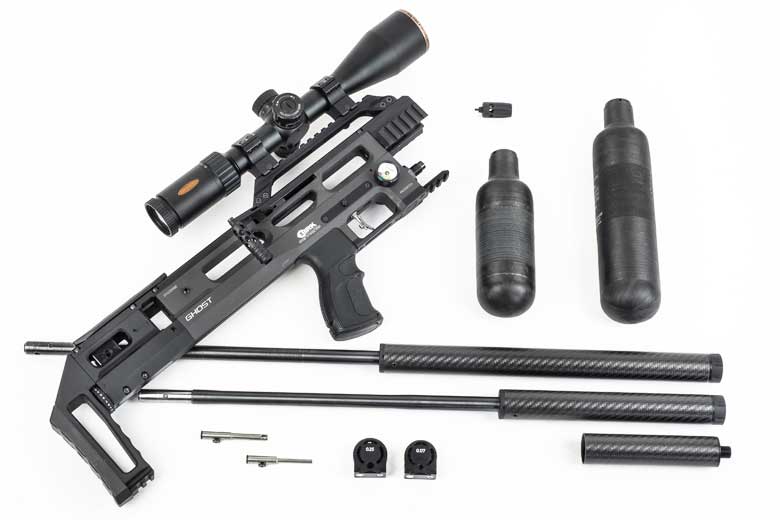
The Brocock BRK Ghost PCP air rifle is built around a titanium-colored chassis to maximize both rigidity and accuracy. Three model configurations are available in .177, .22, .25 and .30 calibers, offering power up to 100 Ft/Lbs.

Devotees will immediately notice that the Ghost is the first Brocock model to include the availability of .30 caliber.

The New BRK Ghost Is Launched Today

Thanks to a quick and easy interchangeable barrel system, the BRK Ghost’s caliber can be swapped in minutes.

The BRK Ghost comes in three styles. The High Power (HP) features a 23-Inch barrel and 480cc carbon air bottle. The Plus has a 17-Inch and 480cc carbon air bottle. There’s also a carbine version with a 17-Inch barrel and super-short shroud matched to a 300 carbon air bottle.

With their combination of light weight, compact size and high power, the company claims that all models are optimized for hunting in any environment.

The power dial at the back of the action offers no fewer than 20 settings, providing multiple power levels at your fingertips. It’s actually a graduated hammer spring adjuster for precise power tuning. There’s also a finger-adjustable dial to adjust the BRK Ghost’s regulator pressure.

Brocock’s proven sidelever action user-swappable from right- to left-hand operation. There’s also an adjustable cheek and buttpad, and left- or right- magazine feed. These are features that make the new Ghost truly ambidextrous.

Supplied with a hard case, the Brocock BRK Ghost has many more desirable features. These include a fully adjustable, match-style trigger, fully-shrouded barrel with a ½ in UNF thread for an additional silencer. There’s a cross-bolt manual safety, adjustable Picatinny scope rail and three additional accessory rails.

A full range of accessories including butt pads, grips and rails from BRK’s official custom supplier PRS are also available. The cheekpiece riser allows the Ghost’s magnetic magazine to ‘double-up’ by twinning two units back-to-back. This provides an onboard payload of between 16 and 26 shots – according to caliber- yet retains a compact profile.

The Ghost looks like another cracker from Brocock – er – BRK! You’ll be wanting to phone your friends at AoA immediately to ensure you’re the first on the block with this beautiful new air rifle. The price is a very attractive $1,995.00.

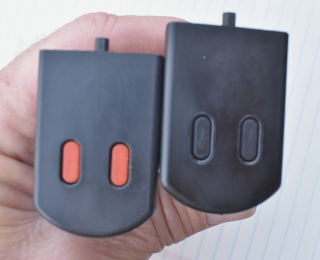
Before getting into testing results with the Byrna less-lethal projectile launcher, a couple of other background bits of information are in order. Two five-round magazines ship in the fitted, zippered case and additional magazines can be ordered through AofA. Each magazine floor plate has two slots where locking tabs engage. Forward thinking Byrna engineers had the clever idea of including orange colored locking tabs to replace the standard black tabs as a quick visual indicator of which type of projectile is currently loaded in the magazine. These locking tabs are quick to swap out and one extra of each color is contained in the kit. Caution: take care when handling the loaded magazines as it is very easy to move the bar that holds the rounds in the magazine, causing it to empty immediately and send you chasing after little round balls. Don’t ask me how I know this.

The colored locking tabs of the magazine floor plate.
Note the handy allen key built into the floor plate of the magazine.

The grip sports rubbery inserts having a “honeycomb” design which feels good in the hand. The grip is hand-filling however, when practicing with good technique even those with small hands should have no problem operating the device. Being a double-action only trigger, it is recommended that the first joint of the trigger finger be placed on the trigger to facilitate firing, as would be done with a revolver. A loaded chamber indicator on top of the unit pops up slightly if a projectile from the magazine is pushing against it. Once the magazine is removed, if a round is still in line with the barrel, simply pressing down on this loaded chamber indicator will release the ball out through the magazine well. Do not attempt to insert a fully loaded magazine if there is still one round in the breech or it can cause a jam. The safety lever disengages the trigger when activated, yet the trigger doesn’t feel that much different making it good for dry-firing practice while not activating all of the internal mechanisms. The unit also has a three slot picatinny rail located on the underside in front of the trigger guard for attaching lights or lasers as you may desire.

A big selling point to the Byrna SD (other than it’s less-lethal aspect) is that it can be stored with both a CO2 cartridge and loaded magazine in place so it is instantly ready for action since the cartridge is not pierced until it is taken off safe and the trigger is pulled fully. As with any CO2 powered airguns, the Byrna SD should never be stored with a partially used CO2 cartridge as this will deteriorate the seals. Besides, if you are going to depend on this unit in an emergency, you’ll want a fresh, full cartridge in the device. The User Manual also states not to leave a loaded launcher in temperatures below 20 degrees F or above 120 F.

To keep the Byrna SD in good working order, after every 500 shots the mechanism should be oiled. The easiest way to accomplish this is by using special oiling cartridges that oil and cycle the mechanism at the same time. There is also an optional oiler kit to accomplish this maintenance task. Please contact my friends at AofA for further information.

The Byrna SD was fun to shoot and provided good accuracy out to the suggested 60-foot range. Of course, it’s very heavy double-action trigger, non-adjustable sights and smooth bore do not promote pin-point accuracy which was as expected. However, a dog or man- sized target at that range is easy to connect with, especially since the launcher can be fired as quickly as the trigger can be pulled. I did find my sample launcher shot high and to the right. Keep in mind when shooting the gas projectiles that they will be affected by the wind. Safety glasses are always recommended anyway when doing shooting sports and especially so with the Byrna. The report of the Byrna SD is fairly loud and sharp, so if practicing indoors hearing protection would be a good idea, as well as a backstop that will alleviate the practice projectiles bouncing back toward the shooter.

My results were as follows:

Shots per 8-gram cartridge averaged19. Once the pressure was too low to discharge a round, there was still enough CO2 in the cartridge so that care should be taken to slowly remove the cartridge cap and control the release of remaining gas.

The Kinetic Projectiles, weighing 44.6 grains averaged 285.9fps at a mile above sea level on a 90-degree day. The Eco-Kinetic biodegradable rounds weighed 47.5 grains and averaged 279fps. The trigger pulls averaged 10 pounds, four ounces after the initial pull that pierces the cartridge and fires the first round. That first pull exceeded the 12-pound limit of my trigger gauge.

The warranty provided on the Byrna SD is one year to the original purchaser. Of course, should the user attempt to take it apart or use non-Byrna projectiles will void the warranty. The kit also contains a nicely done color User Manual that is very clear and easy to follow, although for us older users a larger type font would be appreciated. Also in the kit is a wallet card that indicates the Byrna SD is “Not a firearm under Federal Law” on the front and that it is TSA Approved on the back.

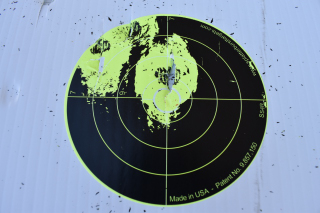
The accuracy potential of the Byrna SD at 20 yards. Note the black splatter around the target caused by the high impact of the projectiles.

All of this protection and peace of mind comes at an MSRP of $399.99. The .68 caliber projectiles can be purchased in plastic bottles containing 95 rounds. The Eco-Kinetics run $34.99, the Kinetic Projectiles at $54.99 and a Professional Training Projectile runs $79.99. The chemical agent projectiles only come in the five-round tubes and cost $34.99 for the Byrna Max or $29.99 for the Byrna Pepper Projectiles. A 10-count package of 8-gram cartridges lists at $19.99. Please check them out by clicking on the active links or connecting with the fine folks at AofA.

Extreme Benchrest 2022

Yes, Extreme Benchrest 2022 is coming soon! It’s running from 6 to 9 October.

Some aspects of the airgun industry’s leading competitive event are to be the same as usual. After all, why mess with success?

For example, the location’s the same – the Rio Salado Sportsman’s Club just outside Phoenix. Also, of course, there’s the headline Extreme Benchrest Competition with the 75- and 100-Yard cards that have never been cleared yet.

And – as usual – the event is completely full. In fact it’s over-subscribed with 200 competitors having registered and a strong waiting list.

But there are some improvements, too. A new competition for 2022 is the Action Armor Steel Scramble. This is a NRL-style shoot with a range of disciplines including precision, benchrest and  Field Target. The common factor is that all the targets are steel. This is also the only course of fire where slugs can be used.

Of course, you don’t have to shoot to enjoy Extreme Benchrest! Every year there are visitors who come to watch the shooting, soak up the atmosphere, meet-up with old friends and make new ones.

Extreme Benchrest 2022

You can also see some great shooters in action, like Tom Adams – above – the overall winner of EBR 2021. John Bagakis is another consistent shooter who’e always there among the top scorers. That’s John below…

Extreme Benchrest 2022

To ensure that you can watch the action downrange, Sightron is EBR’s official spotting scope sponsor for 2022. You can just walk up and take your turn watching the hits!

Extreme Benchrest 2022

There’s also a chance to meet industry personalities too. Here ws see Tom Costan – the owner of American Air Arms – proudly displaying his new EVOL Paradigm model at the 2021 event.

Extreme Benchrest 2022

And there’s always the chance of an exclusive glimpse of a new product or two. Usually you can try out the new model on the “trial range” too.

In fact, there’s rumors that at least one new air rifle will make its first public appearance at Extreme Benchrest 2022. Which one? My lips are sealed…

So what are all these people doing below?

Extreme Benchrest 2022

They’re placing their tickets in the raffle! This is a huge part of Extreme Benchrest as it offers the chance to win some really high-end airgun equipment. In fact, some EBR Raffle prizewinners have returned and won competitions the following year with the gun they won in the raffle!

The EBR Raffle prizes are donated by the many sponsors of the event. For 2022 Extreme Benchrest, there’s a huge list of sponsors.

These include major airgun manufacturers such as Daystate, Brocock, KalibrGun, American Air Arms, Western Airguns and Umarex. A new sponsor for 2022 is Velocity Outdoor, with its Benjamin Airguns brand.

(Note that you need to attend Sunday’s Awards banquet to claim your prize. If you want to attend the banquet, email AoA for details of cost and availability).

Not surprisingly, many optics manufacturers will be participating in EBR 2022 also. We’ve already mentioned Sightron, but Hawke will be there too.

Kevin Sheehan – Hawke’s VP of Sales and Marketing for the US – has become an enthusiastic airgun shooter as a result of attending Extreme Benchrest in previous years! He’s developed into a formidable competitor and will be shooting again at EBR 2022.

New optics sponsors are Athlon Optics and Leapers. So there will be plenty of opportunity to talk to leading riflescope vendors, see their offerings, talk and learn.

Other companies attending Extreme Benchrest 2022 will be Predator International, the US distributor of JSB products. ZAN slugs will be there, too, as well as Accu-Tac, the bipod specialists.

Oh, of course, there’s the prizes!

This year’s competitors will be sharing a record $77,000.00 – yes $77 THOUSAND – in prize money and certificates. You can watch some of the best airgun shooters in the world competing for their share in that pot…

It’s going to be fun. See you there!

Labradar Tricks And Tips For Airgun Use

I have been using the Labradar Doppler radar system for airgun testing for some time. With experience, I’ve learned some useful Labradar tricks and tips. Labradar is not difficult to use, but this experience may be useful to those of you just starting – or thinking of buying – Ladradar.

If you’re interested in determining the Ballistic Coefficients of your pellets and slugs, or understanding the performance of your airgun downrange, this is the way to go…

First a reminder. The primary benefit of using Labradar is that it is able to record the velocity of a projectile at multiple distances downrange.

Secondly, its accuracy is not dependent on light conditions or being exactly parallel to photo electric sensors – which can result in false readings. Both these things make it different from a traditional chronograph.

Generally I have found that Labradar performs better than the manufacturer claims. However, there are obviously some limitations to using it. We’ll cover these below.

Labradar Tricks And Tips For Airgun Use


I first published a post on using Labradar back in 2019. This post updates that with some additional tricks and tips. The current model being sold is the Labradar Lite. This is identical to the original version I have, except for the lack of Bluetooth functionality (which I don’t use anyway).
Labradar calculates FPS by recording radar waves as they bounce back to it from the pellet. For this reason, the radar waves can bounce back from a wall, ground or ceiling. That will cause incorrect FPS measurements. So…

Labradar cannot be used indoors. It’s best used outdoors in a “open field” environment. However I have found that it does work well in a covered shooting range, even if located next to a vertical post or other roof support.

Labradar Tricks And Tips For Airgun Use

Also, it works best set on a shooting bench or tripod. Don’t sit low to the ground.

Often, I’ll mount the unit on a small tripod and place that on the shooting table.

In order to work with an airgun, Labradar requires the use of an additional-cost microphone. This is supplied with a mounting bracket and plugs into the Labradar box. This microphone should be positioned just a little behind and to the side of the muzzle for correct operation.

I always use the foam wind guard that’s supplied with the microphone.

Labradar Tricks And Tips For Airgun Use

Before first use, you’ll need to set the Labradar unit to recognize the microphone as it doesn’t do this automatically. (Set the Trigger Source to “Trigger” instead of “Doppler” in the setup screen.

Use the sighting notch at the top of the unit to point Labradar in the correct direction – at the target, that is. This is pretty primitive and I experimented with using a short length of drinking straw in the notch as a “peep sight”.

But a little experience made sighting easier to do and the straw sighting system was discarded.

My testing has found that Labradar gives valid data at different ranges depending on the size and type of pellet or slug.

For .177 caliber, I obtain good results out to 35 Yards. Some pellets record out to 40 Yards as a maximum. That’s with lead pellets.

Generally, I cannot obtain valid data from alloy pellets in .177 caliber, however. That’s a limitation, although not a big one for most people.

In .22 caliber, I have had good success out to 50 yards, even with alloy pellets. Larger calibers record at longer distances, however 50 yards is the maximum I generally use. My Labradar is set-up to display FPS at the muzzle and at 10-Yard increments out to 50 Yards downrange.

Labradar Tricks And Tips For Airgun Use

The unit’s screen displays data from the last shot. V0 represents Muzzle Velocity (941 FPS) in this case. V10 means 10 Yards, V20 is 20 Yards, etc. The pistol icon means that it’s set-up to record relatively low Muzzle Velocities between 246 and 1,722 FPS – ideal for airgun use.

Another huge benefit of Labradar is that it is able to record and store data onto a SD card. You don’t have to write it down or type the FPS numbers into a computer.

However, I do make written notes of the shot FPS data at the time of testing. That helps when analyzing the data later when multiple different pellets are being tested.

I use SD cards previously used for digital cameras but replaced by higher capacity ones. As Labradar is generating data only, the file sizes are small and pretty-well any old SD card will have plenty of capacity.

The card can then be read using a PC. It appears as a .CSV file that can be opened, manipulated and organized using Microsoft Excel. Here’s how the raw .CSV file displays…

Labradar Tricks And Tips For Airgun Use

The columns headed Ke are an automatic calculation of Kinetic Energy using the Projectile Weight input by the user. Because I’m constantly testing different weight pellets, I make Kinetic Energy calculations in templates set-up in a spreadsheet (rather than resetting the Labradar unit each time) and so use only the first seven columns of data.

Unfortunately this Labradar output is next to impossible to open using a Mac 🙁

As I use Apple computers, I find it necessary to load the .CSV data into Excel using a PC. It’s then saved as an .XLS file and exported to a Mac. The Mac is able to read the .XLS file and I then manipulate the data using the Apple Numbers spreadsheet program.

Trust me, that’s the easiest way to use Labradar data on Mac!

Labradar can be powered using six common AA batteries. This does work, however my testing sessions often last several hours and this eats batteries fast! So, I prefer to power Labradar either by using a separate battery pack or, even better, using a cellphone power charger connected to a 110 Volt electricity supply.

With the rapidly-increasing interest in airgun BCs, for both pellets and slugs, more and more people are using Labradar to understand the performance capabilities of their airgun. And – of course – you can buy Labradar Lite from Airguns of Arizona. They have it in stock!

This post covers something a little different as it is about a less-lethal .68 caliber projectile launcher powered by CO2. Resembling a modern semi-automatic firearm, it fills a niche between lethal means of self-protection and non-lethal.

Byrna Technologies, Inc. is a publicly-traded Massachusetts technology company specializing in the development, manufacture and sale of innovative non-lethal personal security solutions to Police, Government and Civilian buyers. They sell a variety of self-defense items and have a Law Enforcement & Private Security division dedicated to providing top-notch training to these groups. This training has received national certification from the International Assoc. of Directors of Law Enforcement Standards & Training.  The launchers have been purchased for use by school security professionals as well.

The well-made and sturdy Byrna carrying case.
The Byrna SD case open, showing the contents along with a box of extra CO2 cartridges.

The Byrna SD (Self Defense) launcher can be ordered in two flavors, the Kinetic kit and the Pepper kit. Both come in a well-made zippered nylon case with padded compartments for the “gun”, an extra magazine, three tubes of projectiles, two 8-gram CO2 cartridges and manual/paperwork. Everything you need to get started and be able to practice with the SD. This particular kit only contains what Byrna calls “Kinetic” projectiles. Two of the tubes contained hard plastic Kinetic projectiles and one contained their Eco-Kinetic projectiles which are biodegradable, leaving no trace. Obviously, in today’s climate, there are restrictive jurisdictions that regulate or outright prohibit an individual from possessing or using pepper sprays and tear gas. I received the SD Kinetic kit for review, and that probably was for the best as I don’t have a ready stable of volunteers to shoot OC gas balls at…

Byrna refers to this device as a “launcher” and “un-gun” as opposed to a “CO2 gun”.  Its dimensions are: 5.62 inches tall by 7.25 inches long by 1.25 inches wide and it weighs in at a light one pound, ten ounces. An ambidextrous safety can be engaged at any time and disengages the trigger. They are made in Ft. Wayne, IN and contain 108 parts, so it is a pretty complex device. No user serviceable parts here and it voids the warranty if you take the Byrna SD apart. They also make a couple of rifle configurations however; this review is of the SD version of their pistol configuration.

This form of non-lethal self-defense tool is useful for deterring a threat from as far as 60 feet away. Initially, if you find yourself in a situation, simply presenting the Byrna SD might act as a deterrent due to its resemblance to a semi-auto firearm. Should the threat persist, pulling the heavy double-action trigger will pierce the CO2 cylinder and fire the first round from the five-round magazine. Each subsequent trigger pull fires another kinetic projectile. If carrying an extra loaded magazine, pressing the magazine release situated behind the trigger on the left side – just like a majority of semi-auto handguns – allows for a quick swap. One 8-gram cartridge gives anywhere from 15 to 20+ full power shots before exhaustion. The SD can be effective against small aggressive animals as well (but I wouldn’t rely on it in grizzly country!). Like any other projectile launcher, plan to purchase extra CO2 cartridges and ammunition so you can practice and get very comfortable with the SD before you actually carry it.

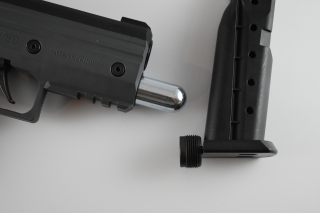
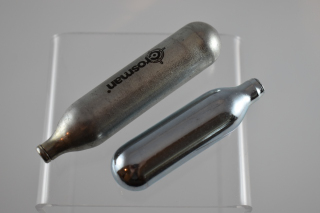
The Byrna SD uses the smaller 8-gram CO2 cartridges. An adapter is available to convert to 12-gram cartridges.

Available from AofA, the Byrna SD kit can be ordered in Gray, Orange, Pink, Tan and Yellow. While some states may restrict possession and use of the Byrna, AofA definitely will not ship to the 5 boroughs of New York City, San Francisco, and several other liberal antigun/anti self-defense enclaves. Refer to their website for the restrictions.

Not being a practicing attorney, I cannot speak to the legalities of purchasing and owning a Byrna launcher in any situation and neither can AofA. I can say, however, that it is not classified as a firearm in the United States. Due to that fact, it is possible for persons with a felony conviction to have airguns in a lot of places, however; for questions about purchasing this unit the best bet is to check with a lawyer and the police jurisdiction you live and work in.

The tube from the Byrna SD kit containing Eco-Kinetic biodegradable ammo.

More about how the Byrna SD worked for me in Part II next month.

What Makes Leapers P.O.I Scope Rings Special

Most shooters think about three core features when choosing scope rings…

First – and most basic – is the diameter of the scope’s main tube. Typically these will be 1-Inch or 30mm, although other diameters such as 34mm are starting to appear on some high-end scopes.

Next is the type of mounting system that is on the gun. Nowadays this is typically a Picatinny rail. However, there’s also the very similar – but not identical – Weaver rail system. Meanwhile, dovetail rails still feature on some .22s and a number of airguns.

Then there’s the scope ring height. Mostly scope rings are graded as “medium” or “high”. However there are also “low” and “extra high” rings available. Although there is – to my knowledge – no standardization of measurement between manufacturers to match these descriptions, they all relate to the height at which the scope is carried above the action.

What Makes Leapers P.O.I Scope Rings Special

So what height scope rings to choose? This will be a combination of factors. One will be the diameter of the scope bell (front). Scope ring height will need to be chosen so that the scope does not contact the rifle in any way except via the rings. (If it does, that’s a sure way to ruin accuracy).

Now the shooter’s personal physique comes into play. How high does the scope need to be mounted in order to achieve a strong, consistent cheek weld when the rifle is shouldered?

Leapers provides a lot of information to help you make an informed decision on the profile of P.O.I rings. This includes the maximum objective diameter that can be accommodated, the saddle height and the center height for the rings.

What Makes Leapers P.O.I Scope Rings Special

For that extra personal touch, the experts at AoA will be happy to advise further when you phone-in your order.

To find out more, I visited Leapers, Inc. This company is based in Livonia, Michigan and they produce their P.O.I scope rings right here in the USA!

“P.O.I” is an abbreviation for “Precision Optics Interface”. To find out more, I visited the company to talk to the experts and find out some key features that should be considered when configuring your new air rifle.

The Director of Product Management at Leapers is Nick Lee. His advice was clear and valuable yet actually amazingly simple.

Nick explained that there are very precise specifications for the Picatinny rails. So, scope rings for these rails also must be designed to Picatinny specs. He directed me to the official specifications: MIL-STD-1913.

Although that’s a pretty basic statement, it’s clear that there are scope rings out there that are designed and manufactured to a somewhat “generous” interpretation of these specifications. Yes, they fit Picatinny rails, but they may do so rather more loosely than is ideal for that basic requirement of supporting a scope consistently and accurately.

To make his point, Nick pointed to the recoil stop bar that’s machined into the base of P.O.I rings. This bar is designed to be a solid fit in a Picatinny rail. And it’s rectangular in shape. There’s one in each ring. (See below).

What Makes Leapers P.O.I Scope Rings Special

Low cost scope rings often use a standard, mass-produced circular rod as the bearing surface against the “teeth” of the Picatinny rail. This is because it’s cheap. “But how,” asked Nick, “could that ever provide really long-term, consistent positioning for the scope against the battering the rings take from recoil? Particularly as they are often not a perfectly tight fit!”

Then there’s the material the rings are manufactured from. Leapers’ P.O.I rings are manufactured primarily from 6061-T6 Aluminum. That’s aircraft-grade material.

Why not steel? Nick explained that 6061-T6 Aluminum is plenty strong enough for this application. P.O.I rings are even qualified for use with .50 cal BMG! It also has outstanding corrosion resistance.

What Makes Leapers P.O.I Scope Rings Special

Plus, the light weight allows for a wide bearing area against the scope tube (it’s 22 mm for P.O.I rings). This minimizes the possibility of distorting the scope tube while also keeping the weight down.

We all expect to remove Picatinny scope rings from the gun and re-mount them later with minimal Point-Of-Impact change. So design and manufacturing precision also has to extend to the side plate: the part that clamps the rings in place onto the rail.

What Makes Leapers P.O.I Scope Rings Special

The locking side plate of P.O.I rings features dual spring-loaded guides to ensure that required secure and repeatable zero. They also prevent any tilting and mis-alignment. Again, another feature to consider as you choose your scope rings and an additional reason why Leapers labels these rings as P.O.I (Precision Optics Interface).

Leapers manufacture its P.O.I Scope Rings in-house in its “UTG PRO” facility on the company’s campus in Livonia. Manufacturing Director Kevin Jin showed me how P.O.I rings are manufactured.

At one end of a long conveyor belt system, strips of 6061-T6 Aluminum are loaded for delivery to whichever CNC machine is designated to produce the next batch of rings. As the P.O.I rings have a surprisingly complex shape, with many subtle curves to prevent snagging in use, they are manufactured on high-specification, Aerospace CNC-MAZAK 4-axis Horizontal machines.

Both Pictinny rail and inner bore hole for the scope are machined during the same set-up as this provides superior concentricity of the scope rings when mounted onto the gun. After that, the rings are cut horizontally into two pieces.

What Makes Leapers P.O.I Scope Rings Special

Particular attention is paid to the scope interface surfaces, Kevin explained. In order to secure the scope in place uniformly and without damaging the tube surface, the inner diameter is bored and finished with an endmill. Finally, there’s a final finish from a reamer to the precise diameter required.

What Makes Leapers P.O.I Scope Rings Special

After machining, the result is double-checked by Leapers’ extremely thorough Quality Assurance team.

Surface finish is provided by matte black, Type III hard coat anodizing. This gives a high-quality, non-reflective and long-lasting appearance to these scope rings. It’s a great match for the high quality airguns and scopes that AoA sells!

Kevin’s Manufacturing Team really cares about the quality of their products and you can see that when you look at P.O.I rings.

By investigating Leapers P.O.I rings, we’ve learned that there’s more to scope rings than meets the eye. We also found out some of the reasons why P.O.I scope rings are special.

Sure, you can buy cheap scope rings for $10.00 a set, or thereabouts. But a pair of high quality scope rings like P.O.I can be had for around $55.00 at AoA.

When you’re spending hundreds – maybe thousands – of Dollars on a new rifle like a Daystate Alpha Wolf, it just doesn’t make sense to skimp on scope rings!