

Deciding on the type of blind and how you will use it, it’s not rocket science but there are a few keys to success!
A blind is made from a variety of materials with the purpose of hiding the hunter and his movement from potential prey. The blind can be as simple as sitting in the gardening shed and shooting through the window or a crack in the door, to something as elaborate as a camouflaged structure that can be moved from place to place. As I have mentioned previously, I like to use a commercially available camouflaged “pop up” blind. It works well and can be set up or broken down very quickly and easily. This allows me to cover ground and set up quietly and efficiently, expanding the shooting possibilities on a given hunt. One can make an effective hide from natural materials at hand. If I am wearing camouflage and I find a nice little space between fallen branches or clumps of brush to crawl into, I find it works fine. I’ll also carry along some lightweight camouflage netting which together with natural materials can be used to make an effective blind. The critical issue is to break up the outline of your body, this is what makes the potential predator stand out to their prey, and secondly, make sure that your blind covers you from behind so that you are not backlit.
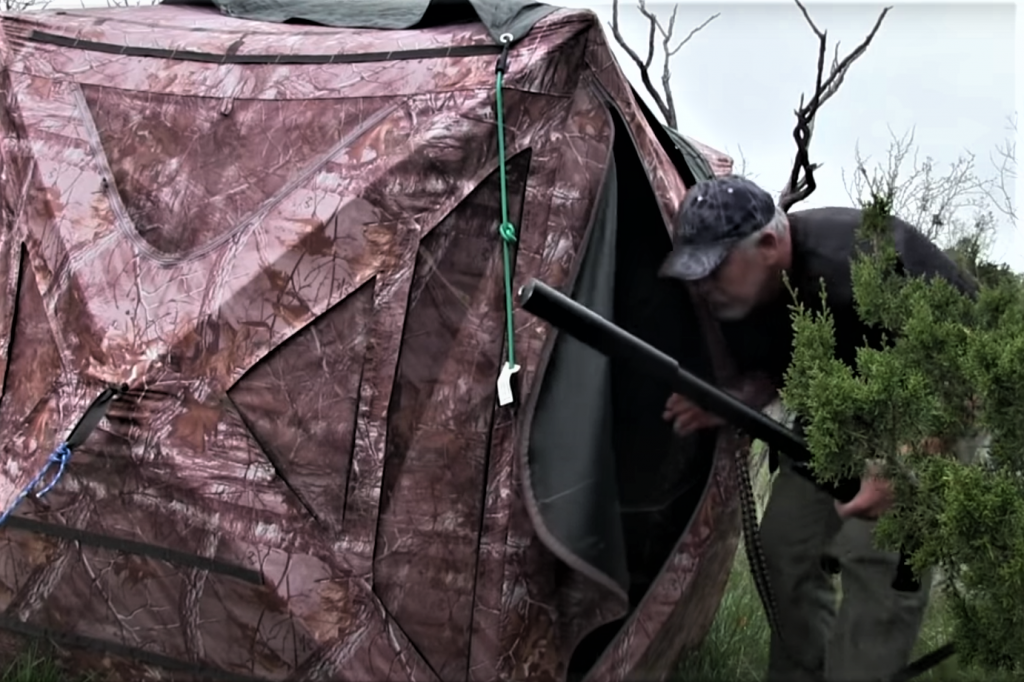
An essential requirement to setting up a productive blind is to find the right location; that is one which is not too great a distance from where you will make your shots, that gives several shooting lanes and a good field of view, and preferably one that has a protected means of approach so that you don’t scare off your quarry. I will sometimes make my approach to the blind before daylight (when I can pull myself out of bed that early) and be in my blind before my prey is out and about. Of course, you must be sure that you’ve located a spot which will draw game; I like to set up around a pond or stream, in a cultivated field which has been left standing after the harvest, along a game trail, etc. It doesn’t matter how well your blind is constructed if there are no animals in the area. Exactly where I set up and how long I stay in a location depends on what I am hunting, where I am hunting, and when I am hunting. I will sometimes use a blind when shooting starlings, ground squirrels, crows, and squirrels, but require something fast and easy to move.
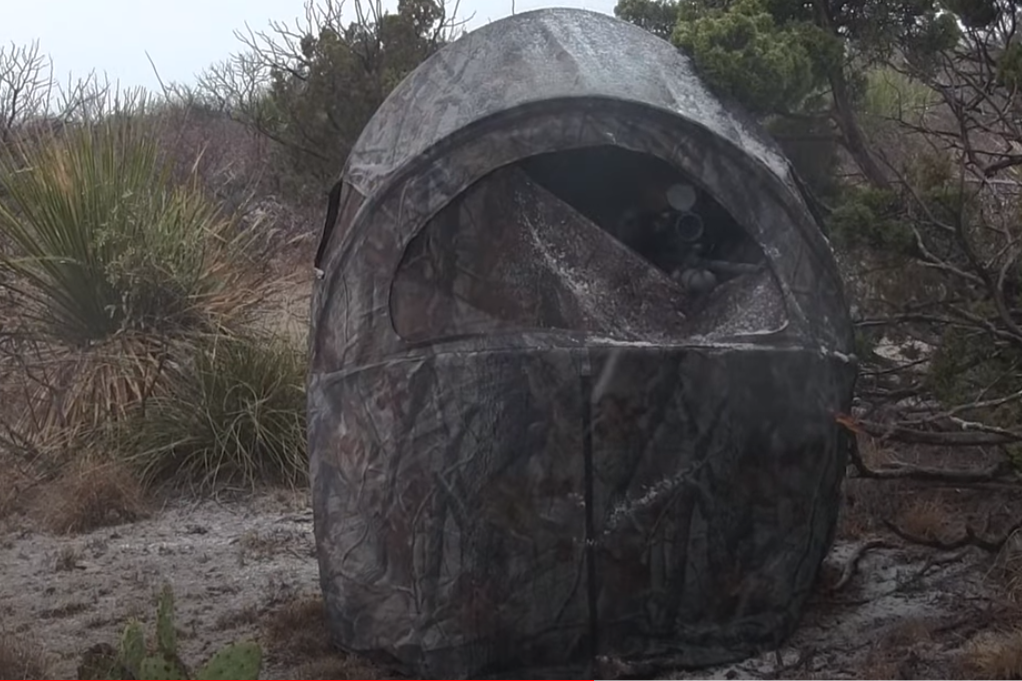
A pop up blind with built in seat is flexible, quick to deploy, and can be comfortable in nasty weather 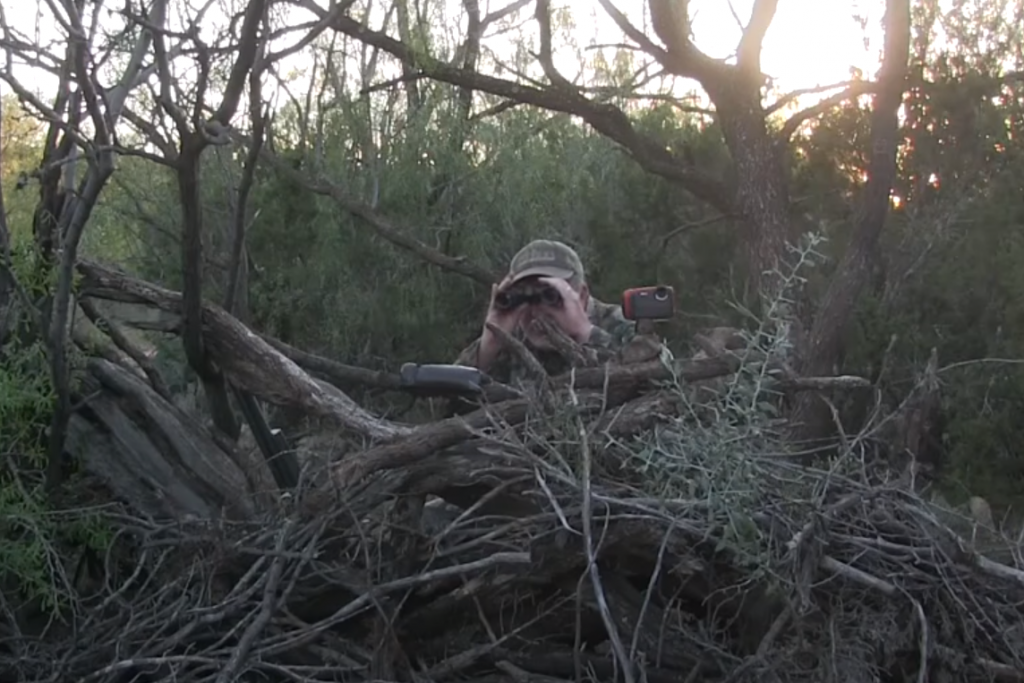
You can use natural materials to build a blind 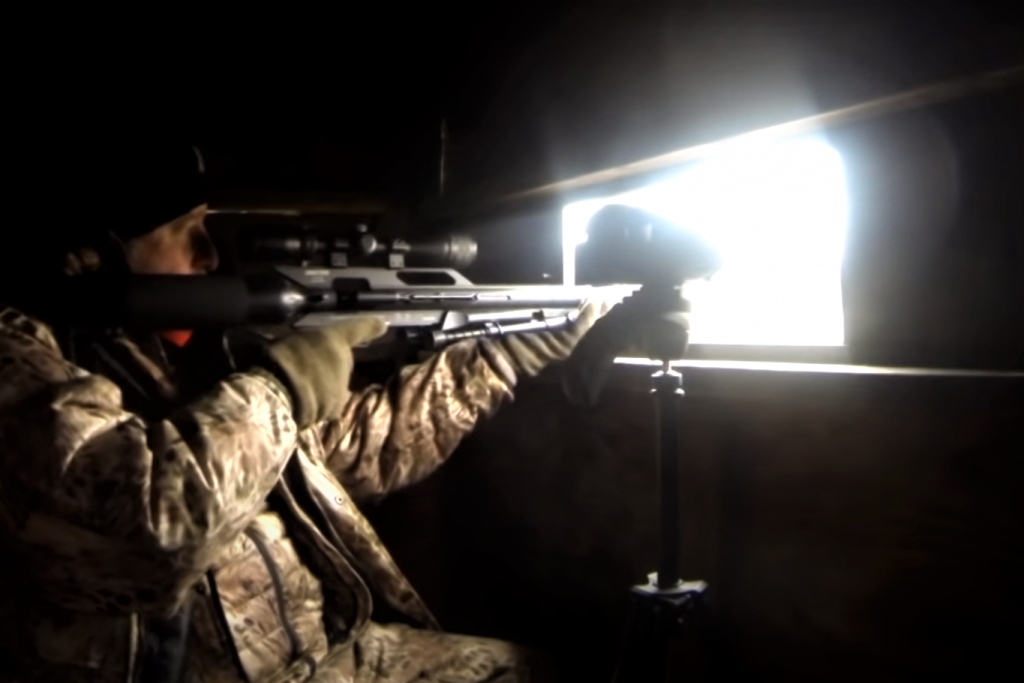
Make sure you have figured out shooting positions and your shooting lane before the action starts. A huge buck walking in is the wrong time to figure it out!
More often, I still-hunt while wearing camouflage, every once in a while finding a protected site to sit and wait. For instance, when hunting jackrabbit I’ll walk through washes and along ridges glassing the area. If I see a jack moving around I’ll work my way into a position to intercept it, and once I find a protected area in some brush along the hillside, I’ll crawl under and wait until a shot is presented. In effect I am carrying some of my blind with me (the camouflage) and using natural materials to finish it off. Again, it depends on your prey. I will also use a camo poncho which has many effective uses either worn or draped across the brush.
