Posts Tagged ‘scope mounts’

The Sightron SIII FT 10 – 50 x 60 Scope Is A Winner!

If your interest is accurate shooting with your air rifle at medium to long ranges, this Sightron riflescope has a lot to offer!

There’s no doubt that 10 years of Extreme Benchrest competition has driven the mushrooming interest in long range benchrest shooting.

But it’s not just benchrest. Airguns are being shot at ever-increasing ranges for other reasons, too. Long range hunting, American Field Target competition and even just challenging long range plinking for fun are all huge growth interests.
The Sightron SIII FT 10 – 50 x 60 Scope Is A Winner!

Then, of course, there’s the amazing increase in power, capability and long range accuracy capabilities that have been engineered into modern PCP air rifles, like those from Daystate and Brocock. Just think of all the effort that’s going into Daystate’s ART program!

And now the long-range airgun shooting game is taking yet another step forward with the introduction of bullet-shaped slugs for airgun use. The big improvements in Ballistic Coefficient offered by slugs, compared to traditional “wasp-waisted” pellets shows to its best effect in shooting at extended ranges.
The Sightron SIII FT 10 – 50 x 60 Scope Is A Winner!

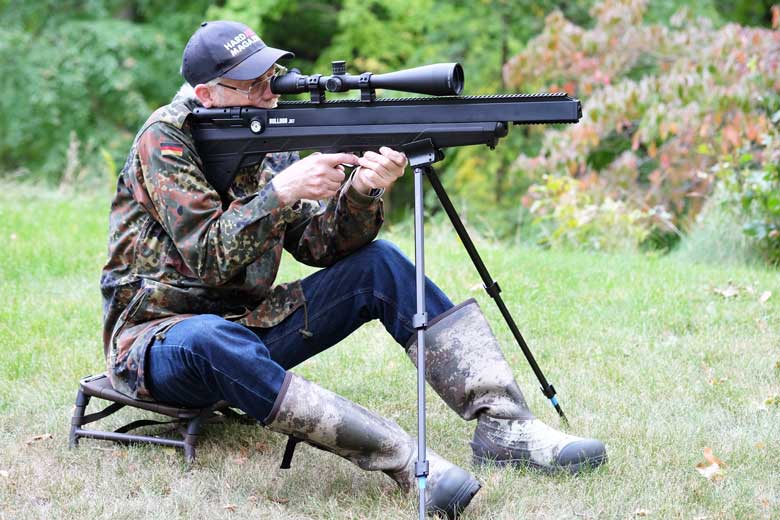
All of this means that there’s more and more focus on the quality of the riflescopes used on air rifles. After all, those tremendous capabilities in airguns and ammunition – together with your personal shooting skill, of course – is wasted if you can’t see the target properly!!!

That brings us to the need for high quality riflescopes, such as those from Sightron.
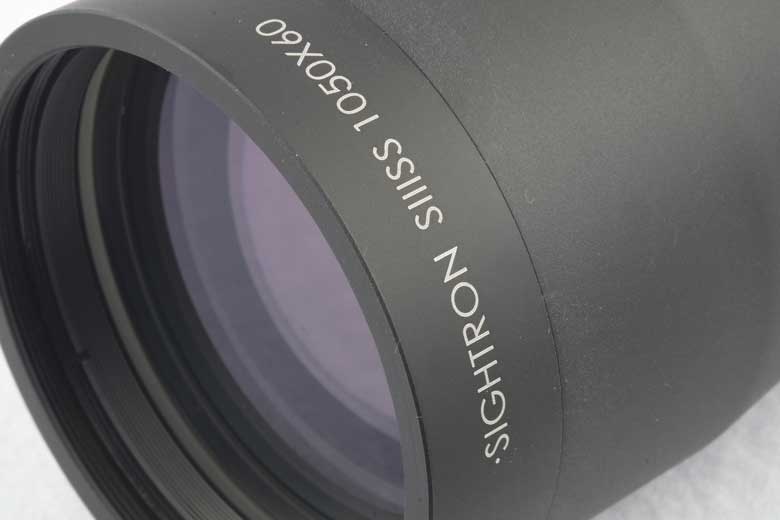
Sightron USA is a strongly-backed company with considerable optics and mechanical expertise in both R&D and its own manufacturing facilities in both Japan and Philippines. That’s important to understand: Sightron is not like many other optics companies which simply brand riflescopes manufactured by another company overseas.

Airguns of Arizona has years of experience with Sightron scopes, so their staff can give their own personal opinions if you order by phone. In this blog post, however, we’ll take an overview of the Sightron SIII FT 10 – 50 x 60 riflescopes that are available in a number of configurations, with choices of reticles and turrets.
Sightron SIII Series Field Target 10 – 50 x 60 riflescopes are airgun-ready, with a focus on FT competition. They have a great reputation with Field Target shooters! However, they are suitable for far wider use than just FT competition and practice.

All SIII scopes are designed and manufactured by Sightron itself in its own factory in Japan. For many scope purchasers, such a pedigree is – in itself – a highly-significant factor in their purchasing decision.
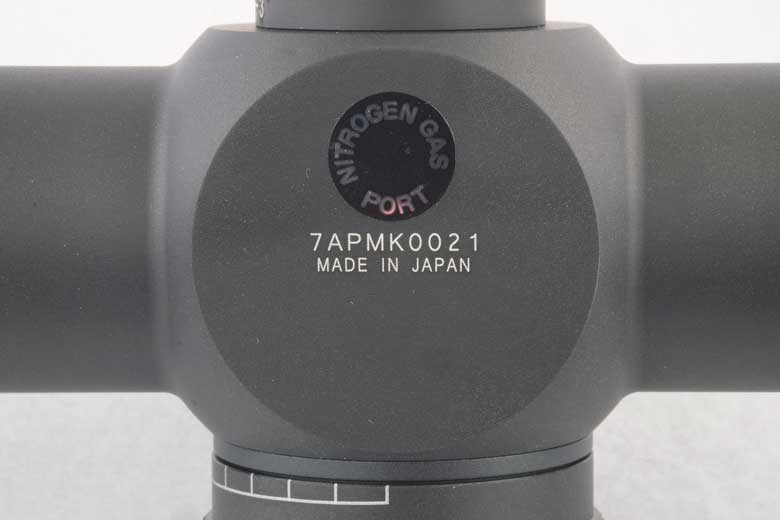
Obviously this is a high magnification scope. Yes, it can be used at 12x magnification (the mag limit for traditional Field Target competition). However it has huge potential for precision long range shooting, such as benchrest competition and hunting.

As the name implies, Sightron SIII Series FT 10 – 50 x 60 scopes all have a whopping 5 x magnification range, from 10 x to 50 x magnification. Combined with the 60mm objective lens, this means that they are large scopes and need to be mounted with this in mind. High rings will almost certainly be in order.

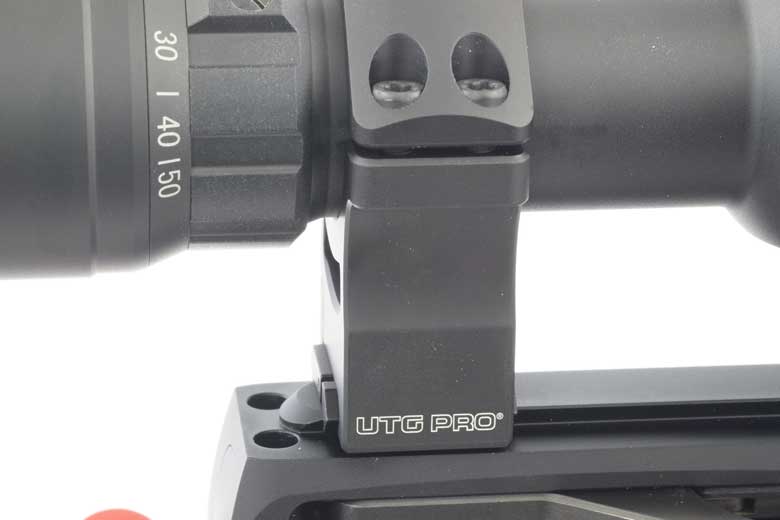
I used UTG Pro rings from Leapers to install a Series III FT scope onto a Daystate Revere. The finish of both matched precisely and they worked well together.
The Sightron SIII FT 10 – 50 x 60 Scope Is A Winner!

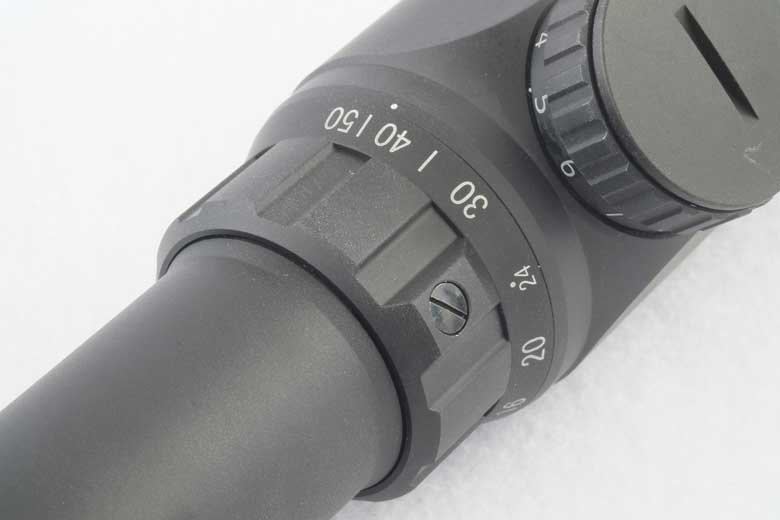
Other common specifications for SIII Series FT scopes are an overall length of 26.9 Inches and 30.8 Ounces weight. They all have a 30mm tube diameter and include side parallax adjustment for ranges between 10 and 300 Yards.

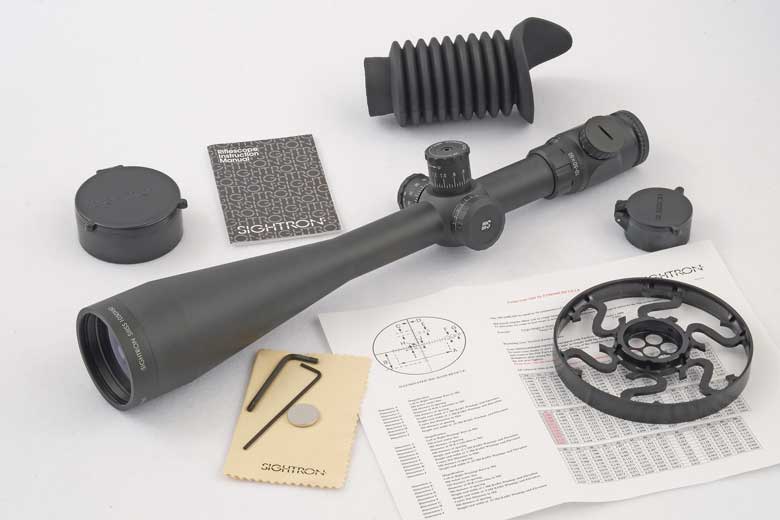
Other supplied accessories include a wonderous, 3-Inch long rubber eye cup and a pair of flip-up lens covers. There’s also an instruction sheet giving vast detail about the reticle, its graduations and how to use it.

This makes them ideal for long-range airgun benchrest shooting and hunting, too.

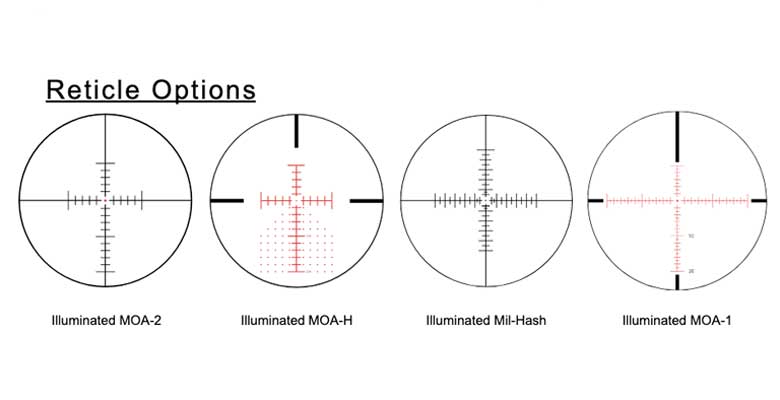
In fact, AoA stocks three models in the Sightron SIII Field Target series. The differences are to be found in the combination of reticle and turret. Two models combine target-style, capped elevation and windage knobs with MOA reticles. One has a Mil-hash reticle combined with tactical (uncapped) turrets.
The Sightron SIII FT 10 – 50 x 60 Scope Is A Winner!

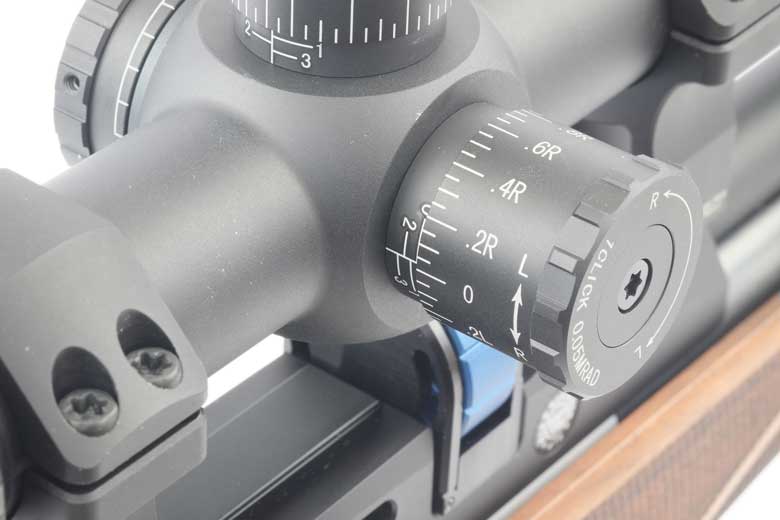
As Second Focal Plane scopes, the click values (1/8 MOA or 0.5 MRAD) given in for turret clicks in Sightron’s specifications relate to 24 x magnification. They will – of course – represent double the angular distance at 12 x and half at 48x mag.

Although the graduated reticles can be used to calculate a target’s range, most airgunners will likely use them for holdover when shooting instead.

In each case, the reticles can be illuminated – if required – by using the graduated control knob on the eyepiece.
The Sightron SIII FT 10 – 50 x 60 Scope Is A Winner!

A large, 5-Inch diameter, machined Aluminum sidewheel is included with all FT models for precision ranging. Unlike many sidewheels, this is not pre-marked with ranging distances. Sightron expects that customers for its SIII Series scopes will want to create their own “range tapes” for use with their own specific combination of air rifle, pellet and personal vision.
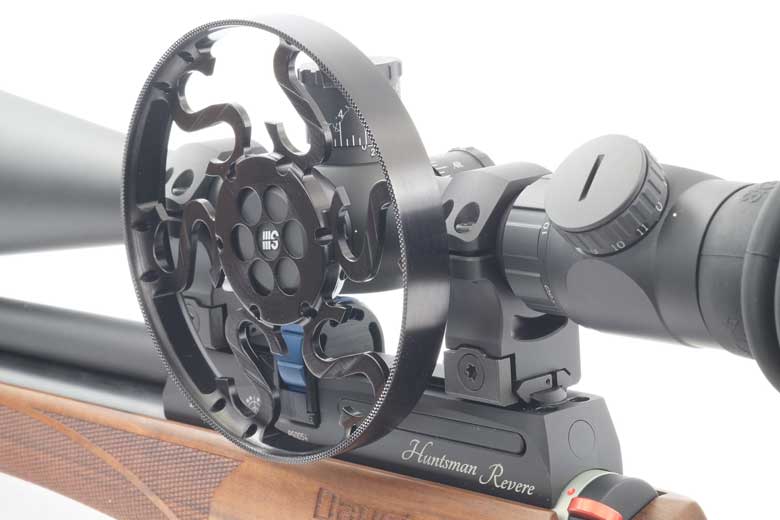
The Sightron SIII FT 10 – 50 x 60 Scope Is A Winner!

That marks these scopes out as being intended for serious users! That probably includes you, too. Ask the guys at AoA about them…

The new FX No Limit Mounts. Notice the big Allen screw just above the two main mounting screws.

The new FX No Limit Mounts. Notice the big Allen screw just above the two main mounting screws.

Unless you decide that you are going to shoot exclusively with non-glass sights such as iron sights or peep-and-globe target sights, eventually you are going to have to deal with the issue of scopes, including mounting and adjusting them.

For some basic background information, check this blog on mounting scopes — http://198.154.244.69/blog/2009/03/mounting-scope.html — and this blog on adjusting them — http://198.154.244.69/blog/2010/04/how-scopes-really-work-and-what-not-to.html .

At some point, however, whether you encounter a springer that has built-in barrel droop or find yourself with the desire to shoot a pre-charged pneumatic air rifle at really long range, you are likely to run into a problem: lack of sufficient elevation adjustment in your scope.

I have faced that problem several times in my airgunning career, and, to my knowledge, there are only a handful of ways of addressing it. The first is to use a different scope, one that has a greater range of adjustment. This can work fine but is generally the most expensive option.

Another option is to switch to a special “drooper” mount for the scope. Some manufacturers offer special drooper mounts that are designed to work with their airguns that have barrel droop built in. I have used these special mounts successfully but they lack flexibility beyond their built-in droop compensation because they cannot be adjusted.

Alternatively, some airgunners opt to raise the back end of the scope by placing metal or plastic shims between the underside of the scope tube and the top of the rear mount. The danger with shims – especially if you are trying to achieve a large amount of vertical adjustment — is that by raising the scope tube at the rear and providing no compensation at the front mount, you raise the possibility of putting mechanical stress on the scope tube that could bend the tube or damage the scope. I have successfully shimmed scopes in the past, but it is not an optimal solution and doesn’t work well when you need a lot of adjustment.

Another option is to “lap” the scope mount rings to angle the scope downward as it passes through the rings. I have never personally used this method of providing for additional elevation.

Finally, I have in the past seen scope mounts that could be adjusted fore and aft to provide additional elevation adjustment, but most of these (a) looked flimsy to me and (b) required dis-mounting the scope to make adjustments.

But now the good folks from FX airguns have introduced something called “No Limit” mounts. They look like ordinary scope mounts, but there is an extra Allen screw above the foot of the scope mount.

Loosen the big Allen screw and the No Limit Mounts can be raised.

Loosen the big Allen screw and the No Limit Mounts can be raised.

With the scope mounted straight and true, you can loosen those Allen screws and adjust the elevation by lifting the front and rear mounts to different heights.  Because the mounts go up and down while tilting forward or back, the scope can maintain a stress-free and relaxing hold.  This allows you to optically center the scope without having to custom lap or shim the rings, and it also allows the long range shooter to re-position his scope angle for a better range of adjustment at extreme distance.

Best of all, the No Limit Mounts can be tilted to provide stress-free elevation adjust of the scope to compensate for barrel droop or long-range shooting needs.

Best of all, the No Limit Mounts can be tilted to provide stress-free elevation adjust of the scope to compensate for barrel droop or long-range shooting needs.

With springers with droop in their barrels, the No Limit mounts allow you to customize your scope angle to align with barrel angle.  The folks at www.airgunsofarizona.com tell me pcps have different angles too.  They see it when moving one test scope from rifle to rifle.  No Limit mounts allow the shooter to “tune” the scope to the rifle before cranking on the elevation turret.  Even if you don’t have a barrel droop problem or lack of elevation range issue, the No Limit mounts can raise or lower the scope to fine-tune its alignment to your eye.

No Limit mounts do not offer any windage adjustment.  The designers at FX felt that if they allowed left/right movement, it would be difficult to keep the mount stable, so they steered clear of that feature.

In my view, FX has come up with an excellent solution to a problem that is bound to vex every airgunner sooner or later.

Til next time, aim true and shoot straight.

–          Jock Elliott