

Many airgunners were taught from the beginning that only head shots were a viable option for hunting ethically. I think head shots are fine, but a well placed heart/lung shot offers many advantages as well.
For about as long as I’ve been hunting with air powered rifles, I have listened to the debate on shot placement. I grew up hunting with firearms and was taught to always take body shots on big game, never a head shot. When hunting small game with a rimfire, the conventional wisdom was that either head or body shots were OK, though headshots might result in less meat damage. As a matter of fact, there was a widely held belief that headshots were unacceptable on larger game, due to the possibility of inflicting a wound, such as a broken jaw, that could prevent a badly shot animal from eating.
As I started to hunt more with airguns and read the UK hunting literature and later follow the online discussions, I found a very strong preference for using headshots only, and an equally strong bias against the use of body shots. The most common reason offered in support of this position was that headshots are more humane, anchor an animal more quickly, and cause less meat damage.


My experience has been that either a properly placed headshot or body shot can be effective and efficient at producing clean kills, while poorly placed head or body shots are not. It is true that even with a perfectly placed body shot that penetrates the heart and/or lungs, an animal may run a short distance before dropping. On the other hand, while a headshot will frequently result in an animal dropping on the spot, it’s also not unusual for an animal to flop, kick, and roll around before giving up the ghost. I believe that to some extent the discussion of what is more humane or painless to the prey is a topic viewed through an emotional lens.
I don’t believe the few seconds between the impact of a shot and the actual death is significant, be it immediate or almost immediate. Especially in the context of how a prey animal usually dies, being taken down and eaten by a predator. That aside, I have seen deer double lunged by an arrow go back to grazing or even trying to mate, until they drop. This leads me to believe that the processing of pain is different, and that a body shot from a projectile that penetrates a vital organ does not place undue pain or stress on quarry. I think every hunter needs to work this out for themselves and decide their own rules of engagement. My view is that either headshot or body shots are acceptable, but regardless of which placement I use the objective is to make it as close to perfect as possible.


What does this mean? A head shot is a misleading term that implies the goal is to simply hit the head, but in reality, it is to place the pellet center of mass in the brain. Conversely a body shot has one or more of the following objectives: pierce the heart, pierce the lungs, and possibly doing this while breaking down structure (shoulder or spine). The key to delivering the proper body shot is knowing the anatomy of your quarry, having the animal positioned so that the appropriate shot placement is achievable, and having the appropriate gun and projectile to facilitate the shot placement you’ve opted for.
One of the reasons I prefer more powerful .25 – .30 caliber rifles with heavier and/or larger projectiles for small game is that it presents more options to effectively place a shot. If I’m hunting with a 50 fpe .25 pcp rifle and there is a rabbit at 70 yards angled towards me, I am comfortable with a quartering body shot that will break a shoulder and penetrate both lungs and possibly the heart. In fact, my experience is that these types of shots are often immediately effective in anchoring the animal on the spot.
However, presented with the same opportunity while hunting one of my 14 fpe .22 rifles, I would not take the body shot doubting the guns’ ability to produce a clean and effective kill. Rather I’d hold off on until a head shot presented. So even as a firm believer in the use of body shots, my choice of this option would be situational.
So, now that I’ve explained my rational for the use of body shots, the rest of this article will focus on how I use them. I would also mention that the kill zone for a headshot and a body shot are approximately the same, about a 1” diameter target area on small game. What can make the body shot a more attractive option is that there is less movement. For instance, a turkey’s head is always in motion, jerking back and forth, up and down, twisting and moving side to side, while the body tends to remain more stationary and gives a bit more time for optimizing the shot.
As mentioned, the term “body shot” is misleading and a better label would be a heart/lung shot. There are several approaches to this shot placement, depending on the animal’s position in relation to the hunter, and shot selection also depends on the type of game you are hunting and other factors. For instance, when hunting feral hogs, I find that broadside heart/lung shots which are a high percentage shot on deer, don’t work so well due to the cartilaginous shield protecting a hogs shoulder (especially boars). But let the porker angle away allowing me to deliver a quartering shot that slips behind the shield hitting the lung and offside shoulder, and we’re good to go!
The “head on” placement can be very effective, providing you know your quarry’s anatomy. If an animal carries its head low, like a feral hog, this might offer very limited access. However, quarry such as jackrabbits or prairie dogs that sit with their heads held high, offer a good frontal option that allows the heart, lung, spine, or great vessels to be targeted.
For most of us growing up hunting deer or other big game with firearms, the “broadside” shot was the holy grail of shot placements. When most game animals stand side on to the hunter, it allows the heart and lungs to be targeted. As a matter of fact, if the gun has the power to fully penetrate the animal both the onside and offside lung and hide are punctured and provides a good blood trail if tracking is required. When hunting with a centerfire rifle, a double lung shot generates massive trauma and will often cause the animal to drop. However, an airgun is more like an arrow in that the lungs are pierced without hydrostatic damage to the lungs, so the animal may run before succumbing. If the lung is penetrated low, there will be a good blood trail and it will be easy to track the animal for recovery. If hit high, there may be no blood at the site and the animal might run 100 yards with no spoor to follow.
Quartering shots can be the quite effective, but are dependent on a knowledge of your quarry’s anatomy. This shot placement will often allow multiple critical points to be impacted. A quartering shot on a predator might allow the lung, the heart, and the offside shoulder to be impacted, shutting down both the circulatory systems (heart/lung) and mechanics (shoulder), anchoring the quarry in place.

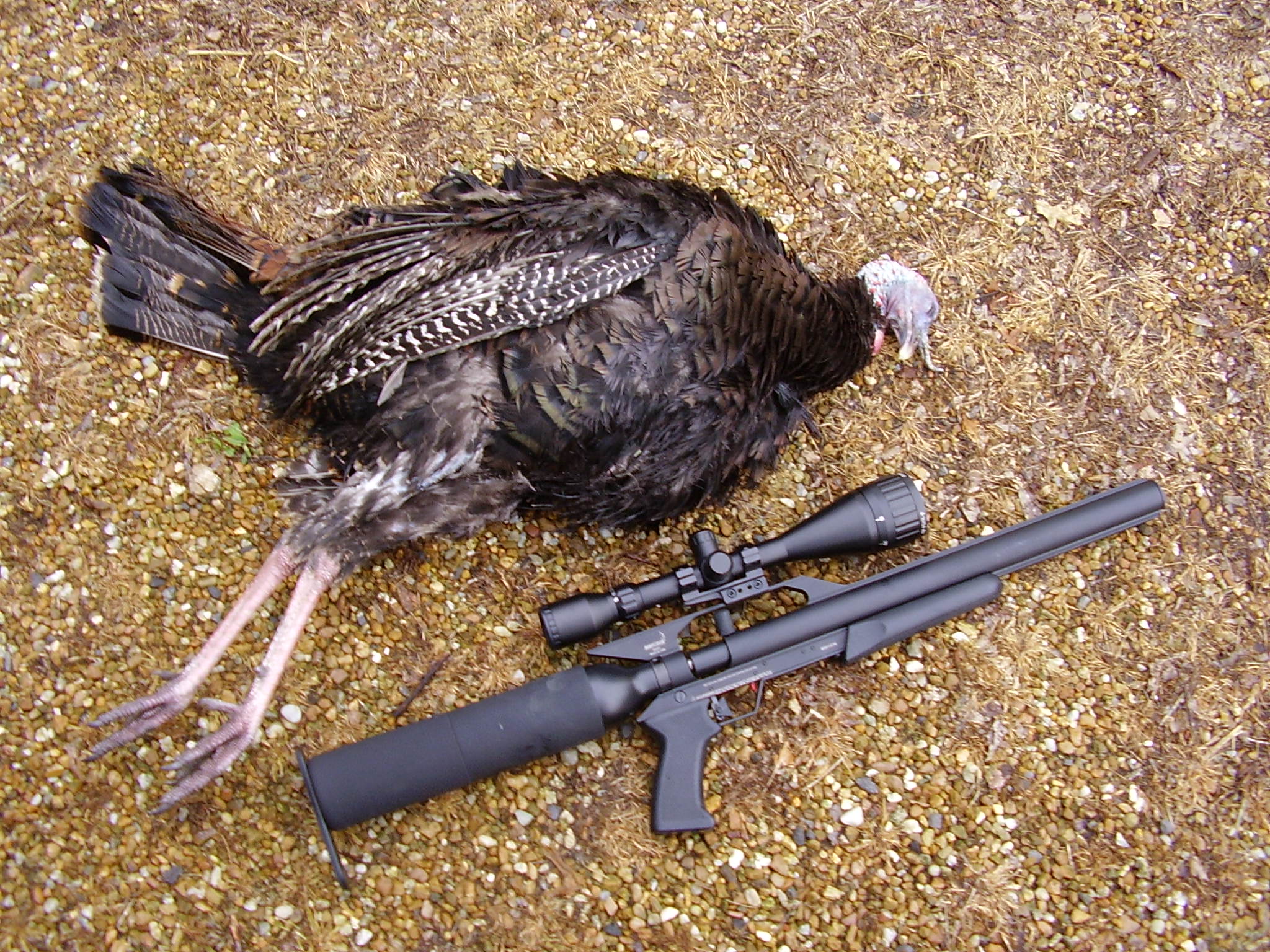

I did mention the relevance of caliber and power on choice of shot placement: a quartering shot serves no purpose if there is inadequate energy to allow deep penetration. If I have any doubt that the gun and ammo can deliver the performance to penetrate and cause the damage required for a body shot, I’ll take a head shot or pass on it altogether. This is often a call you’ll need to make in the field with your finger on the trigger. I might be lined up on a 75 lb meat pig with my .35 pcp rifles shooting a solid slug at 125 fpe, when a 250 boar drifts in and clears the area. This rig will not provide the penetration on such a massive animal, so a body shot is out the window and the headshot back up for consideration.
I have written about the ethics of using body shots in the past, and I obviously think that when used appropriately, they are effective, efficient, and ethical. Making sure that it is an appropriate option is dependent on several variables: such as the game, situation, shot placement, and gear being used. In the US we don’t have limits on either the caliber or power outputs of the guns we can use, which informs my opinions on this subject. I think that if you apply the same questions to your own situation with respect to game, gear, and conditions, you can make the right decision as to whether body shots will work for you.
On another topis: Are any of you getting ready for EBR? My summers slow down quite a bit hunting-wise, but I am trying to get to the range a couple time a week for some bench rest practice. Had so much fun last year that I am really looking forward to visiting Phoenix in a few months, and maybe doing a bit better than last year!
