The ensuing month since the Part I post on the Cricket II Tactical (C2T) didn’t allow for a lot of additional time behind the gun due to some medical issues and totally uncooperative weather. However, I did enjoy the time I had working with this little powerhouse. Since the basics of this bullpup were covered in Part I, this installment will cover the scope used and results from range sessions.

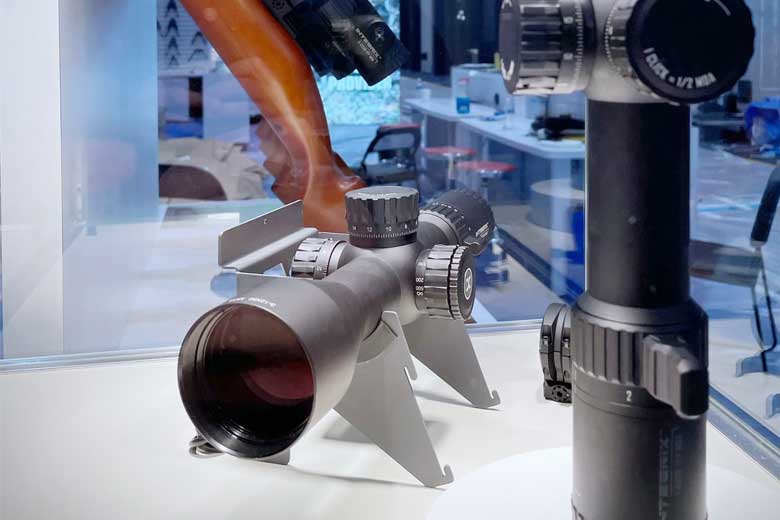
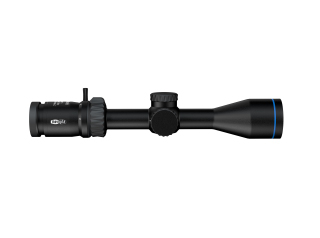
               A loaner Meopta MeoPro Optika6 was in my inventory and it provided a good fit for the power of the C2T with its 2.5 to 15 magnification. That can really make small objects look very large and clear plus the oversized zoom ring makes adjustments easy with its rubberized covering and very aggressive texturing. Meopta also includes a threaded throw lever that screws into one of four holes along the rim of the ring for fast adjustments. Extra screws are also provided to cover the remaining holes to keep debris from collecting in them. A side parallax adjustment knob having a smaller version of the aggressive texturing also eases dialing in a clear sight picture at various yardages. Speaking of clear sight pictures, this scope is made in the Czech Republic and they are renowned for their optical glass. Meopta is in its 89th year of making high quality optics, so it goes without saying you’d have a hard time finding an optic with better clarity, especially at this price point. Additional features include anti-reflective and hydrophobic coatings along with being nitrogen filled and waterproof. Aluminum caps having the same aggressive rubber texturing cover the windage and elevation turrets, which are adjustable in ¼ MOA very positive clicks. Zero can easily be reset using a coin or screwdriver once sighted in. This is a Second Focal Plane scope so the reticle remains the same at any magnification and won’t obscure a small target zone at high magnification. The reticle is a duplex type and other reticle options are available when ordering the scope. The scope also comes with lens covers connected by heavy rubber straps that hold them firmly on the scope; much better than the flimsy elastic cords used with some other lens covers. Its black matte finish blended perfectly with the finish on the C2T. Excellent glass with high magnification capability does come with a cost in weight so it did add 25 ounces to an 8.5-pound gun. Having the bottom six slot picatinny to attach a folding bipod to helped the overall weight be less concerning.
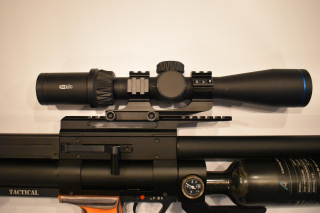
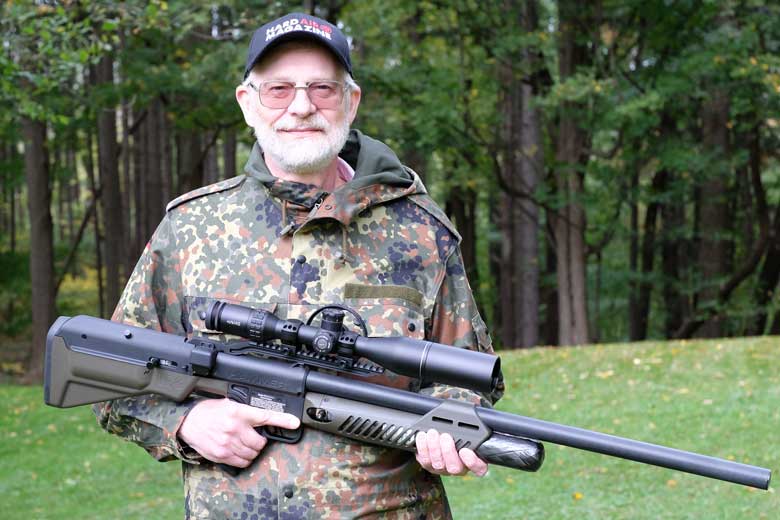
The Meopta Optika6 2.5-15x44mm scope mounted to the Cricket II Tactical

               As far as performance, as can be expected from an airgun in this price range, it was very, very good. The C2T is also a product of the Czech Republic and Europeans take their airgunning seriously. The guns action was smooth and I never experienced any feeding problems other than when I tried Predator Polymags. They were just slightly too long to work with the C2T magazines and there is no way to feed individual pellets. The safety was positive at blocking the trigger and easy to use being just above the trigger.

               I didn’t get the chance to determine a total number of shots per fill at 6000 feet altitude as I never let pressure go much below 200 bar. From 230 down to 200, shooting a variety of pellets of differing weights, I was averaging 30+ shots before topping off the gun. The User’s Manual states working pressure is down to 110 bar so it seems feasible you could get 90 or possibly more shots from a single fill. Accuracy results were excellent across a range of pellets at 25 yards. Pellet weights ranged from 14 gr. Up to 25 gr. hollow point slugs with results of five shots touching to pretty much a single ragged hole in a few cases. While H&N Field Target Trophy and Hatsan Vortex Supremes were not its favorites, they’d still get the job done if hunting with the C2T. Extreme spread and standard deviation were excellent with all of the pellets tried, opening up a bit when shooting the Argentinian-made Apolo slugs. Even so, the slugs traveled at an average 892fps having a 9.65 extreme spread and 4.12 standard deviation. For hunting that means over 44fpe!

               A shout out here has to go to the new Norma branded pellets provided by AofA. They just recently started carrying this line and I think they have a winner here. Packed 200 to a tin, they were very clean. The S-Target Match at 14 gr. is designed for accuracy, of course and has a slightly reinforced skirt. It lived up to the accuracy claim producing a ragged single hole grouping. The Superpoint Strike at 14.5 gr. is designed for penetration and was also super accurate. The Golden Trophy FT Heavy, designed for energy, weighs 17.6 gr. and this domed pellet is considered a dedicated hunting pellet. It produced five shots touching and over 41fpe having an extreme spread of 5.60 and standard deviation of only 2.23. I have some similar results through another gun as well so look forward to doing more shooting with them.

               All-in-all a great experience with a great little bullpup gun. I mentioned a couple of pet peeves with the C2T and after spending more time with it I’d prefer the grip thinned out somewhat for more comfort but by no means a deal breaker.

The Cricket II Tactical ready for work

               If interested in obtaining any of this kit or wanting to know more, give AofA a call.

The name “cricket” brings to mind small noisy insects and, depending on your age, a classic Disney character. The Czech Republic manufacturer KalibrGun may have intended a connection to either of those things when they named their awesome bullpup air rifles, or, maybe not. Nevertheless, their handy and compact pellet launchers are accurate and well-designed, plus of high-quality old-world craftsmanship.

               The Cricket is the flagship model and KalibrGun has stuck with a good thing in the bullpup configuration. More recent models have improved by relocating the cocking lever to mid-receiver. However, all manufacturers must innovate and come up with a new product to stay relevant. KalibrGun’s latest model capitalizes on the popularity of tactically designed (tacticool?) guns.

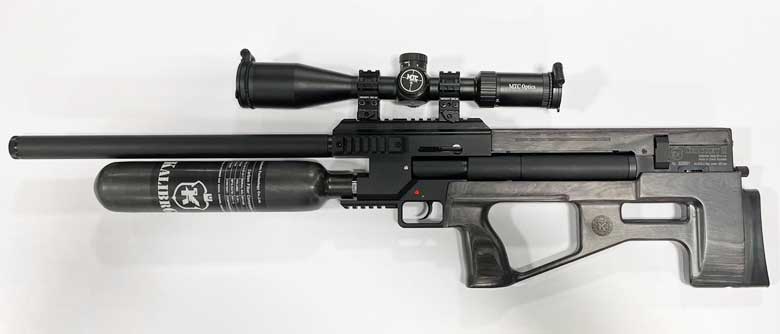
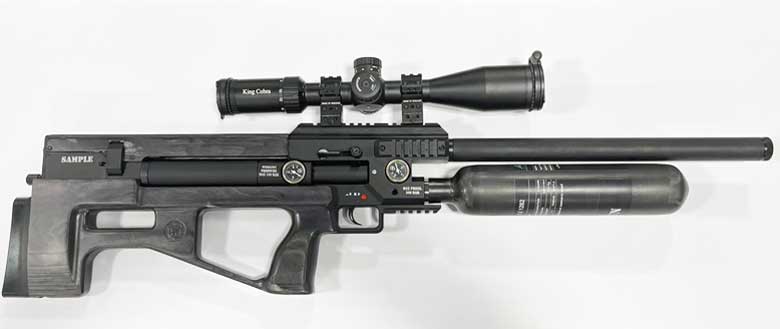
               The Cricket II Tactical models are offered in barrel lengths of 17.7-inch and 23.6-inch. The shorter version comes in .177 and .22 calibers. The longer version comes in .22, .25 and .30 calibers. My sample is the long-barreled version in .22 and has an overall length of 34 inches. It weighs 8.5 pounds, which is on the heavy side, especially when adding optics, but it does balance well in the hands even so. I selected a Meopta Optika 6 2.5-15x44mm second focal plane scope to mount on the platform, bringing the package to just over 10 pounds.

The KalibrGun Cricket II Tactical ready for business

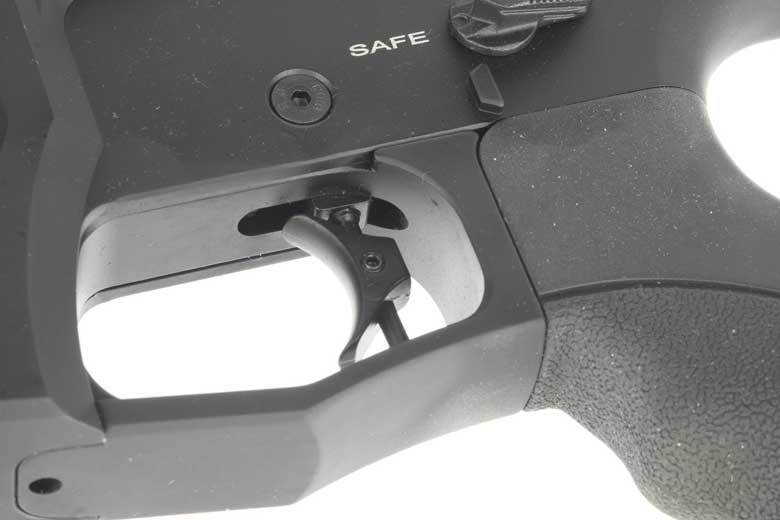
               The receiver is made from aluminum and finished in a matte black. Two laminated wood pieces comprise the vertical grip and buttstock. My sample sported a dual color orange and grey laminate that really stands out in a crowd. Solid wood and other laminate colors are offered, of course. The vertical grip also has a nice laser-cut checkering to promote a good purchase. Having fairly large hands I found the grip filling. Those with small hands may find it a bit too large and search for a potential aftermarket option. A thick, dense rubber buttpad that is adjustable vertically. A 500cc carbon fiber wrapped bottle resides in front, under the barrel/shroud with a large, easily readable manometer marked in bars. Maximum pressure listed in the full color instruction manual is 300 bar. Since the manual covers several models, there is a mention of red, yellow and green fields that don’t exist on this manometer. Additionally, no instructions are given on adjusting the trigger, yet the specs show it can be changed between 2 and 10 newtons (approximately 7 to 36 ounces). Speaking of the trigger, it is a curved, wide, smooth-faced plastic job that is single-stage and averaged a pull of one pound, 4.1 ounces. It is housed inside a generous open-bottomed trigger guard and just above the trigger is a red safety button that blocks the trigger. Pushing the button to the left unblocks it.

Magazine storage on the Cricket II Tactical

               Two 14-shot rotary metal magazines ship with the gun along with the brass fill probe and extra O-rings for resealing. The two magazines can be stored in the wooden buttstock and are held in place by ball bearing detents. An 8.5-inch picatinny rail sits on top of the receiver with an additional 4-inch accessory picatinny rail on the bottom. The barrel has a sound dampening shroud and the muzzle is threaded to allow additional suppression to be added, although this gun is pretty quiet in .22. Adding a DonnyFL Koi suppressor took the noise down to a mouse fart, but of course, added length. Still, it made for a nice-looking package.

               Features on this gun include a swappable cocking lever, now relatively common on air rifles, making the Cricket II Tactical model truly ambidextrous; and MCL, the Magazine Control Lever. This lever allows manual indexing of the magazine in addition to loading and unloading of the magazine. There is also a red-tipped cocking indicator that projects out of the back of the rifle. Pet peeves about the Cricket are the lack of a hold-open or bolt stop after the last round is fired and the magazines cannot handle longer pellets such as the Predator Polymags. Also, a soft padded surface on the cheekrest area included for the price would have been a nice touch. Cheekrest options are available from the AofA website.

Close up of fill port, safety and bottom picatinny rail

               KalibrGun offers a 12-month warranty, however, AofA extends that to three years. MSRPs are: $1695 for the shorter (45) model and $1795 for the longer (60) version.

               More about how it shot will be in Part II, but in the meantime, you can reach out to the knowledgeable folks at AofA for any questions or to talk about the other fine models in the KalibrGun lineup.

The Umarex Gauntlet 2 Is Now At AoA

The Gauntlet has been around for some years, so – now that the Umarex Gauntlet 2 is in stock at Airguns of Arizona – let’s look at the new model in some depth and understand how it compares to the original Gauntlet.

The Umarex Gauntlet 2 continues in the tradition of the original Gauntlet. It redefines the PCP air rifle market in terms of price/performance – again!

The original Gauntlet set the PCP world alight because of its combination of features, including  a consistent, regulated shot count at an unmatched price point.

First off – there’s the new stock color and design. It’s a lot more stylish in my opinion and uses many less small parts. The breech now has Picatinny rails for scope mounting, in line with the current trend. In fact, the breech IS the same as the original Gauntlet with the Picatinny rails mounted on top as separate parts.

The scope ring you can see in the photograph above is a UTG POI ring. They’re manufactured by Leapers and I find they give good results.

Now we have an even more oversized bolt handle. It’s steel and knurled to provide good grip for operation. Actually, it works very well.

But even with this larger bolt handle, the cocking effort for the Gauntlet 2 is very high. All Gauntlet models have the heaviest bolt action I’ve ever tested!

Why so tough to cock? Well, undoubtedly the design of the Umarex Gauntlet needs a heavy hammer spring to achieve its power levels. That hammer spring need to be cocked before firing and you supply the effort to tension that spring when pulling back on the bolt handle.

To be sure, it’s far from impossible to cock. And it’s something that the owner will become used to. It’s also slightly easier than the original version.

Most will likely find it a very acceptable part trade-off for the significantly increased power of the second generation Gauntlet.

The Umarex Gauntlet 2 Is Now At AoA

Furthermore, the Gauntlet 2 is available in .22 and .25 calibers only. There’s no longer a .177 model. This is not surprising as sales of .177 cal PCPs in the US market have become very restricted.

Note that this comparison is based on the .22 caliber Gauntlet. There are differences in specs between the .22 and .25 caliber models in both the “Gen 1” and “Gen 2” Gauntlets.

The regulator pressure for the .22 caliber gun has been increased from the original 1,100 PSI to 1,900 PSI. That’s an increase of 73%.

There’s also a different HPA bottle supplied with the Gauntlet 2. This offers a whopping 85% increase in capacity from 13 Cubic Inches of the Gen 1 model to 24 Cubic Inches.

Not only that, but the maximum fill pressure for the Gen 2 bottle has been increased, too. Now it’s up to 4,500 PSI from the original 3,000 PSI.

It’s an interesting commentary on the capability of the basic Gauntlet platform that it has proved to be capable of such significant power increases while still retaining the same overall design as the original Gen 1 model.

So what were the results?

Using mid-weight (13.43 Grain) .22 caliber pellets, the muzzle energy has jumped from 20.42 Ft/Lbs in the Gen 1 gun to 33.18 Ft/Lbs. That’s an increase of 62%.

The number of consistent shots per fill for the Gauntlet 2 fell by 16% (from 74 to 62). However, if we take the number of consistent shots and multiply it my the muzzle energy per shot for each gun, we find that there’s a 36% increase in the total muzzle energy obtained from one fill of HPA. As follows…

Gen 1 Gauntlet. 20.42 Ft/Lbs x 74 shots = 1,510 Ft/Lbs.
Gen 2 Gauntlet. 33.18 Ft/Lbs x 62 shots = 2,057 Ft/Lbs.

The Umarex Gauntlet 2 Is Now At AoA

As is expected from any PCP, the Gauntlet 2’s power level increases with pellet weight. Starting at the 30 Ft/Lbs level with ultra-light 10.03 Grain H&N Field Target Trophy Green alloys, it rises to over 45 Ft/Lbs with JSB 25.39 Grain Jumbo Monsters. Now we’re talking!

This is in .22 caliber, remember. So the Gauntlet 2’s 45 Ft/Lbs of Muzzle Energy matches that of the original Gauntlet in .25 caliber. That’s a significant increase in power!

Sure it’s well down from the power of a .22 caliber Daystate Red Wolf HP. And the sophistication of the Gauntlet is nowhere near that of the Daystate. But for a $410 PCP, it’s very creditable and – after all – it is about $2,400 lower in price than the Red Wolf too…

The Umarex Gauntlet 2 Is Now At AoA

There’s no doubt that the Umarex Gauntlet 2 is a large air rifle. Overall length is 47 Inches, which is longer than most PCPs. The all-up weight of the rig I tested was 11 Lbs 0 Oz, including the scope. This – in itself – is not exceptional. However the long front-mounted HPA tank brings the center of gravity well forward.

It’s manageable, but could be a tough proposition for smaller shooters to hold steady.

The new and improved stock design of the Umarex Gauntlet 2 does, however, allow for a bipod to be fitted. M-Lok slots are incorporated in the upper sides and base of the forend.

For testing, I mounted a bipod to a Picatinny rail adapter installed in the M-Lok slots. The result was solid and sturdy. This is another improvement compared to the original Gauntlet, which did not have provision for mounting a bipod.

Shooting from a bipod was found to be comfortable and stable. If you can, this is the best way to shoot the Gauntlet 2.

The Umarex Gauntlet 2 Is Now At AoA

Overall, the Umarex Gauntlet 2 gives you a ton of gun for the money – in every respect!

Power, accuracy and consistency were all outstanding in the sample I tested. The consistent shot count is good, too. Yes, the Gauntlet 2 is more expensive than the original Gauntlet, but it’s easy to see why, given this stellar performance.

Downsides are the sheer length of the gun, the muzzle-heavy weight distribution and the very heavy, rather rough bolt action. But – if you can live with these drawbacks – there’s nothing in the market today to touch the Umarex Gauntlet 2 for value.

It was great to get back to SHOT this year. Seeing old friends and wandering miles of aisles while experiencing sensory overload on all things gun related is always a fantastic time. A number of companies, both big and small, decided not to attend, which made the show floor seem somewhat deserted. In actuality, the show attendance was only down about 25% according to what I’ve heard. Even so, there were plenty of new airgun-related things to see despite dreaded COVID’s impact on these companies for two years. Just a few highlights are listed here to whet your appetite.

              Starting with my favorite purveyor at the show, AofA, (no money exchanged hands – honest!) they didn’t have a booth at the show, but KalibrGun did and a new semi-auto bullpup prototype was on display. In a tactical-looking thumbhole style laminated wood stock, it carries a 580cc carbon fiber tank. In .22, .25 or .30 caliber, t will have a fully adjustable trigger and allow adjustment of the hammer spring. The plenum volume is also adjustable from 38 to 53cc’s. The cocking handle can be swapped for left-handers. An option with a carbon fiber stock is planned as well. So new it had not been named, no pricing was available and I did not get info on the rate of fire.

Under the Western Big Bore brand, AofA also announced a carbine version of their .45 caliber game-getter. Another laminated wood stocked air rifle, this eight-inch shorter version will still be a powerful hunting arm, just much easier to field. A unique feature of this new version is that it will also shoot a proprietary arrow! Stay abreast of developments here.

              Speaking of arrow-firing capability, both AirForce Airguns and Umarex introduced new models this year. AirForce’s model comes in two flavors, a long version that shoots arrows and short version shooting bolts. Both utilize 4500psi tanks as shoulder stocks and are regulated to take the pressure down to 1500psi to launch the projectiles.

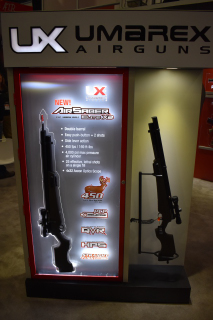
Umarex’s Air Saber EliteX2 display

               Umarex also showcased a twin barrel arrow launcher called the Air Saber Elite X2. It only launches one arrow at a time using 1500psi from its 4000psi tank. One fill provides 25 effective shots, sending the arrows at 450fps. A second generation of their Air Javelin, the Air Javelin Pro. It now uses HPA as opposed to CO2.

               In airguns, Umarex launched quite a few new ones, however, the big news was a 20-gauge HPA shotgun named the Primal 20. Utilizing a 4500psi tank it is capable of sending a 395-grain fin stabilized slug at 700fps, generating 430fpe. It comes with a removeable choke so other aftermarket chokes can be installed plus the side-cocking handle can easily be swapped for lefties.

               Beeman introduced a new version of the Chief II model – the Chief II Plus. The air tank was changed to 3000psi which should yield 100 shots-per-fill. Available in .177 or .22 in synthetic or wood stocks. A regulated Commander model is also new this year and sports a more robust rotary magazine with a shot-count window.

Beeman’s booth

               Benjamin introduced a new Bulldog model in .457 caliber. Having all the features of the .357 caliber version, it can fire 350-grain slugs at 760fps for 450fpe. As is the trend in airguns these days, its cocking handle can be swapped to accommodate left-handers. The Armada now comes in a semi-automatic version. It is housed in a chassis-style stock in .22 caliber only. Claimed velocities are 950fps.

Benjamin’s new semi-auto Armada

               Of course, other interesting airgun related items and accessories were also introduced at the show. Be sure to contact AofA if you come across something in particular as they probably are already aware of it and can hook you up with so many of the great things associated with this hobby/lifestyle.

The Benjamin Gunnar - A New PCP Worth Considering

I know what you’re thinking…

You’re looking to buy a quality PCP air rifle. You have a budget of about a Grand. Of course, you come to Airguns of Arizona!

Here you see quality PCPs from well-known brands like Weihrauch, Daystate and Brocock and more. Sure, most of them cost a little more than your budget – maybe $200 or $300 more. But, having got this far, you’re going to go all-in and swallow a few more bucks for a quality PCP.

Then you see the Benjamin Gunnar at precisely $999.99. What, a Benjamin for a Grand?

Sure the Marauder has built-up a great reputation over many years, but that’s half the price. But that Gunnar sure looks interesting. Hmmm…

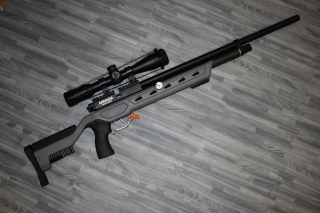
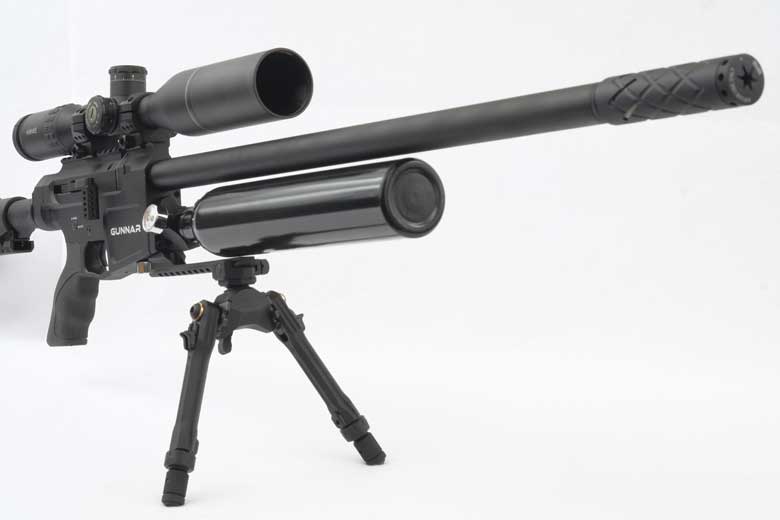
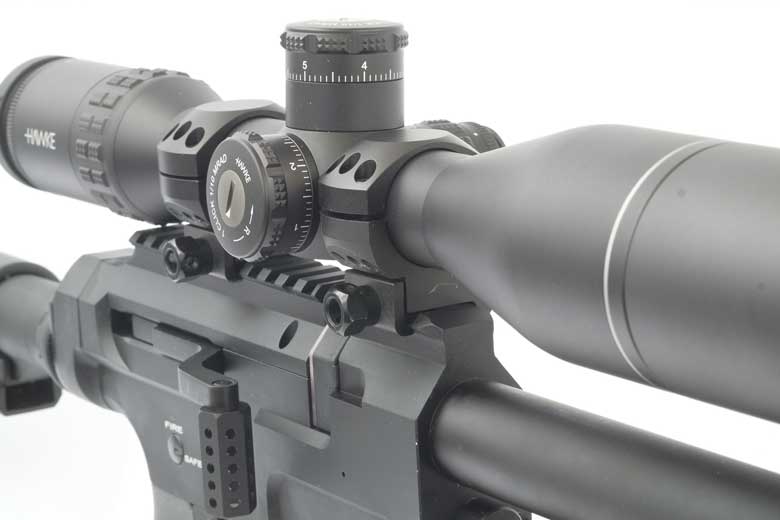
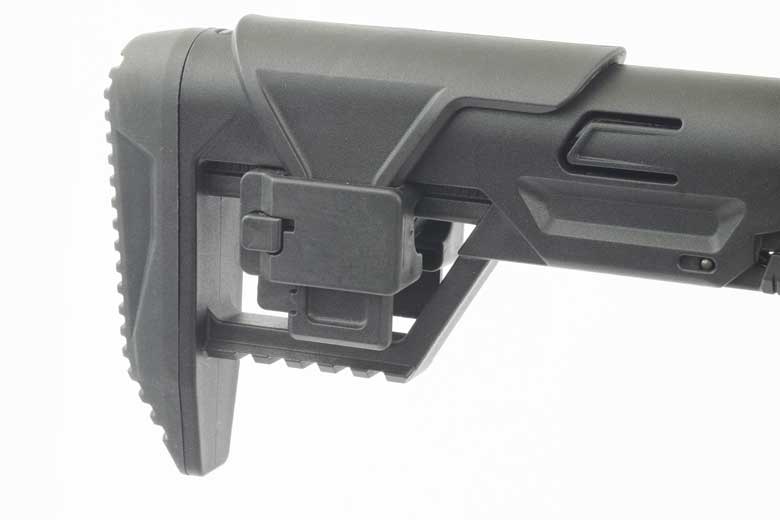
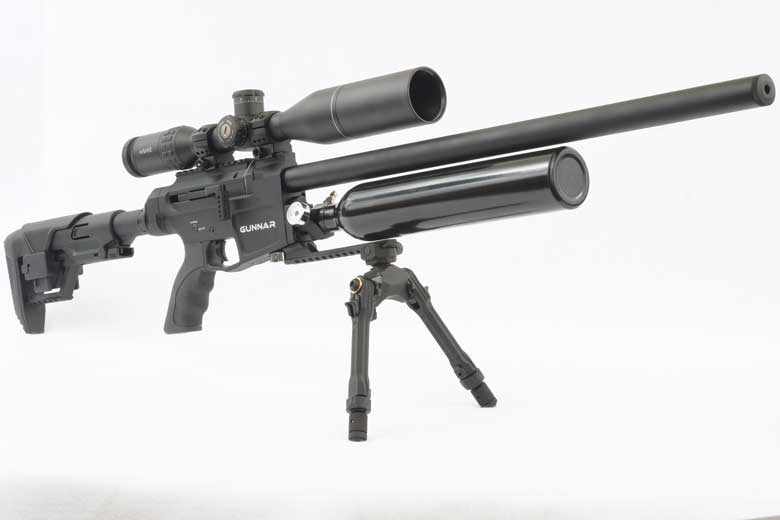
And yes, the Gunnar is an interesting air rifle. It has the now-familiar “black gun” look about it, with an AR15-style one piece receiver, pistol grip and collapsible buttstock. It’s available in the current “must have” calibers of .22 and .25, too.

I’ve been shooting it and can report that it is a pleasant air rifle on the range. In .22 caliber, I’ve seen a very fair muzzle energy of 33.6 Ft/Lbs when shooting 25.39 Grain JSB Jumbo Monsters, together with 10-shot, 50-Yard groups of around 1-Inch when shooting un-selected JSB pellets of various types.

There’s not much wrong with that. So let’s look a little closer.

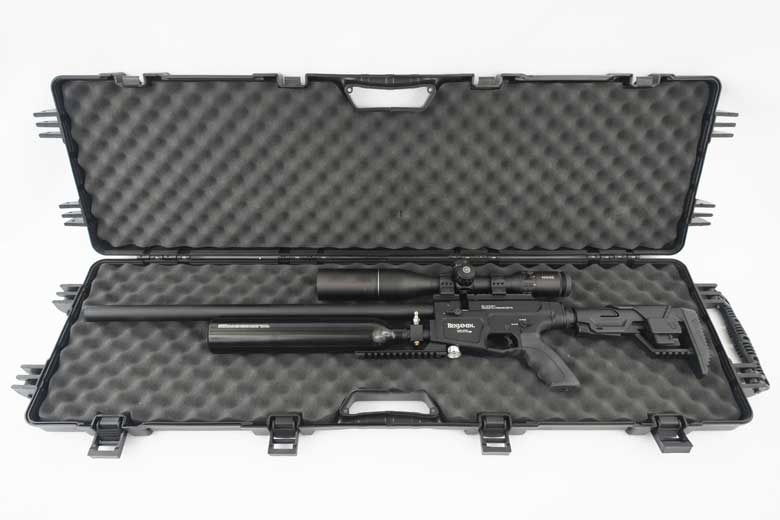
First impressions are definitely positive as the Gunnar is supplied packed in a heavy-duty synthetic carrying case. This case has side and end handles. It also has wheels, being suitable for dragging across solid surfaces like concrete.

The Benjamin Gunnar - A New PCP Worth Considering

That robust case will protect the Gunnar on its’ journey to you. And that’s a not insignificant benefit. It’s also large enough to hold the rifle with a substantial scope mounted on it. Sadly, that’s not always the case with other cases that are bundled with air rifles.

You’ll need to collapse the Gunnar’s multi-length AR-style stock to fit in the case, but that’s no real hardship.

The Benjamin Gunnar - A New PCP Worth Considering

The Gunnar has a large, alloy HPA tank that promises a good shot count.

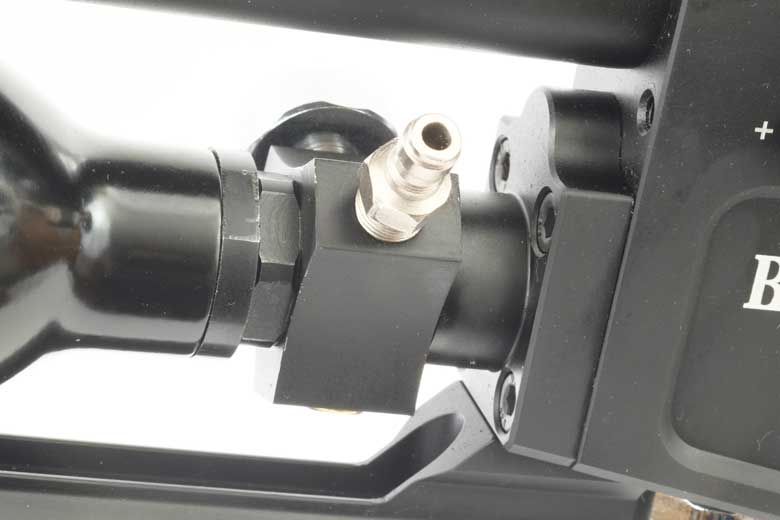
The regulator is built-in to the tank assembly, rather than being integral to the receiver. However, the gun has to be de-gassed and the tank assembly removed and disassembled to adjust the regulator setting.

One secret benefit of this is that the “V block” holding the pressure gauge and quick disconnect fill nipple can be re-assembled with the gauge facing the opposite side, should that be more convenient for the user.

There’s a solid, two-piece Aluminum receiver. This provides a substantial housing for the trigger, hammer, valve, safety, bolt and and cocking mechanism. There’s also a front, underside Picatinny rail. Many shooters will want to install a bipod to this rail.

In front of the trigger, there’s a gauge showing the regulator output pressure. Surprisingly – perhaps – for 2022, the HPA tank fills to a moderate 3,000 PSI. The regulator is set to approximately 1,500 PSI when received from the factory.

The Benjamin Gunnar - A New PCP Worth Considering

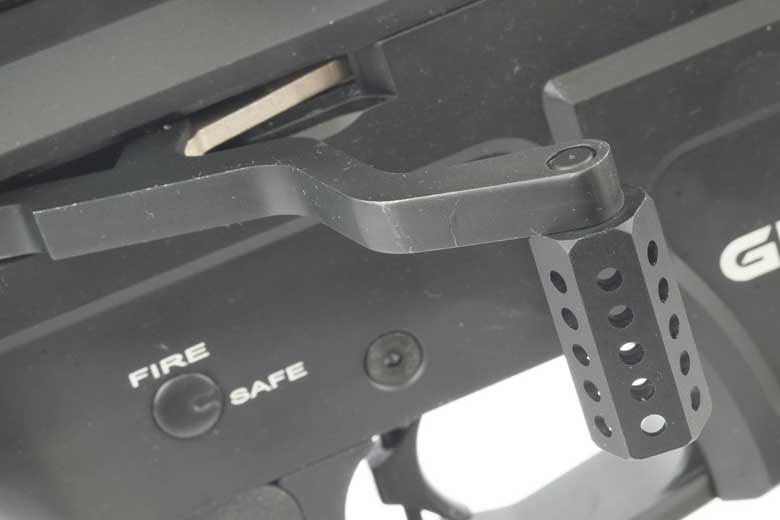
Bolt operation is courtesy of a smooth sidelever mechanism. Two magazines are supplied with each gun.

The .22 cal mags hold 12 shots. In .25 caliber, it’s 10. They’re somewhat different to the traditional Marauder magazines – but the loading principal is the same.

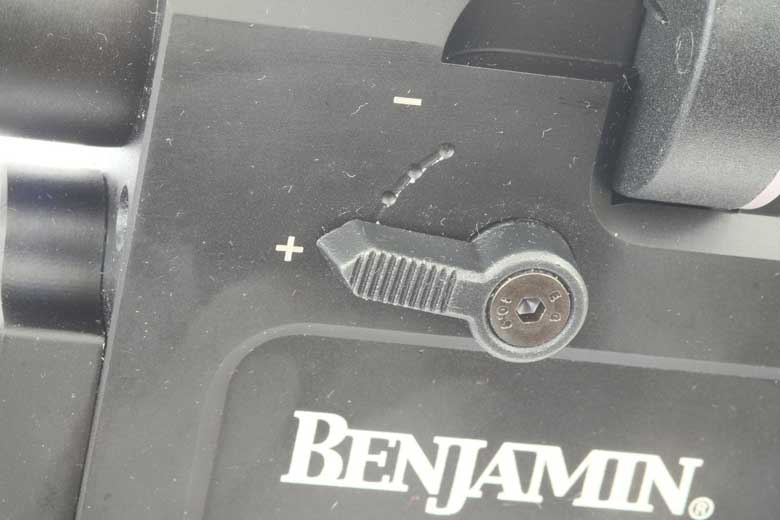
The obligatory power-adjustment control is located on the left side of the receiver. This works by varying the size of the transfer port. The power control lever is provided with 5 positions.

But note that there’s no hammer spring adjustment capability on the Gunnar.

I used the top Picatinny rail to mount a Hawke Sidewinder 30 SF 4-16 x 50 scope. There’s a clear design benefit here as the magazine does not project  above the Picatinny rail. This allows a low scope height to be attained which many shooters will find to be a good thing.

Pistol grip and buttstock are AR-compatible units. The pistol grip is pleasantly grippy.

The Benjamin Gunnar - A New PCP Worth Considering

The buttstock is multi-length adjustable. The cheekpiece is also adjustable: not only for height, but also for position along the stock’s length. This is a pretty high-end buttstock!

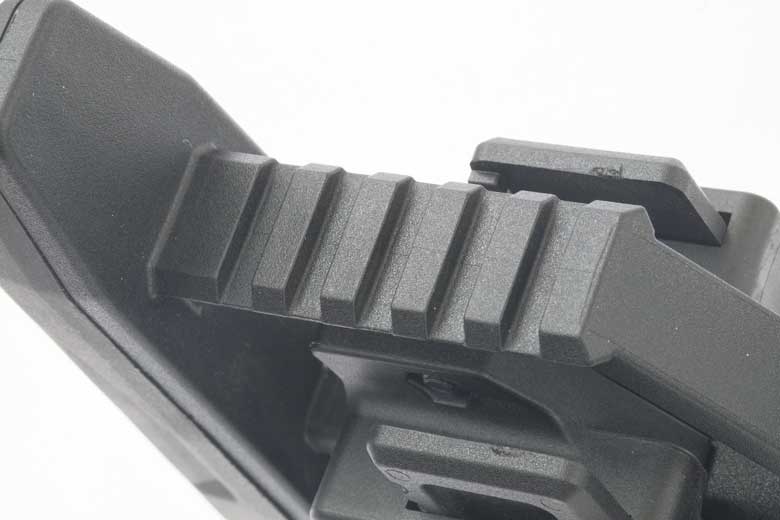
Indeed, there’s also a third Picatinny rail on the underside of the stock. This can be used for mounting a monopod for benchrest shooting.

The barrel is fully-shrouded. However a replacement shroud end cap is also supplied with the gun. This can be screwed-into the end of the shroud to allow a moderator to be added, should extra quietness of report be desired. I installed a 0dB unit, of course.

The Benjamin Gunnar - A New PCP Worth Considering

So there’s a lot of positives in the Benjamin Gunnar.

If you talk to the knowledgeable staff at AoA, they’ll be able to tell you more, including the fact that AoA is offering a special of free shipping for a limited time…


SIG SAUER P320 M17 Air Pistol

Airguns of Arizona is usually regarded as an outstanding supplier of “serious” – make that expensive and often PCP – airguns. But the company actually sells airguns of all types – including “fun pistols”

It’s such a fun pistol that we’re looking-at today. The SIG SAUER P320 M17, in fact.

SIG is unusual in that many of their CO2-powered centerfire replica air pistols are pellet-shooters. True, they do have some BB-firing models, but their specialty is pellet pistols.

SIG SAUER P320 M17 Air Pistol

SIG’s air pistols are almost all CO2-powered versions of the company’s centerfire models. That’s the case also with the P320 M17.

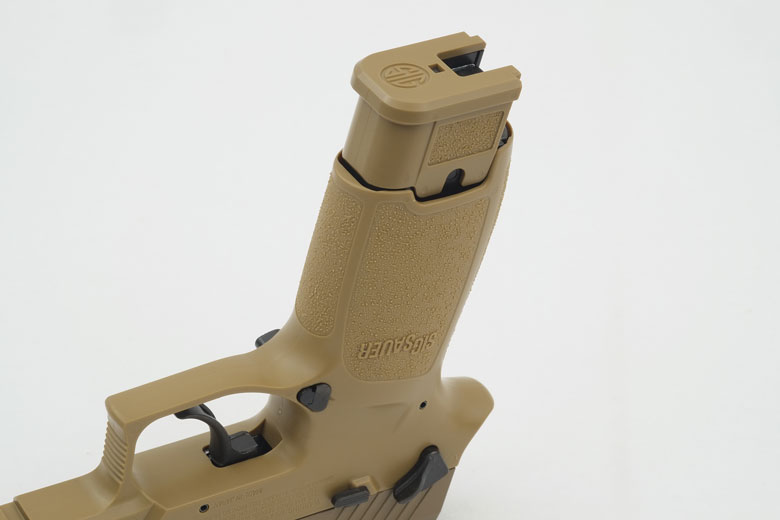
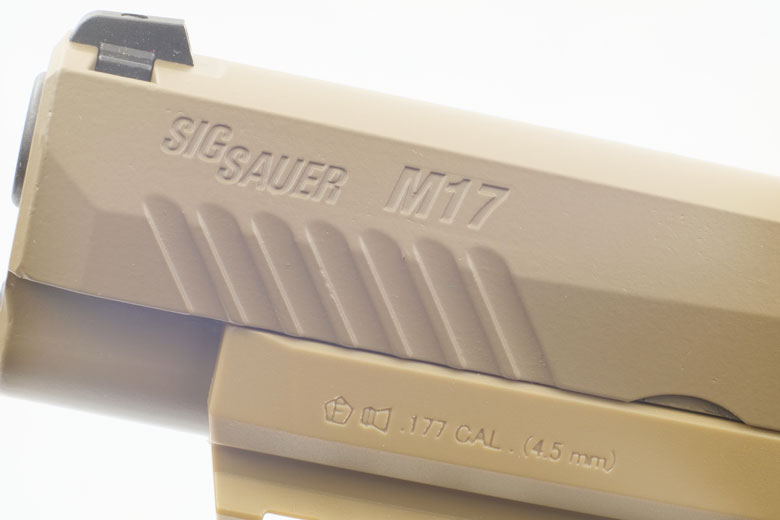
You see, the SIG Air P320 M17 air pistol is a remarkably realistic version of the US Army P320 M17 service pistol. Length, width, height and weight are all identical – or almost – to the centerfire original.

SIG sets high standards throughout the organization and its products. It’s clear that this is the most realistic pellet pistol that they have introduced to date. It’s thus ideally-suited for the training role that the company sees  as a key value proposition for its airgun products.

The P320 M17 air pistol features a fully-functional ambidextrous manual safety – a first for a SIG Air pistol and an exact match to the firearm.

There’s also a functioning takedown lever. Unlike previous SIG pellet pistols, the M17 can be field-stripped, which will please many people.

SIG SAUER P320 M17 Air Pistol

The drop-free magazine release is not ambidextrous. But this is a relatively small difference from the centerfire M17.

The overall appearance of the sights is very realistic. However, it’s true that that sights do not offer the night vision capability of the military firearm. Nor are they adjustable. This means that we need to be creative if your sample doesn’t shoot exactly to the point of aim.

One alternative would be to mount a small laser on the Picatinny rail and make aim corrections using that. This is a Leapers UTG LS200 Red Sub-Compact laser. As you can see, it fits onto the P320 M17 air pistol very conveniently.

Another is the the SIG M17 Pellet Pistol Reflex Sight.

This is a huge asset to the M17. It provides elevation and windage adjustment capability, combined with multi-brightness control of the projected red dot. It’s delightfully small and light and makes accurate shooting the M17 so much more enjoyable!

SIG SAUER P320 M17 Air Pistol

SIG claims that the P320 M17 air pistol is a perfect tool for M17 firearm owners to practice with and stresses the similarity to the firearm. I agree.

The manufacturer also claims a Muzzle Velocity of “up to 430 FPS” – depending on temperature and other environmental considerations. Unfortunately, the maximum FPS achieved by the P320 M17 air pistol I tested was just 310 FPS, with 5.56 Grain alloy pellets.

Now it’s true that this was recorded in a cool – 62 degree F – test range in up-state New York. It’s also true that the Muzzle Velocity for CO2-powered airguns varies by about 2 FPS per degree F temperature change.

However, even if the range temperature had been 92 degrees F in sunny Arizona, the test gun would have only achieved a maximum of 370 FPS. That’s the 310 FPS at 62 degrees + (30 degrees difference x 2 FPS) = 370 FPS.

Actually, a maximum of 370 FPS would still be a pretty good muzzle velocity for a CO2-powered air pistol. But it’s still 60 FPS short of the claim.

Is that a big deal? For most people who plan to use the P320 M17 air pistol for practice and punching holes in paper, the answer is “no”.

The P320 M17 air pistol I tested showed very good accuracy. The gun was certainly “minute of soda can” accurate at 6 Yards.

However, there was a clear tendency for the pellets to strike slightly to the right of the bull. This was not an issue at 6 Yards, however the group dropped down and to the right on the 10 yard target.

Accuracy was quite consistent with all the pellets I tried. The RWS Hobbys performed marginally best however, so these were shot at the longer, 10 yards range.

Although to pellets struck low and right at 10 yards, they were still within the “minute of soda can” – just not exactly in the right place! Overall, this was a very creditable performance and with one of the add-on sights you could easily be “spot on”.

The SIG P320 M17 air pistol offers a very realistic-feeling blowback, particularly with a new, full, CO2 cartridge. Felt recoil is surprisingly strong, another big improvement over previous SIG non-blowback pellet pistols.

One complaint is that the slide does not hold back after the last pellet has been fired. This is not unknown among CO2-powered replica firearms, however.

The trigger is double-action only and has a rather long pull. The pull weight of the test gun was rather heavy at an average of 9 Lbs 8 Oz.

Both pull weight and length are clearly related to the pellet feed mechanism. It is the trigger pull which advances the next pellet into battery for firing, rather than the slide recoil. So technically, the M17 is actually a revolver!

However, the pull itself felt consistent and predictable.

SIG SAUER P320 M17 Air Pistol

My SIG P320 M17 air pistol gave just over 60 shots before the Muzzle Velocity fell below 200 FPS. This is around average for a CO2-powered air pistol with strong blowback.

However, I kept firing and eventually achieved 80 shots before the gas was completely exhausted. That’s a very good count for a blowback air pistol, although the FPS for the final magazine’s contents was very low.

The CO2-loading system employed in the M17 is – in my opinion – the best there is at the present time.

SIG’s cam lever system is simple, easy and quick. There’s no screws to turn and no unsightly levers hanging down below the magazine. There’s no need for an Allen (hex) wrench either and no issues if that wrench were to become lost.

SIG SAUER P320 M17 Air Pistol

Incorporating the cam lever system into the magazine itself is also a significant operational improvement compared to having it located in the frame, as with some previous SIG models.

As with any replica air pistol – both BB- and pellet-firing, loading the ammo is actually the longest task of preparing the P320 M17 air pistol for shooting. But the new, 20-pellet magazine is really quite convenient to load. It also has no need for the owner to hold down a spring-loaded follower, as can become tedious with some BB pistols.

So if you’re looking for some fun plinking, or some serious training action for a centerfire P320, the SIG P320 M17 air pistol could be just what you’re looking-for.

And at $119.95, it’s not exactly going to break the bank!

2022 SHOT Show Report - New Cricket Semi-Auto And More...

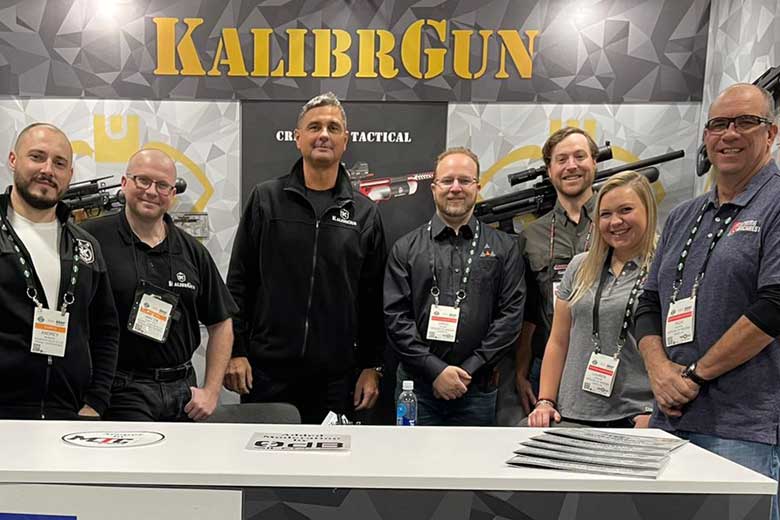
Those happy faces above are the combined KalibrGun and AoA teams at KaliberGun’s Booth at the 2022 SHOT Show. And they had plenty to smile about, as you can see…

The biggest news was the appearance of a prototype semi-auto Cricket! Although there’s understandably no specifications available yet, this new model is clearly a development of the recent – and highly-rated – Cricket 2 Tactical.

2022 SHOT Show Report - New Cricket Semi-Auto And More...

The give-away for the semi-auto action of this new Cricket 2 is the straight-pull cocking lever on the side of the receiver. There’s no sidelever cocking here!

2022 SHOT Show Report - New Cricket Semi-Auto And More...

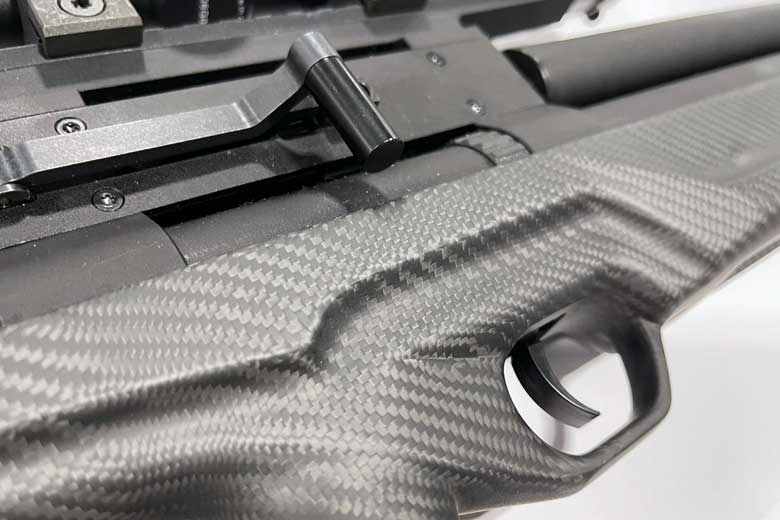
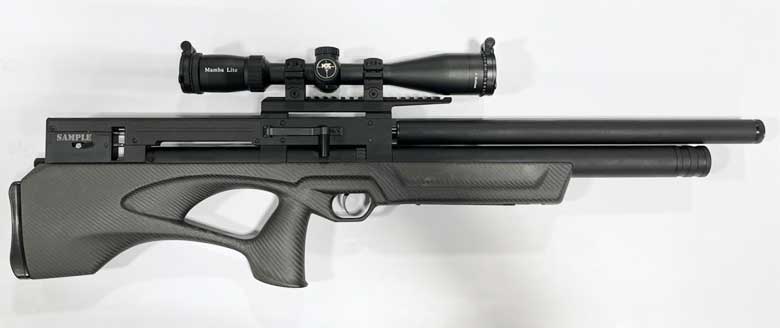
But KalibrGun innovations don’t end there. Another highlight was carbon fiber stocks for Cricket models. I had not previously heard of a completely carbon fiber-stocked air rifle before. But KalibrGun have done it…

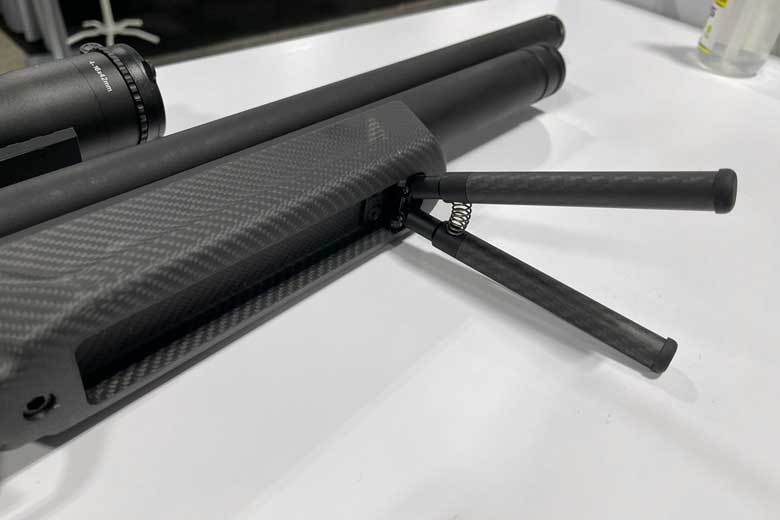
Carbon fibre stocks will be available in future for both Cricket and Cricket 2 Tactical models. They’re extremely light, durable and practical. They also look great!

It’s important to note that these stocks are build entirely of carbon fiber. They’re not just carbon-fiber-wrapped, as is often the case.

KalibrGun have also taken the opportunity to incorporate a bipod into the forend. Very neat!

The Cricket 2 Tactical was being shown with a stylish laminated wood stock that sets off the design very nicely, too.

In fact, the laminated wood stocks for the Cricket 2 tactical are planned to be available in multiple colorways, including blue, green and orange. They also include a monopod in the rear buttstock for additional stability in benchrest shooting.

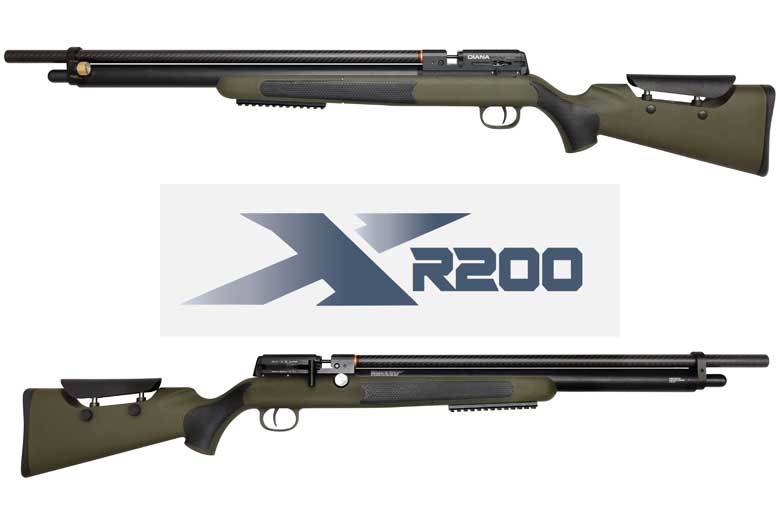
Another air rifle you may expect to find at AoA in future is the new Diana XR200.

The Diana XR200 is the first model in what is promised to be a whole new range of PCPs. It’s made in Germany and is being shown for the first time at the 2022 SHOT Show.

The XR200 certainly is an interesting air rifle! It has some new and unique features, together with an impressive range of features. It’s to be available in four calibers: .177 cal, .22, .25 and .30 caliber.

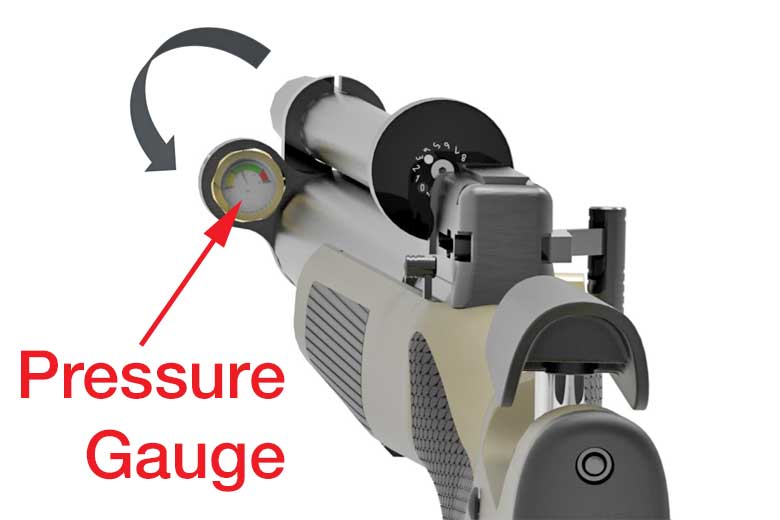
One obvious feature is the position of the HPA pressure gauge. This is at the front of the pressure tube, however it faces backwards – towards the shooter – and is rotatable to be visible from either side of the gun. A big benefit here is one of safety: it’s not necessary to look down the barrel of the gun to read this gauge!

The Diana XR200 will be available with German Lothar Walther barrels. There’s also the option of polygonal barrels and slug-optimized barrels.

Diana has also taken steps to make the XR200 slug-friendly by having very deep magazines. These are able to accept slugs of up to 16 mm length, says the company.

Of course the XR200 is regulated. An Altaros regulator is included for consistent shot count. It’s adjustable and there’s a pressure gauge on the right side of the action to display the regulator setting.

Airguns of Arizona has long recommended and sold UTG scopes from Leapers. So it’s likely that they will also offer this new range of scopes…

At the 2022 SHOT Show Leapers celebrated both the launch of the Integrix scope line and the 30th anniversary of the company which – in the best American style – was founded by owner David Ding in his garage back in 1992.

Intergix riflescopes are developed, designed and manufactured completely in-house by Leapers. They’re the product of years of market research, design and engineering. With Integrix, Leapers is aiming to challenge the best scope makers at the top end of the market!

On show were Integrix 3-18×44, 3-12×56 and 1-8×28 scopes. Each is available in both First Focal Plane (FFP) and Second Focal Plane reticles. All include ultra-premium optical glass from internationally-famous glass founders Schott and Ohara as part of the goal to achieve top image quality.

I understand that Integrix scopes will start shipping in late Spring/early Summer 2022. So they’ll be here soon!

If you have an affection for older airguns, whether it is because you have been around long enough to have actually owned or admired one in your youth, or simply appreciate the lines and mechanics, you may have the need one day to have it restored. Should that be the case, I would like to put in a shameless plug for my friend Tim Smith of Smith Airgun Repair. Tim is the editor and publisher of Airgun Hobbyist magazine, yet still finds time to run Smith Customs and the repair business with the able assistance of his wife Sue. I’ve known Tim for over a decade, yet had not approached him until recently about restoring one of the old, dilapidated specimens I picked up at either a garage sale or gun show somewhere. I decided it was high time to pull the trigger (see what I did there?) on putting the Crosman V-350 in my possession back into shooting shape.

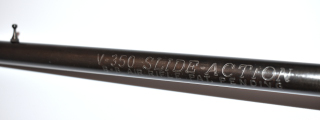
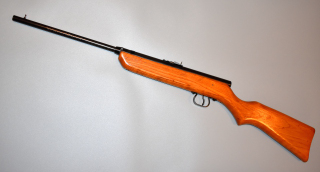
               Crosman introduced the V-350 single-shot, Slide Action Barrel Cocking (aka: push-barrel) BB rifle in 1962 when the company was just getting into spring-powered airguns. Up until this time they had been producing CO2 and pneumatic guns since beginning operations in 1923. It was based on an old Quackenbush design and held 22 BBs. It continued production virtually unchanged until it was discontinued in 1969, by which time over a quarter million units had been made. The V-350 was modified with some improvements in 1969, including a Monte Carlo stock, and redesignated the Model 3500, which carried on production until 1975.

A close up of the barrel markings on the newly reblued barrel

               The V-350 was in pretty rough shape when I sent it to Tim and Sue. The stock was beat up and most of the bluing was gone and there was some rust pitting on the barrel where the shooter grabbed it to push the barrel back into the receiver in order to cock it. It was also missing its front sight and was basically a mess that needed some tender loving care.

               After sending the air rifle off, I put it out of my mind as I was in no particular hurry and expected it would be at least a couple of months before I would be getting it back. To my surprise, after just three weeks it was on its way back to me. I couldn’t believe the transformation and to say I was pleased was an understatement. Not only did it look good, but it was a shooter again and shoots very accurately, for a smoothbore, out to about 30 feet. A complete breakdown of the replaced parts and labor costs is provided on your receipt. Of course, labor accounts for the majority of costs involved and the V-350 will become a wall-hanger, no doubt, since it has more nostalgic value to me than dollar value as a collectible. And, even though it has been professionally restored, the actual collectible value is less than what I have into it. However, if you have a valuable old airgun that you would like to have restored, reach out to Tim and let him know what you have to determine if he can do the work and come up with a cost estimate. He can be reached at: info@smithairgunrepair.com.

I neglected to take a “before” picture, but please take my word for it that this airgun was in sad shape.

               Additionally, if you are into vintage airguns, be sure to check out AofA’s available inventory of used and collectible airguns on their website which can be found here. Bookmark the page and refer to it often if you don’t see what you are looking for as they purchase collections, attend airgun auctions and accept trade-ins on purchases, so the available items change often.

The Umarex Hammer - A Big Bore With An Unique Benefit!

The Umarex Hammer .50 Cal was a long time coming. But now it’s here and working!

At AoA’s price of $849.99, the Umarex Hammer .50 Cal can’t be beaten in terms of power for price. If you’re in the market for an air rifle to hunt big game at the lowest price, the Hammer is the obvious choice.

The Hammer provides a combination of uniquely-outstanding performance and somewhat unusual quirks. I found that it’s VERY ammo-sensitive. Michail Kalashnikov would definitely not have approved of this design!

But keep reading, there are some real benefits too…

The Umarex Hammer - A Big Bore With An Unique Benefit!

First The High Points

Accuracy was very good indeed!

Given the design of the Hammer and its intended use solely as a hunting tool, I specified only two-shot groups when testing the gun. Why use two shots? Well the Hammer has a 2-shot magazine, so I wanted to see how it performed in a “rapid follow-up shot” situation.

At 50 Yards, using Umarex 320 Grain SLA bullets, accuracy was 5/8-Inch CTC for two shots. That’s definitely better than required for successful big game harvesting.

At 25 yards, Both shots went through the same hole!

The Umarex Hammer - A Big Bore With An Unique Benefit!

For testing, I did not have access to the 550 Grain bullets that give the Hammer its’ claimed 700 Ft/Lbs muzzle energy. However, I saw a maximum Muzzle Velocity of 889 FPS with 320 Grain slugs. This represents a muzzle energy of 561.7 Ft/Lbs. This is a powerful air rifle!

The trigger of the Hammer I tested by had a rather long, and rather creepy pull. However the Umarex Hammer .50 Cal is not intended to be a target rifle. It’s a hunting gun and the trigger is perfectly usable for this task.

Trigger pull weight was also acceptably consistent. The average was 2 Lbs 13 Oz.

Next, The Unique Benefit

The Hammer .50 Cal is unique as the only regulated big bore airgun. Umarex claims that three full-power shots are available from one 4,500 PSI fill of High Pressure Air.

The Umarex Hammer - A Big Bore With An Unique Benefit!

But as the Umarex Hammer .50 Cal I tested used 600 PSI per shot and the regulator is set to 3,000 PSI, it’s clear that – even when fully filled – the gun will give just two full-power shots per fill. The third will have – at most – 2,700 PSI to work with. As this is below the regulator set pressure, it will – therefore – generate a lower velocity.

So, the Hammer I tested gave just two really consistent full power shots per fill. However, two consistent shots is better than any other – unregulated – big bore out there, so this is a big benefit for the Hammer.

The Umarex Hammer - A Big Bore With An Unique Benefit!

Another benefit for the Hammer is that those two FULL POWER shots are also available even when filled from a tank that only has 4,200 PSI inside.

In testing for this review, I was able to achieve no less than 14 full power shots from a 550 Cu. Inch tank with a starting fill pressure of 4,500 PSI. I filled the gun multiple times before the tank pressure fell to 4,200 PSI.

So, if you want to shoot a significant number of full-power shots in a day with a big bore airgun without having a portable compressor, booster pump or additional HPA tanks available, the Hammer is unique. There’s no other big bore that can match this performance!

But There Are Some Downsides…

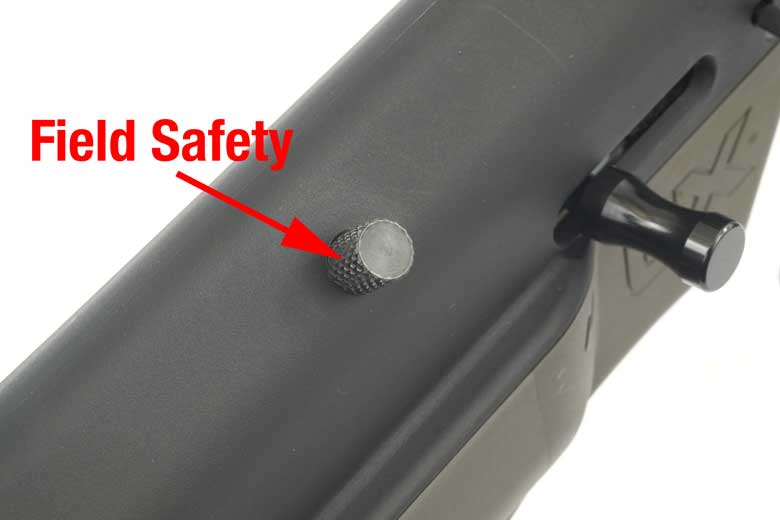
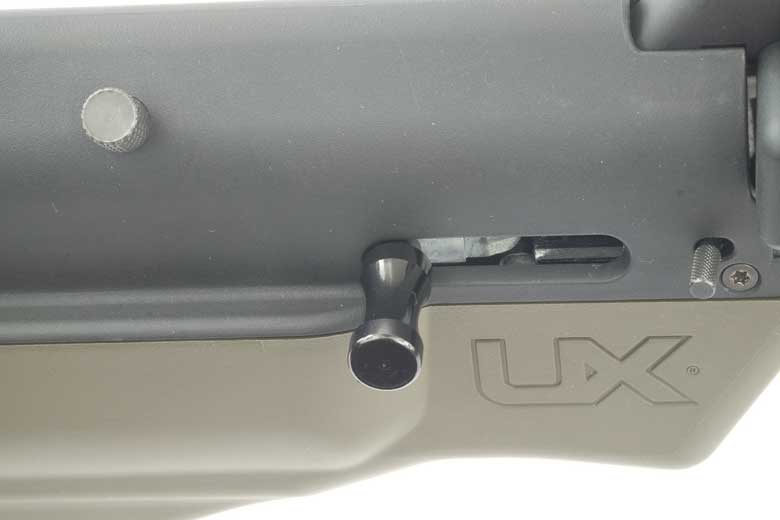
With no less than three safeties, this is a complicated airgun to use. So it’s mandatory to read the Owner’s Manual before operating. But once you understand the workings, it’s not so difficult to shoot and handles surprisingly well.

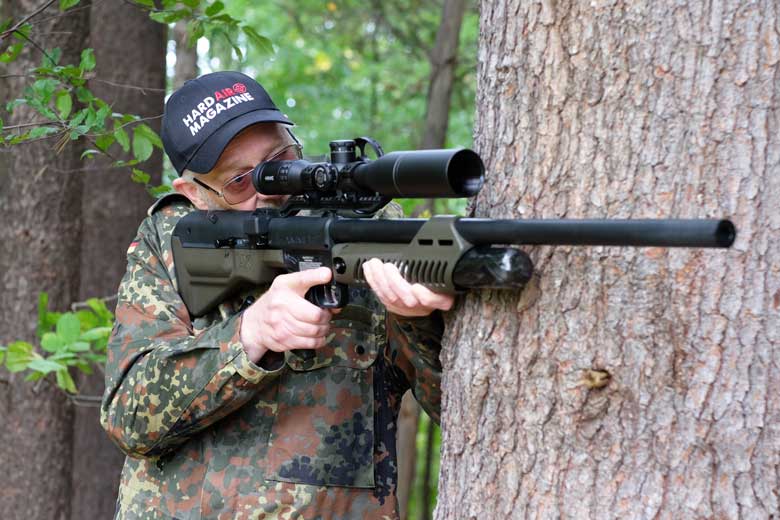
The position of the Field Safety is fine for use by right-handers. However, it’s a pain for left-handed shooters as it’s located exactly where the cheek rests.

The Umarex Hammer - A Big Bore With An Unique Benefit!

During testing, I experienced a couple of misfires when shooting the Hammer. However this was traced to operator error. I was being too gentle with the bolt handle!

Yes, it does say in the Hammer’s Owner’s Manual that the bolt handle must be pushed “ALL THE WAY FORWARD”. It fact, the bolt handle needs to be pushed all the way forward with a fair amount of force to ensure that it’s correctly engaged. Once I understood that, the gun worked correctly.

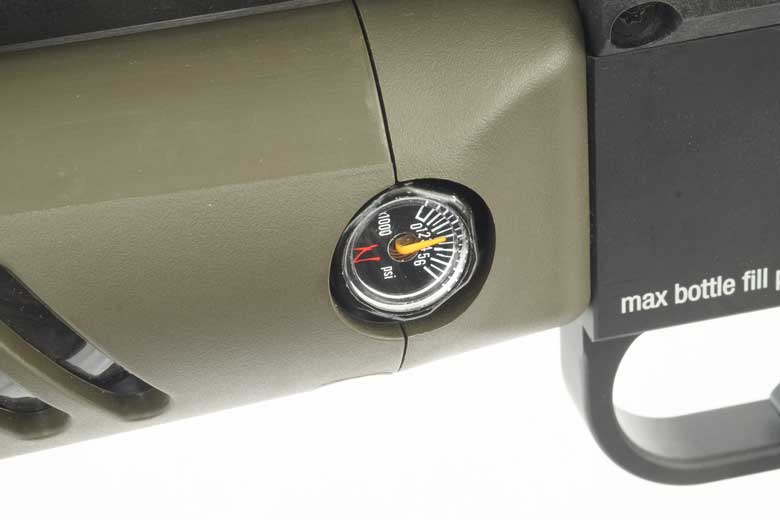
Also the Hammer uses a Ninja Paintball regulator and pressure gauge. In my opinion, this gauge is extremely difficult to read accurately. The graduated angle on the gauge plate is too small, the maximum indication (6,000 PSI) is too high and there’s no red warning section to advise that the HPA bottle is being overfilled.

In addition, the Hammer Owner’s Manual indicates (with a rare degree of honesty) that the gauge has an accuracy of +/- 10%. That’s a full 450 PSI either way at the full 4,500 PSI fill pressure!

The Umarex Hammer - A Big Bore With An Unique Benefit!

So I agree wholeheartedly with the Owner’s Manual. When filling the Hammer, do not rely on this built-in gauge but consult the more accurate and larger gauge on the HPA tank or compressor being used to fill the gun.

One additional issue with the Umarex Hammer .50 Cal is also covered well in the Owner’s Manual. This is the considerable blast of air that emerges from around the magazine well when the gun is fired!

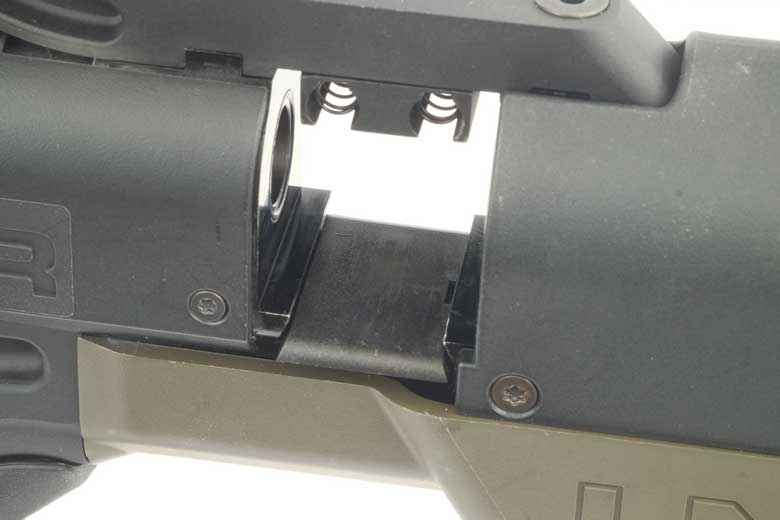
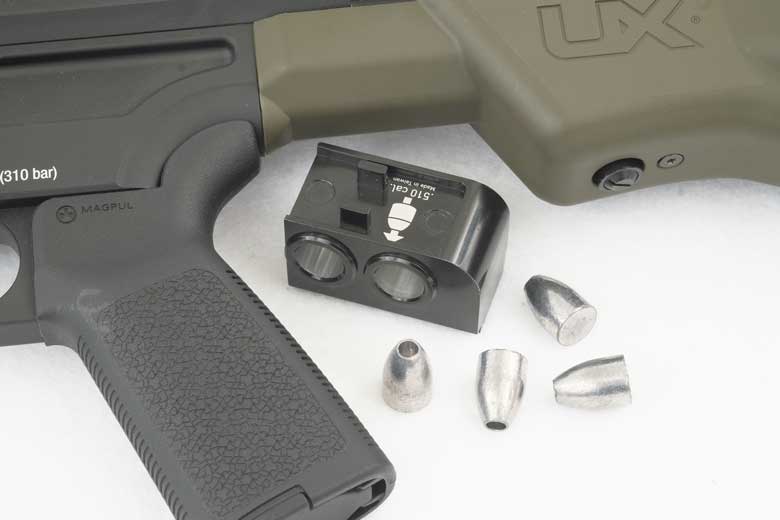
Because it has no conventional bolt, the Hammer fires slugs directly from the magazine. They “jump” across to the barrel at the moment of firing. The magazine is a close fit in the magazine well, but there are no seals, so air escapes from all around the magazine when the gun is fired.

The Umarex Hammer - A Big Bore With An Unique Benefit!

In fact, a surprisingly large amount of 3,000 PSI air is expelled in this way when the gun is fired. You definitely do not want your hand or face in the way – or even to be next to the gun!

This means that fit of the slug (or bullet) in the magazine is extremely critical. Too loose and the slug can fall out of the magazine. Too tight and it will not load fully into the magazine.

Importantly, the difference between “too tight” and “too loose” is very small. This would have upset our Mikhail!
The Umarex Hammer - A Big Bore With An Unique Benefit!

The diameters of the chambers in the magazines for the Hammer I tested measured 0.507 Inches. So, .510 caliber Umarex SLA ammo is – in theory – 3 Thou oversize. This allows the slug to be pushed into the magazine without too much force, yet there’s enough swaging effect of the ammo for the slug to be an appropriately-tight fit into the magazine.

In fact, the base of the SLA slugs measured a consistent .509 Inches diameter. They inserted perfectly into the magazine – all except one which measured .511 Inches. That did not.

The additional 2 Thou made all the difference. There’s a very fine balance here between ammo that works and that which doesn’t!

Yet if you are prepared to select or size your slugs carefully, the Hammer does deliver – very well. The AoA team will be pleased to help you decide if this is the big bore for you.
There are a lot of scopes on the market today. Some good, some junk and then there are the quality scopes that deserve a shot at being the next scope on your favorite air rifle. Generally, the scopes coming out of Europe would fit that bill as some of the best lenses have come from that part of the world. Meopta is a Czech Republic company that has been in business since 1933 producing quality optics. They also are a leading manufacturer and partner to many of the world’s finest optical brands and their catalog even reaches into the semiconductor, medical aerospace and military industries.

The sample provided to me is their MeoPro 2-10×42 model, one without all the bells and whistles in order to compete with lower-end scopes on the market without sacrificing quality and value. Others in this Optika5 line include a 3-15x44mm, a 4-20 x44mm and 4-20x50mm or 4-20x50mm with illuminated reticle. The name for the scope series is derived from their 5x magnification capability (2-10 and 4-20…).

My sample is a beautiful scope with flawless finish. The image is bright and clear with a Second Focal Plane duplex style reticle Meopta calls Z-plex. Also available in this model within the series is holdover-style stadia called the ZPlus. In the 4-20x50mm models an additional BDC 3 “Christmas Tree” style reticle is an option. Rubber armored turret knobs and magnifying ring with raised triangular cuts make it comfortable and easy to grasp and turn the knobs. The scopes come with durable rubber lens covers having sturdy rubber bands rather than the wimpy elastic cords on most provided covers to keep them in place. The one-inch, single-piece aircraft grade aluminum tube makes for a strong scope body and is coated with a special abrasion -resistant matte black anodized finish that helps reduce glare. The turrets are zero-reset types that can be adjusted using a coin and the click adjustments for windage and elevation are in ¼-inch MOA. Proprietary advanced lens coatings provide true color representation and unsurpassed low-light performance in its class including MeoBright, the anti-reflective coating that provides up to 91% light transmission while cutting glare. All external optical surfaces are also coated with MeoShield anti-abrasion coating, plus a special hydrophobic MeoDrop coating to repel water, grease and dust. All Optika scopes are Nitrogen purged and waterproof. Additionally, these scopes are engineered to withstand heavy recoil and are built tough enough to handle the extreme bi-directional recoil of spring piston air rifles. A removeable throw lever is included with the scope and an optional sun visor is available.

The Meopta Optika5 2-10x42mm

Generally, European scopes run on the higher priced side of things. Because Meopta saves their costs by not advertising in magazines, etc., they pass those savings on to the consumer. As mentioned earlier, this Optika5 model is pretty much bare bones to keep its price point low so this unit does not have a side wheel parallax adjustment, but there is a version called the 2-10x42PA, with the “PA” standing for Parallax Adjustable. Additionally, the 4-20x50mm model comes in a version with an illuminated reticle.

The Owner’s Manual is printed in eight languages, which indicates the reach of Meopta’s market. Being made in a country that is part of the European Union, even instructions on how to handle the scope for recycling “after its useful life” are included because the EU is heavily committed to recycling. However, with reasonable care, this scope is sturdy and should last a long, long time. Costs are also saved on packaging as the box the scope comes in is entirely of heavy cardboard with corrugated supports to hold the scope in place. No foam or Styrofoam is used in the packaging of the scope. I suspect this is just a much because of the aforementioned EU recycling consciousness as it is for cost savings.

This unit will add 20.8 ounces to your setup and is just over 12 inches long. Its MSRP on this model runs $350, and that includes a Lifetime Transferrable Warranty for all Meopta optics sold in the U.S.; another indication of a quality product for the cost when a manufacturer stands behind their product with a lifetime warranty.

Close up of the ocular bell with the removeable throw lever

 While it is not yet showing on AofA’s ­­­­­Meopta web page, a quick call to my friends there should have you on your way to receiving one of these beauties on your doorstep.