Surprise! Eight Things You Didn’t Know About The AoA Service Department

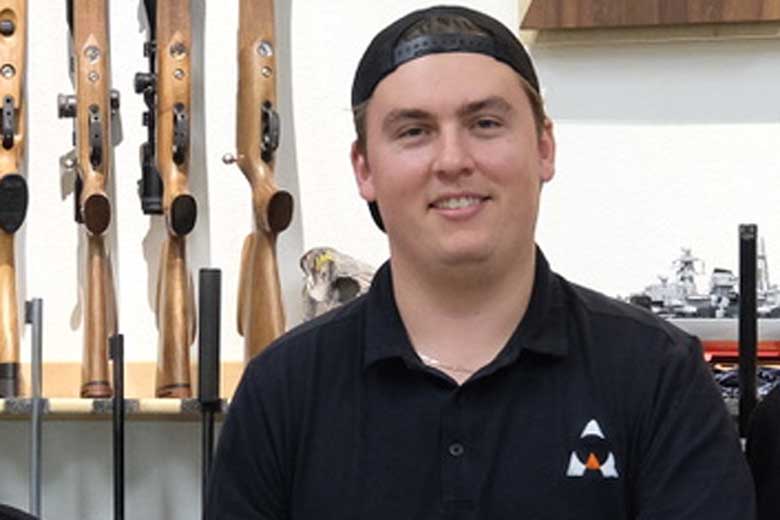
Recently I visited Airguns of Arizona to find out on how the world’s leading high-end airgun dealership does things. In particular, I was interested to visit the AoA Service Department and talk to Shane, the Service Manager at AoA. That’s him in the photograph above.

I’ve known AoA for years and thought I knew everything about how they operate. Boy, was I wrong! Here’s eight things that I didn’t know about the AoA Service Department.

I’ll bet you didn’t know them all either…

______________________________________________________________________________

One: They Don’t Just Service Airguns They Sell
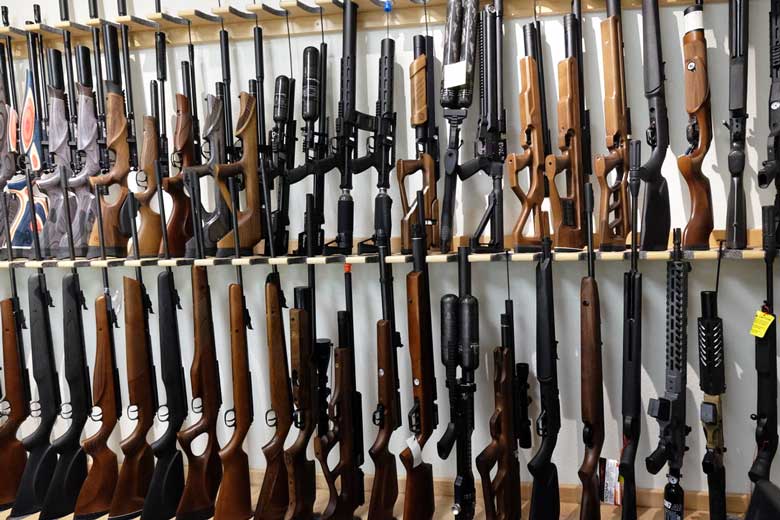
My guess was that the AoA Service Department would support just the guns sold by Airguns of Arizona. In fact, Shane told me, that’s not so.

The majority of work in the AoA Service Department is for non-warranty work and much of it is for airguns that were not even purchased from Airguns of Arizona, he explained.

AoA Service also handles warranty work for Precision Airgun Distribution (PAD) dealers around the country, when that is necessary.

While Airguns of Arizona Service has very wide capabilities, it’s impossible for them service every make and type of airgun ever built – mainly for parts availability reasons. (If you can’t source the parts, it’s very tough to offer a repair service). In this case, Shane tries to help owners by suggesting other reputable repair shops that may be able to help.

______________________________________________________________________________

Two: Sixty-Plus Years Of Experience

The AoA Service Department has three senior service technicians, Steve, Don and Kip. What I didn’t realize was that each of them has more than 20 years experience working on airguns. That’s a total of sixty-plus years experience among just these three guys!

Below. Left to right are Kip, Shane and Steve. Where was Don? We’ll see him below…

Surprise! Eight Things You Didn’t Know About The AoA Service Department

Steve is the Daystate and Brocock expert. He specializes on these PCPs, together with the BSA models. If you want AoA to provide a specific ART Tune on your Red Wolf for ultimate competition performance – a $400 special service requiring masses of detailed knowledge – it’s Steve who does this too.

In addition, Steve is a part owner of the company, along with his brother, Robert Buchanan. He’s been a mainstay of the AoA Service Department since the company started, waaaay back.

Don specializes in the LCS Air Arms models and the new Daystate Delta Wolf. A highly-qualified machinist who worked in a previous life for NASA on the Space Shuttle, Don has also been with AoA for many years. In his “other life” outside AoA, Don builds custom powder-burning rifles and is an avid competitor in long-range shooting competitions.

Below. Don Golembieski behind his favorite SK-19.
Surprise! Eight Things You Didn’t Know About The AoA Service Department

He describes the LSC SK-19 air rifles as “awesome guns but really too complex for the average owner to repair.” He encourages LCS owners always to never let HPA pressure fall below 125 bar as this is one of the secrets to a long, trouble-free shooting life for these guns.

Kip is well-known to many AoA customers as he answered phones in the Sales Department for many years, advising customers on their purchases. But he’s always worked on repairs too…

Nowadays, Kip’s the “go to” man for big bore PCPs. He’s also the Eastern European PCP specialist, working on RTI, AGT and KalibrGun models. In addition, he takes his hand at springers, too. That’s versatility for you!

______________________________________________________________________________

Three: The Best Way To Contact AoA Service

Most people naturally phone AoA and ask to be put through to the Service Department. In fact, Shane says, this is not the best solution as – due to the volume of phone calls AoA receives, it’s far better to send an email.

Although Shane is happy to help repair and warranty customers by phone, helping to diagnose issues and suggest a customer fix if applicable, he says the best way to contact him is via service@airgunsofarizona.com. He’ll get back to you asap.

Below. Service requires parts. AoA has a ton of them, as Steve Buchanan shows us…

Surprise! Eight Things You Didn’t Know About The AoA Service Department

______________________________________________________________________________

Four: Service Turnaround Time

“One week whenever possible up to about four weeks max,” says Shane. He explains further that some times of year are typically busier for repairs than others, obviously this affects turnaround time.

Also – while AoA keeps large stocks of service repair parts – if they need to order-in a part for some reason, then obviously that builds-in a lead time over which they have no control.

Basically, Shane explained that AoA Service always tries to do things correctly using their outstanding knowledge and experience. He stresses that often a quick repair is not necessarily a good repair!

AoA prefers to take more time when it’s needed. For example any PCP that’s in for leaking issues is going to have a 48-hour (or longer) leak test. It’s not gong back to the customer until it’s passed that test!

In addition, all repaired airguns are tested for Muzzle Velocity after repair to prove performance.

Below. AoA has machining capabilities to, in case they’re required.
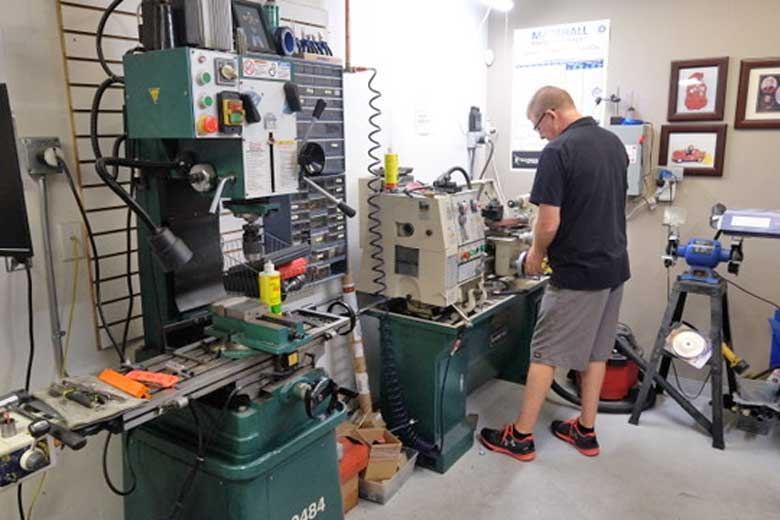
Surprise! Eight Things You Didn’t Know About The AoA Service Department

______________________________________________________________________________

Five: How AoA Keeps Track Of Repairs

Every gun reaching the Service Department is registered into a specialized software system. This allows the status and location of every gun to be known and tracked at each stage of its journey through Airguns of Arizona’s Service organization, right up to final return to the customer.

AoA is not going to lose your gun!

______________________________________________________________________________

Six. What Guns Do They Work On Most?

PCPs make-up the vast majority of the service work for AoA. Shane stressed that the new Daystate, Brocock and Weihrauch models are all outstandingly reliable. His department typically only sees these models when they are old and have seen a huge amount of use.

And Weihrauch springers are “bombproof”!

In many cases, O ring issues are the “Achilles heel” of PCPs. Fortunately these are easy to source. This enables AoA to provide service coverage for a much wider range of PCP models than you might have thought.

______________________________________________________________________________

Seven: How AoA Handles Warranty Repairs

In the VERY unlikely event that warranty attention is required on a brand new gun for which Precision Airgun Distribution (PAD) is the US distributor, Airguns of Arizona will pay for shipping BOTH WAYS if the customer finds a genuine problem less than 30 days from receiving the product.

These brands are: Daystate, Brocock, LCS Air Arms, Weihrauch, KalibrGun, RTI, Diana, American Air Arms, Feinwerkbau, Western Big Bore, AGT.

I know of no other company that makes such generous coverage of return shipping costs!

Beyond 30 days, the customer is responsible for the cost of shipping back to AoA. The company then rectifies the gun and provides quality return shipping at no additional charge.

Finally, it’s important to understand that AoA does not provide warranty on all the guns they sell. Some of the cheaper products have their own warranty coverage and the customer will need to follow that company’s own support policies as appropriate.

But AoA does provide warranty support the vast majority of high-end products that they sell. The company is committed to providing outstanding warranty coverage for the products PAD distributes!

______________________________________________________________________________

Eight: Shane’s The “New Shane”

One final surprise. Shane is not a very common name, but a Shane worked for AoA for many years. Shane the Service Manager is NOT that same person. In fact, he’s the “New Shane” at AoA, having been with the company a little under a year.

He’s a great guy who has the customer’s best interests at heart and is keen to ensure that all warranty or service work is managed in the best possible manner!

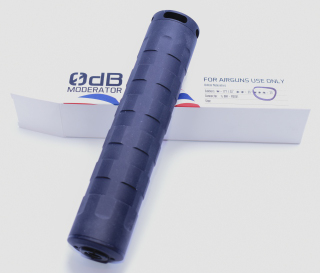
The title is just a play on words to describe the 0dB .30 caliber silencer recently sent to me by AofA to test out. Obviously, silencers don’t completely eliminate the report of a shot, even on airguns. Although, shooting heavier pellets at subsonic speeds through a well-made silencer mounted on a PCP air rifle can reduce them to the level of a mouse fart.

I happen to be working with the .25 caliber Daystate Delta Wolf that AofA was kind enough to loan me in order to write about it. A barrel adapter was needed for its M20x1 metric threads in order to use my DonnyFL UNF threaded silencer so I requested for one. Only  expecting the adapter, when the package arrived I was pleasantly surprised to find a new product, the Magnum 0dB silencer in .30 caliber inside.

The new Magnum 0dB silencer from AofA

For the larger bore Delta Wolfs, the standard thread size on the muzzle is the metric M20x1 thread. This is approximately three-quarters inch across as opposed to the standard one-half inch seen on airgun silencers found here in the states. In order to keep with the tactical styling of the DW, this new Magnum model silencer has a matte black finish and is beefy without being very heavy. I wasn’t able to weigh the Magnum and the specs were not available at this time, however, the additional weight was not really noticeable once it was installed and it looks fantastic mounted on the DW.

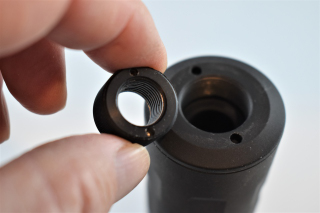
Upon taking it out of its box and looking over the simple instruction sheet included I discovered that the adapter sold by AofA is actually not needed with this particular silencer. There is already a removeable “built-in” adapter that nests inside the M20x1 female threads so the silencer fits standard ½ x 20 UNF threads right out of the box. Spanner holes are located on either side of the face of the insert to provide a way to remove it and have access to the M20 threads required by the Daystate. No spanner wrench is included with the silencer but that is not a big deal as two small allen wrenches or nails could be used if needed to loosen the adapter.

0dB Magnum silencer showing the built-in adapter

While the DW’s shrouded barrel didn’t need additional help for the subsonic shots, lead-frees and lighter lead pellets could easily top 1100fps unless the DW was tuned down; and who wants less powerful shots? The Magnum only comes in a .30 caliber bore configuration and it did its work very well. I don’t have a decibel/sound level meter so my comments are subjective and yet I believe it was highly effective at taming the bark of the Delta Wolf sending 19 grainers at supersonic speeds. Of course, the Magnum will work on any .25 or .30 caliber air rifle you have with a threaded muzzle. It was, however, designed for the .30 caliber Delta Wolf with its capability of developing over 90fpe. Daystate claims extreme effectiveness in suppressing the DWs report and the Magnum gave no reason to doubt that claim.

Here is a link to the AofA website page for 0dB silencers although the Magnum is so new it is not showing there quite yet. Once the new Magnum appears on the page it will be listed at $279. If you have questions or can’t wait to get your hands on this impressive piece of kit, please contact the great people at AofA at: 480-461-1113.

Shooting The Diana 54 AirKing Pro

The Diana 54 AirKing Pro is the latest version of a long-running classic. It’s a great buy for the airgunner wanting an unusual spring/piston air rifle.

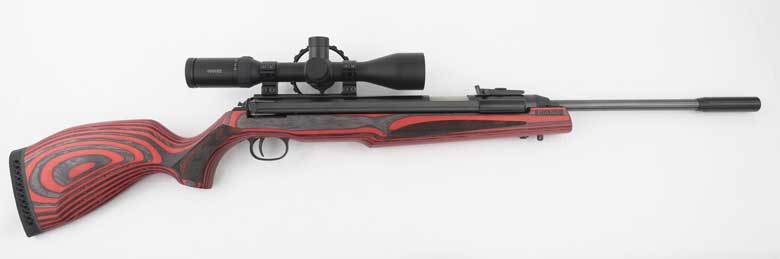
At a price of $740, the AirKing Pro in its beautiful red laminate stock is near the top end of the pack for a spring/piston air rifle. Also it’s far from a new design, the Model 54 has been around for many years.

Yet this remains an outstanding air rifle. It’s powerful, the test gun delivered great accuracy with a wide variety of pellets. And it looks beautiful!


If you can bear to do without the red/black laminated stock and will settle for plain beech, the price falls to $660.

The Diana 54 AirKing Pro I tested proved to be both powerful and accurate in .177 caliber. You can compare the results I obtained to those for the .22 caliber gun tested some time back by Gordon Smith.

Muzzle Velocity peaked at no less than 1269.01 FPS with the lightest Predator GTO alloy pellets. They were accurate, too.

Maximum velocity with lead pellets was achieved with the 7.0 Grain RWS Hobby pellets. But accurate, they were not!

Underscoring the AirKing’s power, most of the pellets I tested pellets equaled or exceeded 1,000 FPS: the only exception being the heavy – 10.65 Grain – Baracuda Match pellets.

Such Muzzle Velocity numbers produce a high Muzzle Energy that’s around 19 Ft/Lbs for the majority of typical mid-weight lead pellets. The highest Muzzle Energy was delivered using H&N Field Target Trophy pellets. In this case, no less than 19.54  Ft/Lbs was achieved.

That’s well above the manufacturer’s claim and very strong performance for any spring/piston air rifle in .177 caliber. It was also very close to the maximum power of the .22 caliber model. That is a surprise!

Equally impressive is the ability of the Diana 54 AirKing Pro to provide great accuracy with a wide variety of pellets. This is not a “pellet picky” air rifle. Overall, the best accuracy was achieved using 8.44 Grain JSB Exacts, although others were very close.

Sub half Inch groups for 10 shots at 25 Yards are easily possible!

Shooting The Diana 54 AirKing Pro

The T-06 trigger delivered a very light pull weight. It was also extremely consistent, varying almost imperceptibly from 1 Lb 2.3 Oz to 1 Lb 3.9 Oz. The average was 1 Lb 2.9 Oz, as measured using a Lyman digital trigger pull gauge. That’s perfect for all practical purposes.

As is the case with most spring/piston air rifles, the Diana 54 AirKing Pro is not fitted with a shroud or moderator. With mid-weight (~ 8 Grain) or heavier lead pellets, noise level was judged to be as expected. That’s fairly loud: marginally backyard-friendly if your neighbors are not too close.

Needless to say, the light alloy pellets caused the gun to sound like a .22 rimfire! Their very high Muzzle Velocities exceeded the Speed of Sound (approximately 1100 FPS) and therefore caused a loud sonic boom. You will not want to try this in your backyard with others around and no ear protection!

This is not a complaint about the AirKing Pro as such. However it’s typical of high-powered .177 caliber air rifles when used with light pellets – even if they are fitted with silencers.

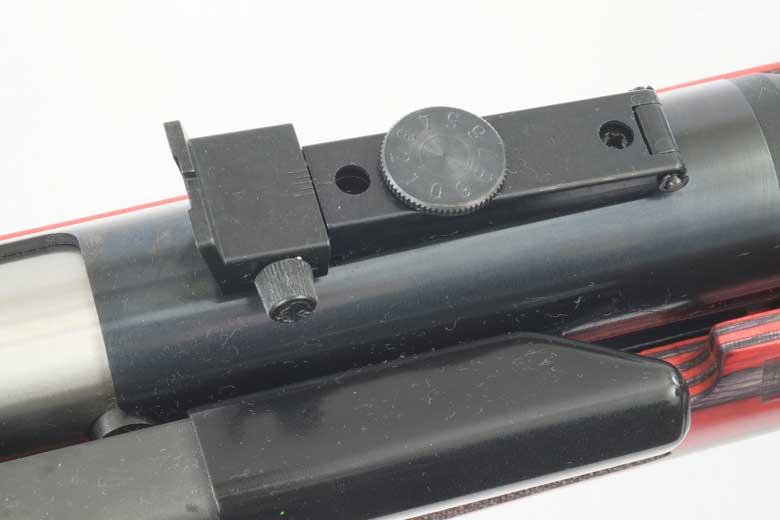
If you want to go “old school”, the Diana 54 AirKing Pro is supplied with a set of traditional open sights. The rear sight has click-adjustable elevation and windage correction capability. The front sight provides additional elevation adjustment by including a dovetail-mounted front post that slides along an inclined ramp.

Are there fiber optic inserts on these sights? Definitely not! Traditionalists will be happy about this, too.

Shooting The Diana 54 AirKing Pro

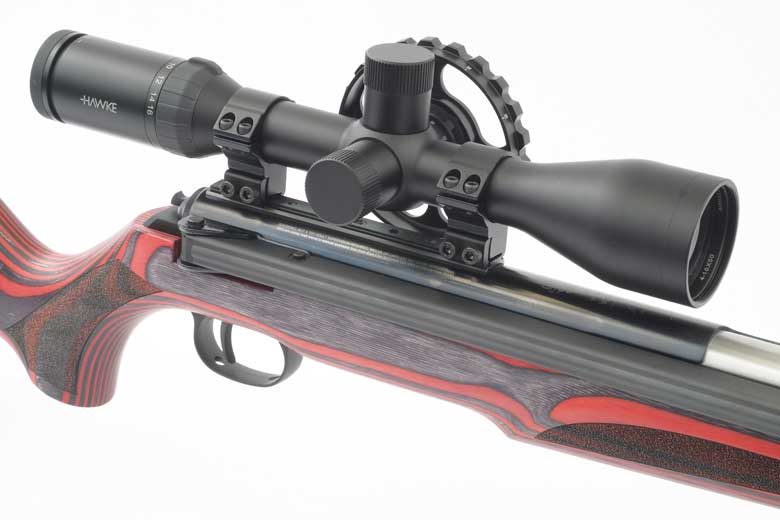
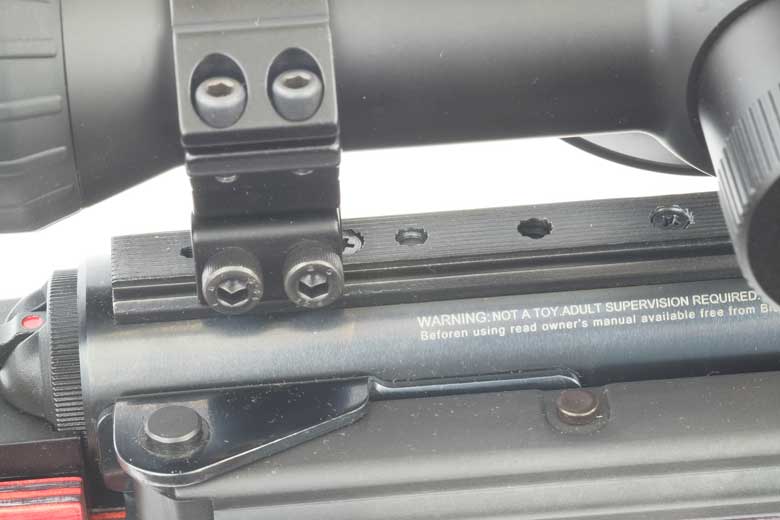
For this review, I installed a Hawke Airmax 30 WSF 4-16 x 50 riflescope. This was mounted onto the AirKing Pro using a solid pair of Hawke Match Ring Mounts.

In spite of the Diana 54’s reputation for fierce action recoil, the scope stayed in position correctly for the whole review period (and more). The Hawke scope also showed no ill effects from the AirKing’s recoil.

Overall, this was a very successful pairing of scope and rifle. At 13 3/4-Inches long, this scope was about the maximum length that will fit on the gun without interfering with access to the pellet-loading port.

Yes the Diana 54 AirKing Pro is heavy. With the Hawke scope mounted, the gun you see here weighs-in at no less than 12 Lbs 7 Oz. So this is an air rifle that requires a strong – and probably also large – shooter.

However the weight balances well for off-hand shooting. In some ways the weight even makes the gun easier to shoot as the weight seemed to dampen natural operator wobbles – at least for me.

But now a word of caution…

The fixed barrel, sidelever action of the Diana 54 AirKing Pro requires the shooter’s fingers to be inside the open, sliding breech to load pellets. This is just as it has always been with every sidelever springer!

Yes, the Model 54 is fitted with a mechanical anti-beartrap mechanism plus automatic cocking lever safety and that automatic trigger safety. However every knowledgeable airgunner ALWAYS loads these guns with his/her arm between the open cocking lever and the body of the gun. This is to provide additional protection should – by some unpredictable mischance – the action suddenly slam forward during loading.

To be fair, I have never heard of this happening with a Model 54. But if it did, the result would definitely be immensely painful and likely result in the loss of fingers!

Shooting The Diana 54 AirKing Pro

So the Diana 54 AirKing Pro owner MUST learn to load this gun with care and with his/her arm in this “buffer position”. At first it can feel unnatural, but you’ll soon get used to it and do so. If you have any doubts, AoA’s experienced staff can help you out.

So if you’re in the market for a quality spring/piston air rifle – the Diana 54 AirKing Pro is great value for money – whichever caliber and stock you choose!

And did I mention that it’s beautiful???

With more and more airgunners shooting at ever longer ranges, pellet consistency becomes increasingly important. But what should we expect as consumers from the pellets we shoot?

Dedicated Field Target and Benchrest competitors have long sorted their pellets. So there’s some experience that sorting by weight – and by head size, too – maximizes downrange accuracy.

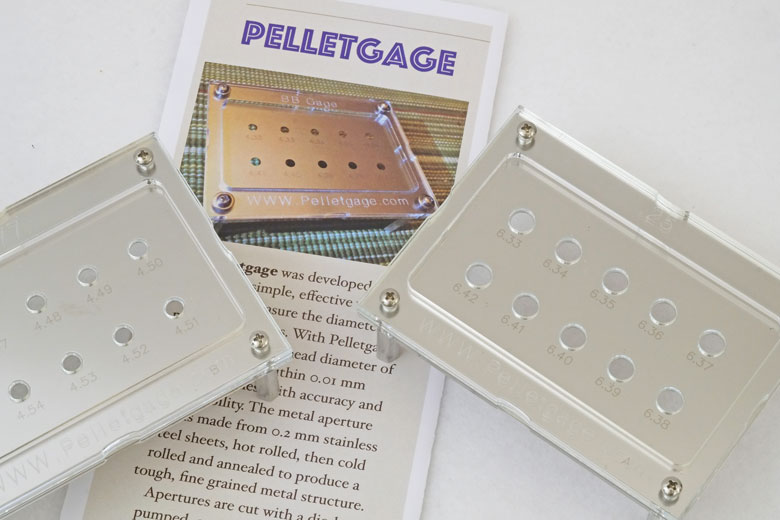
Measuring pellet head diameters is easy. Just use a Pelletgage – it’s available from AOA.

First, let’s give the pellet manufacturers some congratulations!

Given that they’re mass-manufacturing and selling pellets for just a few cents each, the quality is really amazing. It’s clear to any enthusiast that the overall quality and consistency of our pellets has improved greatly over the years.

The head diameter of a pellet determines how deeply it engages with the barrel’s rifling. Variations in this degree of engagement can alter the Muzzle Velocity and result in downrange accuracy issues.

Today, Let's Talk Pellet Consistency!

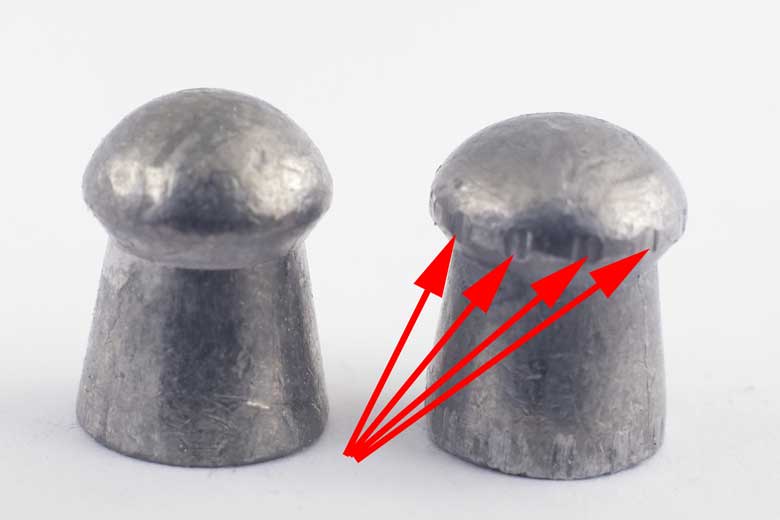
The photograph below shows two pellets of the same type. That on the left is un-fired. The one on the right has been fired. Grooves caused by the pellet’s head engaging the rifling are highlighted by the arrows. (The skirt also shows some grooves, as you can see).

As a result of a TON of measurement, we find that – on average – pellets work-out to have head sizes slightly larger in diameter than the nominal barrel diameter.

In fact, pellet head diameters average 0.51% larger than the caliber. This makes sense as – if the head diameter were to be smaller than the bore, the head would not engage with the barrel’s rifling and accuracy would be terrible!

The average difference in diameter between the smallest and largest pellets in a tin can be as high as 2.5%. But typically it’s more likely to be around 0.5%, as we can see here from this chart.

Today, Let's Talk Pellet Consistency!

Generally, larger calibers tend to have head diameters that are proportionally greater, as we’ll see below.

Furthermore, heavier pellets in any specific caliber will tend to have head diameters that are larger. Lighter pellets in a specific caliber tend to have head diameters that are closer to the nominal bore size.

Take look at this chart…

Today, Let's Talk Pellet Consistency!

As this chart shows, the percentage by which pellet head diameters measure above the nominal bore diameter increases with caliber. So – for example – .22 caliber pellets have greater head engagement in the rifling than do .177 caliber pellets.

It would be reasonable to expect that rifling depth is likely to be greater in larger bore diameters, so that makes sense.

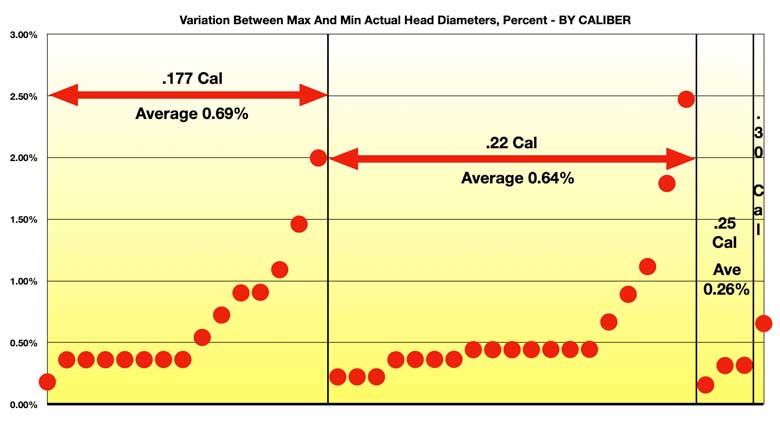
But as we can see from the next chart, the variation in head diameter between the smallest and largest pellets in a tin tends to be greater in .177 cal than it is in .22 caliber.

Today, Let's Talk Pellet Consistency!

That tells us that  – on average – there’s likely to be somewhat more benefit to sorting pellets if you use .177 caliber than if you shoot .22 cal. However, in each caliber a good number of pellets tested showed a difference of 0.02 mm – that’s about 8/10 of a Thou – between the largest and smallest in a tin. It’s the outliers that make the difference!

If we take the same data and express it as a percentage, the average difference between largest and smallest is less in .22 caliber than it is for .177. This is basically because a similar level of consistency is being applied to a different diameter. (The larger the bore diameter, the smaller the percentage).

Today, Let's Talk Pellet Consistency!

All-in-all, this analysis demonstrates remarkable consistency in airgun pellet head diameters. However, it also demonstrates that – for best results downrange – sorting pellets for consistent head diameters is extremely valuable.

Consistent downrange accuracy requires consistent pellets. Somehow I very much doubt that any top competitors in Extreme Benchrest fail to sort their pellets!

For information, the pellet test data analysis here is based on measuring a total of 3,800 pellets. As you can see, there’s more data for .177 and .22 cal than for the larger calibers. But the general trend is pretty clear.

If you’re interested in accurate shooting and don’t have your own PelletGages yet, it’s time to buy some! They’re available in five common airgun calibers. There’s .177 and .22 calibers, of course, together with.20 cal, .25 and .30 caliber. AoA has them in stock…

It’s Still A Classic! The Weihrauch HW30S

The Weihrauch HW30S is a spring/piston air rifle air rifle that’s been available for many years. In fact, it’s no mistake to describe it as a classic break barrel airgun.

Yet it still sells strongly because this German-manufactured airgun offers outstanding quality. It combines this with great handling and is easy to shoot well. All at a very attractive price!

The HW30S is compact and is supplied with industry-leading open sights. It’s great for the whole family to use for plinking and informal target shooting.

Sure, it’s not a powerhouse hunting gun. But the limited power allows so many other positive attributes that most people will be happy to accept that and just enjoy the fun of shooting it…

It’s Still A Classic! The Weihrauch HW30S

Remarkably, the HW30S currently being sold by Airguns of Arizona for just $313.98. That’s outstanding value for money, particularly when combined with an amazing – for a gun of this price – limited lifetime warranty!

This price is really not so much more than that of many widely-available spring/piston or gas ram air rifles, yet the quality and shootability are “night and day” different.

So why is that?

Well, like all other airguns from the family-owned Weihrauch company, the HW30S doesn’t strive to attract customers with all the latest features and marketing buzzwords. There’s no “Zillion FPS” muzzle velocity claims, nor many of the other “bells and whistles” that are found on so many other breakbarrels.

Instead you have a simple, great-shooting gun that can provide tons of enjoyment for the whole family. You don’t have to be a body-builder to cock it, the weight is light and the recoil minimal.

The only downside is the relatively low Muzzle Velocity. Although that is precisely the reason for most of the other benefits…

With the Weihrauch HW30S we have a genuine case of “less is more”!

Most mid-range, domed pellets produced 615 – 640 FPS from the .177 caliber gun I shot. Typical Muzzle Energy is in the 7 – 8 Ft/Lbs range.

This is fine for plinking and informal target shooting out to about 40 Yards. But it’s not enough for ethical hunting use unless you’re an expert shot, the range very short and the quarry very small.

The best accuracy in my test was achieved by 8.64 Grain H&N Field Target Trophy pellets. However the HW30S was consistently accurate with a wide variety of pellets. It’s not at all “pellet picky” and that’s unusual.

Weihrauch triggers are always good. The HW30S I tested was no exception and was very pleasant. The trigger blade itself is metal, nicely-curved and ridged for good finger contact.

Touching the trigger brings a very light first stage into play. Then there’s a clear distinction with the second stage. Sear release is predictable and controllable. The average pull weight was just above 2.5 Lbs.

Cocking is smooth and quiet. There’s none of the roughness that sometimes afflicts springers. In fact the cocking action itself is actually very pleasant. There’s no whip or flexing in the action and the ball bearing lock-up is very positive and solid.

Cocking effort of the HW30S I tested peaked at about 24 Lbs. This would definitely be considered light or manageable by the vast majority of shooters. That makes the HW30 ideal for extended shooting sessions.

The relatively low muzzle velocity means that the HW30 is backyard-friendly, even with light alloy pellets. This makes it ideal for many airgunners whose range is in their back yard, garage or basement.

There’s no moderator, shroud or any silencing system fitted to this air rifle. But that’s because there’s no need for such equipment!

Weihrauch is one of the few airgun manufacturers which remain truly committed to open sights.

The rear sight has the expected click adjustment capabilities for windage and elevation. But look closer and you’ll see that this rear sight actually has a choice of four different sighting notches!

By pulling out and rotating the rear sight notch plate, you’ll find a choice of wide and narrow square notches, a V notch and a U-shaped notch. These are the perfect compliment to the interchangeable front sight elements – no less than six of them! – which are also provided with the HW30S.

That’s no less than 24 different combinations of iron sight configurations provided with the gun!

For my HW30 test review, I mounted a Hawke AirMax 4-12 x 40 scope using an one-piece mount. Such a scope would be a typical choice for many HW30 purchasers. It’s fairly light but has good optical quality and an Adjustable Objective (AO) for focusing down to 10 Yards.

Note that – if you order the scope and mount at the same time as the gun – AoA will carefully install and sight it in at no additional charge. That’s an outstanding free service !

At 12.9-Inches overall length, this is definitely the longest scope that it’s possible to mount on the HW30. Any longer and it would not be possible to break the barrel!

Even with the Hawke Airmax 4-12 x 40 scope mounted, the total weight of the HW30 was just 7 Lbs 3 Oz. That made it extremely easy to carry and hold.

The Center of Gravity was just where you want it: directly ahead of the trigger and in the natural position for the shooter’s forehand. So balance and handling were natural, neutral and easy to achieve. This was aided by the pleasantly-shaped ambidextrous buttstock.

With the low-mounted scope, I was able to achieve an excellent cheek weld against the stock, while the rubber buttpad gave a secure, grippy surface against the shoulder.

To summarize, the HW30 is a little air rifle that exudes quality.  Metal finish is exemplary, bluing is deep and even. The Italian Minelli stock is gracefully-shaped and has panels of sharply-executed checkering in the Beech wood.

Performance is outstanding so long as you can accept the limited power level available.

It also benefits from that outstanding limited lifetime warranty that’s fulfilled in the USA by Airguns of Arizona. That’s a huge benefit that shows that the quality impression is not just skin deep!

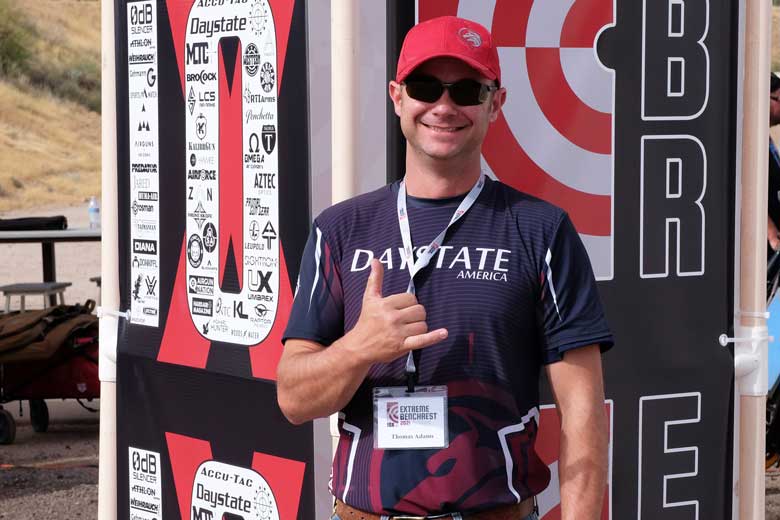
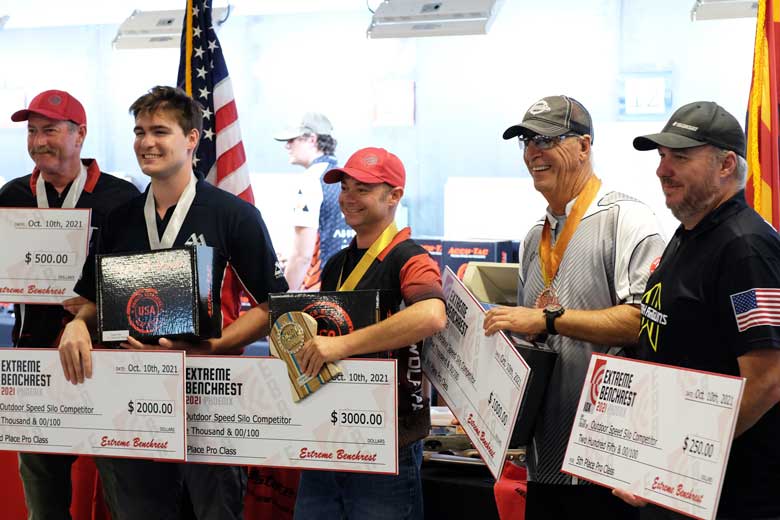
Tom Adams Wins Extreme Benchrest 2021 With A Daystate Red Wolf

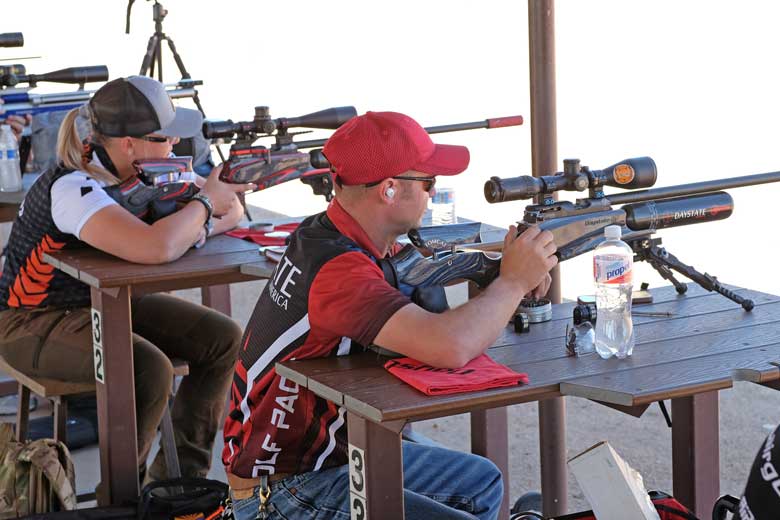
The 2021 Extreme Benchrest competition was the tenth annual “in person” event. As usual, it was held at the Rio Salado Sportsman’s Club in Mesa AZ, from October 7 – 10th.

Daystate Red Wolf Tom Adams

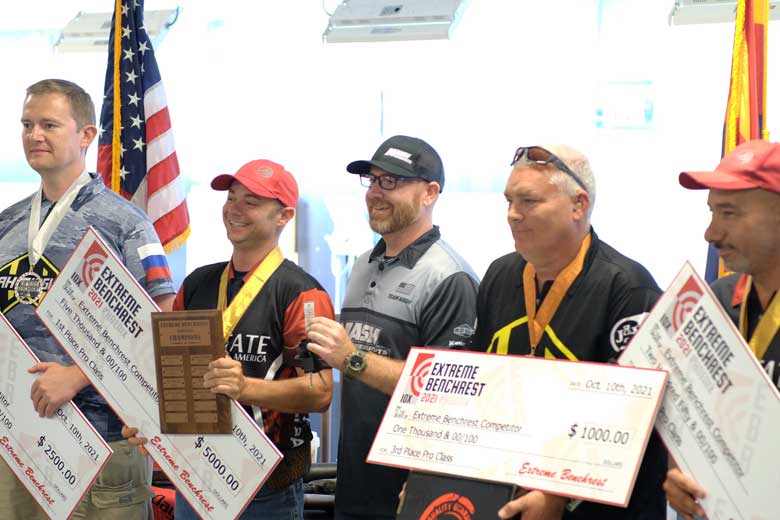
And – of course – there was a winner of the ultimate competition, the Pro Class of the 75/100 Yard Extreme Benchrest Competition. This year that winner was Tom Adams shooting a Daystate Red Wolf. In fact – specifically – a Daystate Red Wolf High Power in .22 caliber with the Midnight blue laminated stock.

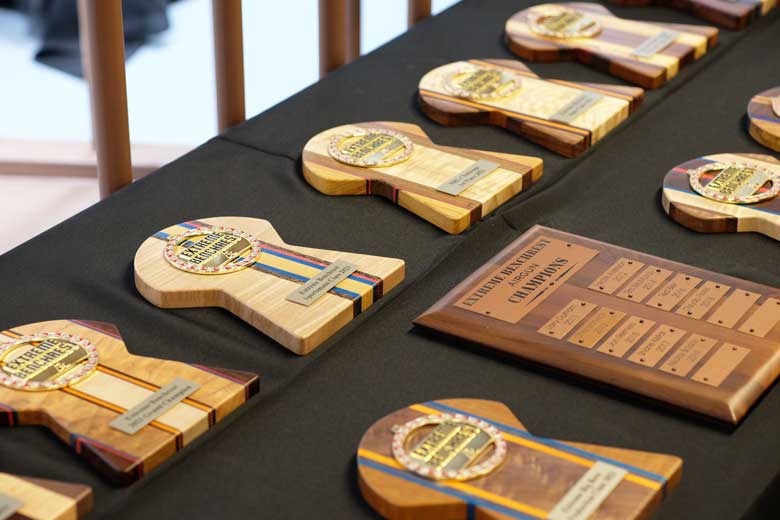
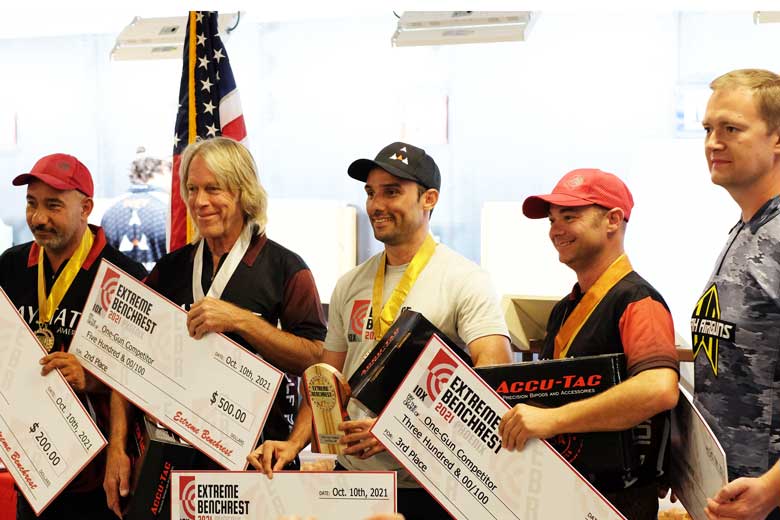
So now Tom’s name will be inscribed on the EBR Winners plaque (center below) for 2021. Also – please note that Tom also made all those beautiful wooden plaques that were presented to class winners. He’s definitely a man of many talents!

For his achievement, Tom won a check for $5,000 PLUS a 4×4 truck worth $32,000. WOW! BTW. The gentleman in the center of the photograph was presenting Tom with the keys to the truck.

Tom Adams Red Wolf

Here’s the scores for the 2021 Extreme Benchrest Pro Class…
Tom Adams, 222, 3X
Nicolay Boldov, 218, 6X
Todd Blanchard, 214, 2X
Lauren Parsons, 214, 2X
John Bagakis, 211, 5X

As you can see, Tom won convincingly. But it should be noted that – out of the top five winners, three were shooting Red Wolf High Power guns. That’s Tom (obviously), Lauren Parsons and John Bagakis. Congratulations to all!

In fact, there was a large number of Red Wolves being fielded all down the line at Extreme Benchrest…

Moreover Tom placed strongly in every other class at Extreme Benchrest 2021. He used his Red Wolf for every course of fire, including the Extreme Field Target competition.

Tom Adams red Wolf

As a result, he placed third overall in the One Gun Challenge. This recognizes EBR competitors who use the same gun for every class at Extreme Benchrest. Here’s the results…
Jeffrey Hernandez, 752
Bobby Corcorran, 750.6
Tom Adams, 744
John Bagakis, 740
Nicolay Boldov, 735

Tom Red Wolf

Again, it’s worth noting that three of the top five One Gun winners were shooting a Red Wolf. Bobby Corcorran and John Bagakis had the same choice of air rifle.

But wait. There’s more!!!

Tom also placed top in the Speed Silhouette Pro Class. For this, he single-loaded his Red Wolf. Yes, amazingly, he did not use a magazine! Tom’s hands were a blur as the left hand fed pellets into the single shot tray and his right hand operated the cocking lever and trigger.

Somehow he also found the time to sight the targets and hit each one faster than everyone else!

Here’s the times of the top five competitors.

Tom Adams, 00:47.87
Nic Gregoria, 00:52.64
Anthony Turchetta, 01:07.65
Dave Corder, 01:10.78
Todd Hatfield, 01:12.07

Tom Adams red Wolf

Congratulations Tom! He’s certain to be back to defend his title at Extreme Benchrest 2022. With his trusty Red Wolf again, for sure…

Tom Adams Red Wolf


I realize Steven Archer has already provided his thoughts on the new Daystate Delta Wolf in his July posting.  Additionally, a background blurb was posted in March. Yet, as I have been provided with a loaner Delta Wolf in .25 caliber by the great people at Airguns of Arizona for articles in other publications, it seemed prudent not to let this opportunity go by.

Sign of the Delta Wolf (impressed into the buttstock)

               Anyone following the storied history of the maker knows they’ve been at the PCP game over 40 years. PCPs are all they make and the Delta Wolf is the culmination of their years of experimentation and experience at building some of the finest air rifles out there. And, while Delta Wolf is a nice, strong name for this new airgun, if Daystate had me working in their marketing department, I’d have pressed for the name “Sans Kitchen Sink” model because they’ve thrown in everything but the kitchen sink!

               Just to recap, in case you haven’t read the aforementioned posts, the Delta Wolf is an ambidextrous bullpup design sporting AR styling. It is the world’s first all electronically operated/controlled air rifle. That means the trigger control, hammer strike and dwell time on the valve are all controlled via a built-in computer and settable/programmable by the end user through an on-board touch screen. Air pressure is controlled by a Huma regulator that is easily adjusted by the shooter. The Delta Wolf is relatively light at 8 pounds and adding the new MTC King Cobra FFP 6-24x 50mm scope added another 1.8 pounds. Its picatinny scope rail is reminiscent of the carry handle on the original M16s with a built-in 3 degree slope and it is adjustable forward and back if the eye relief isn’t quite right. It uses an all metal flip open, easy-loading rotary magazine that has strong magnets to hold it in place. The magazine holds 10 rounds of .25 and easily accommodates long skirted or polymer-tipped pellets and slugs. Magazines can be inserted from either side of the rifle and that feature lends itself to another nifty trick of the Delta Wolf; two mags can be inserted – one on each side. Once one runs dry, the other can be pushed into place to continue shooting. Those Daystate engineers really had their thinking caps on!

New Delta Wolf with the new King Cobra scope attached

               Additional cool features include a metal trigger shoe that is adjustable vertically and for cant. It is connected to a fully adjustable match trigger which was breaking out of the box at a hair-trigger 6.9 ounces according to my trigger gauge. The cheekpiece is adjustable forward or back and the rubber buttpad can be adjusted vertically. The 480cc carbon fiber wrapped air reservoir is removeable and safe working pressure is 250 bar. An ambidextrous safety lever that will feel familiar to AR users also controls turning the LCD touch screen on if it has gone to sleep. Filling is accomplished from the bottom of the rifle via a male nipple that is protected by a neat little magnetic cover plate. The long, female quick-connect needed is provided with the rifle. The cocking handle is large, easily manipulated and smooth as butter. It is also easily swappable to the other side. A true carbon fiber barrel shroud surrounds the 23-inch German-made barrel optimized by Daystate A.R.T. – Accuracy Research Team – efforts, to give unparalleled results. The muzzle is threaded, yet requires an adapter in order to use a DonnyFL, 0dB (Zero decibel) or other suppressor. Since this thing is capable of launching heavy pellets at supersonic speeds, sound suppression might be a good investment if you are going for the upwards of 100 foot-pounds this beast is capable of.

               The Delta Wolf is available in three other calibers: .177, .22 and .30, or the barrels can be purchased along with matching bolt probes and magazines and swapped out easily making this a most versatile platform.

               Several factory settings are permanently stored in the onboard computer with the capability of user-input settings that can be saved in the Advanced Mode of operation..  Additionally, AofA pre-programs five settings in each rifle that goes out with one having the clever acronym WARP – With All Reserve Power – as in warp speed, because it maximizes the Delta Wolf’s tuning automatically. How? By using the chronograph that is built into the carbon fiber shroud! Yep, the Delta Wolf has an onboard chronograph, but you can’t tell it’s there. The velocity of each shot displays on the LCD screen as long as the unit is turned on. The results are not recorded or reviewable as the info is used by the computer to calculate consistent shots based on the user input. Still, it is a built-in chronograph! How cool is that?

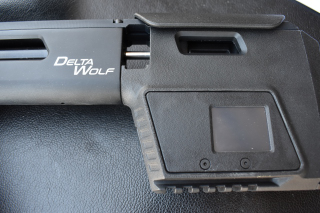
Buttstock holds the LCD display

Everything is powered by a rechargeable Li-Po battery held in the buttstock.  It can be recharged using the supplied USB–C cable and any cell phone portable charging pack, wall charger or computer. Lastly, a Bluetooth module is incorporated to provide for future additional features and updates.

As you might have surmised, this kind of bleeding edge tech and engineering does not come cheap. AofA is the exclusive U.S. distributor for Daystate and Delta Wolfs are shipping now for $3395 as fast as they can get them in the door. It includes a 5-year warranty in the U.S., and comes in a nice, hard-side padded case with the aforementioned quick-connect fill adapter and 0-round magazine, a charging cord and package of O-rings. This new Delta Wolf air rifle has now set the bar for others to follow.

The LCS Air Arms SK-19 In .30 Caliber

It’s tough to develop new products when demand is so high that you can’t keep up with the current order rate. That’s the situation LCS Air Arms have been in since the beginning of their company.

But that’s not stopped them from slowly expanding the range of selective-fire SK-19 airguns. Following the initial .22 and .25 caliber models, they also introduced variants with attractive anodized highlights. Yes, that’s cosmetic, but – trust me – it still takes development time and effort to implement correctly.

And now there’s the .30 caliber version of the SK-19.

The LCS Air Arms SK-19 In .30 Caliber

That increase in caliber makes a huge difference to the power. The SK-19 .30 caliber is actually about twice as powerful as the .22 cal model – on a shot-to-shot basis. We’re talking of a difference between 40 Ft/Lbs for the .22’s Muzzle Energy to 80 Ft/Lbs for the thirty cal.

This step up even from .25 cal. to .30 caliber requires the gun to handle a much larger volume of air per shot to create that additional power.

So the engineering skill and effort involved in this recent development should not be underestimated! It’s compounded by the full-auto capability of the gun. Full auto fire in .30 caliber requires the internals to handle a huge amount of High Pressure Air in a very short space of time.

The SK-19’s designers must have to have invested a significant amount of CAD design, testing and manufacturing programming time. And then more testing. Ever more testing…

You know they did this because it works!

In fact, the .30 caliber version of the SK-19 works faultlessly, just like the smaller calibers. That’s a big achievement for this relatively new company. We should not just take it for granted.

The LCS Air Arms SK-19 In .30 Caliber

Although the .30 caliber version looks similar to the .22 and .25 caliber models, it actually features a longer barrel and longer bipod mount rail. That’s apart from the internal modifications, of course.

Let’s be clear, the SK-19 is not a cheap air rifle. The price is $2,199 for the .30 cal model. Then you need a quality scope and rings. Plus a robust HPA supply system (think heavy-duty HPA compressor plus large HPA tank). Then factor-in plenty of .30 caliber pellets at 10 – 12 cents each (you’ll be needing them). Plus, most owners will add accessories like a bipod and possibly an air capacity upgrade.

So yes, this is an expensive air rifle to own. It’s also particularly expensive to run in .30 caliber due to the ammo cost. But the performance is unmatched. And the best is (almost) always expensive…

The LCS Air Arms SK-19 In .30 Caliber

The SK-19 .30 caliber sample I tested gave a Muzzle Velocity of 898 FPS with 44.75 Grain JSB Exact pellets. That represents 80 Ft/Lbs of Muzzle Energy – per shot.

The heavier, 50.15 Grain JSBs produced an average of 863 FPS – that’s 83 Ft/Lbs of Muzzle Energy.

Accuracy was exceptional, too. Shot at 20 Yards with 44.75 Grain JSB Exacts, this target gave a genuine “one hole” group for 10 shots.

Out at 50 Yards, I couldn’t resist setting the “fun switch” to full auto using the same pellets. The group was just 3-Inches high and 1.25-Inches wide. for all 17 shots from the full magazine.

It’s clear that the SK-19 .30 caliber  can really shoot – even on full auto!

In full auto mode, a quick “dab” of the trigger provides a “2-shot burst” capability. This is easy to do and is quite predictable. The main requirement is to completely release the trigger between “dabs” so that the action will re-set before firing again.

Holding the trigger back in full-automatic mode empties the magazine in less than 3 seconds. It REALLY brings the smile to your face!

All SK-19s are fitted with two safeties. One is located above the trigger on the left side of the gun. The other is part of the fire control selector at the rear.

The LCS Air Arms SK-19 In .30 Caliber

But there is also an unannounced third “safety” that can be deployed for complete “belt and braces” security.

If you swing out the magazine locking lever – as in the photograph above – this prevents the magazine from indexing. The result is that no pellet can be placed in battery in the gun. If you pull the trigger with the locking lever out, all you will get is the sound of escaping High Pressure Air…

Thanks to Lauren Parsons for this tid-bit of information!

My .30 caliber test gun featured the standard 480cc tank, yet it still delivered 55 consistent shots before reaching the regulator set point.

There’s a larger, 580cc tank option that can be specified with the SK-19. The result – of course – will be a higher shot count.

Given the 17-shot magazine capacity in .30 caliber, it would make practical sense to re-fill with a full charge of of High Pressure Air after three full magazines of shooting (51 shots).

Of course, the SK-19 is all about shooting! Loading? Well that’s something you just have to do…

It’s steady, plodding work to rotate the magazine, then load three pellets – in the .30 caliber version – before deliberately rotating the magazine again to show another three empty chambers. Repeat…

The LCS Air Arms SK-19 In .30 Caliber

The new longer, lower Picatinny rail that’s fitted to the SK-19 .30 caliber is beneficial. It allows a wider range of positions for attaching the bipod that will very likely be supporting the LCS when it’s fired on the range.

As mentioned above, the gun can be ordered with a 580 cc bottle, instead of the 480cc tank used for this test. In addition, there are double bottle adapters available – although then you are talking of a considerable increase in weight, along with the huge increase in shot count. Don’t forget to order that bipod!

There’s not a huge range of ammunition available for .30 caliber airguns. Mainly, it comes from JSB – under one name or another – while NSA also has some .30 caliber slugs.

But there is one type of pellet that will not fit the SK-19 .30 caliber – that’s Predator Polymags.

Even though the difference between the magazine depth and maximum Polymag pellet length was just 0.15mm (or about 6 Thou, if you prefer), it’s just too much. The gun will not accept them. All the conventional pellets fitted without any issues whatsoever.

But that Polymag issue is the only real problem I found with the .30 caliber version of the SK-19.

The selective fire capability compared with the quality, reliability, power and accuracy means that there’s nothing in the market that can compare with the SK-19!

That’s why so many avid airgunners have been happy to wait in line to receive their SK-19

               As with practically every other industry in the world, Covid-19 rocked the airgun world as it pertains to parts shortages, production halts, transportation delays and so forth. One of the few bright spots was Umarex’s ability to intro the second generation of their extremely successful Gauntlet PCP rifle. That model led the charge for bringing accurate and affordable PCPs to the market.

Left side view of the new Gauntlet2

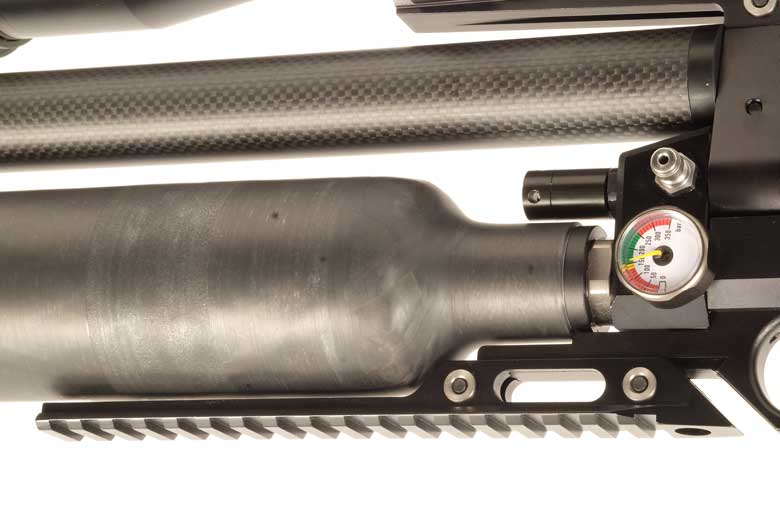
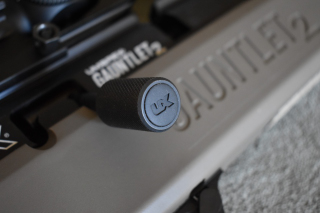
               This new Gauntlet2 offers multiple upgrades and design changes while coming in at the same weight of 8.5 pounds. Starting at the back, there is a thicker black hard rubber buttpad attached to a new precision-shooting style Flat Dark Earth color stock. An adjustable cheek riser in contrasting black is also part of the stock. This was redesigned to be adjustable via two hex head screws as opposed to the original Gauntlet which required loosening of the rear sling stud to adjust the cheek rest. The new stock has a thinner cross-section up to the point where it flares to accommodate the pressure gauge and new, larger 24 cubic inch air tank. This new air tank also handles 4500psi compared to the 3000psi tank on the first-generation Gauntlet. Coupled with the regulated valve set to 1900psi, this combination yields over 50% more power than the original. The drawback is that the longer bottle makes the Gauntlet2 more muzzle-heavy. The cover that doubles as a forearm now incorporates several M-Lok slots on the sides and bottom for accessory mounting.  

The aircraft aluminum receiver houses an improved hammer and spring, reducing the cocking force by 15% according to Umarex. The hammer spring is still quite stiff and cocking effort remains stout on this model so Umarex added a knurled, oversized cocking knob in order to aid in cocking. For the additional power, most buyers would find this acceptable. It is currently available in .22 and .25 calibers, both using a spring-loaded rotary magazine. The magazine in .22 holds 10 rounds and two are provided with the rifle. For those who purchased a first-generation Gauntlet, those magazines will work fine in the Gauntlet2. However, if you regularly shoot Predator Polymags or longer waisted pellets, they will be too long for the magazine and you’ll have to revert to using the provided single-shot tray.

New, larger knurled cocking knob with the Umarex logo prominently displayed.

The barrel is rifled steel and 28.25 inches long. It is surrounded by a shroud incorporating a new four baffle design to make the Gauntlet2 even more quiet than the original, which it does quite effectively. When shooting outdoors it should not be necessary for the shooter to wear hearing protection. No provision is made for attaching additional suppression; however, the original Gauntlet spawned a bunch of aftermarket mods included threaded barrel adapters. Some of those mods may work on the Gauntlet2 and if they don’t, I’m certain it won’t be long before a slew of mods are available for this version. At an overall length of 47-inches, additional suppression may or may not be desirable.

The trigger is the same single-stage as on the original Gauntlet with adjustments for overtravel, weight and sear engagement. The average trigger pull on my sample gun was a mere one pound, 15.9 ounces out of the box! Since adjusting the trigger requires removal of the action from the stock, I was glad no adjustment was necessary as I prefer not to disassemble loaner guns. The safety is a rotary type in the front of the trigger guard and disengages the trigger. It is easily manipulated by the trigger finger, at least for right-handers.

              The Gauntlet2 comes without any sights, as was true with the original. An MTC King Cobra FFP 6×24-50mm with Illuminated Reticle scope reviewed here last month was installed on the 7.5-inch combination dovetail/picatinny rail using a no-name mono-mount in my possession being mindful that the rotary magazine projects above the receiver by ½-inch.  At 14.4 inches long, the 30mm tube gathers additional light, yet added 25 ounces to an already long and heavy rifle, but was manageable. It is a very nice scope that works well with this more powerful air rifle and even though I was not able to reach out past 25 yards during my testing, this combo should work well for Field Target or long-distance precision shooting.

AofA was kind enough to provide some of the new Norma pellets that they just started carrying (so new they do not have them up on the website yet). The Gauntlet2 seemed to like all but the Superpointstrike pointed pellets. Umarex touts this air rifle as capable of sending .22 lead pellets over 1000fps and that was my experience with the Normas under 16 grains. The Golden Trophy FT domed pellets at 15.9 grains averaged 1017fps with excellent accuracy. The Norma S-Target Match Flat points at 14 grains travelled at 1061fps and yielded very good accuracy. These “mid-range” pellets yielded over 35 foot-pounds of energy. Several of the heavier pellets tried generally exhibited excellent accuracy as did lightweight Predator flat point lead-free GTOs at 11.75. The drawback with the lightweight pellets is that they break the sound barrier at 1118fps, increasing the crack of the rifle and making it less backyard friendly.

The MSRP lists out at $449. AofA does not currently show this model on their Gauntlet page as Umarex is just now able to start filling backorders due to the aforementioned Covid-related problems. However, I’m sure they can advise customers as they come back into inventory.

It’s A Great, Compact Hunter! The EVOL Mini.
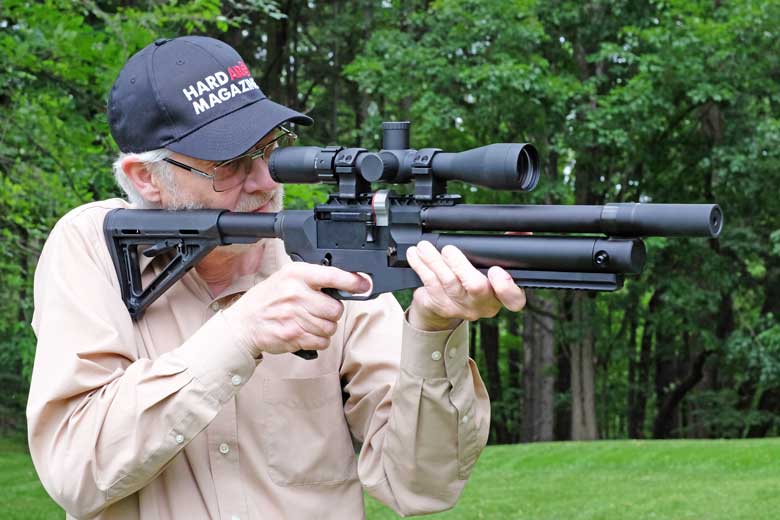
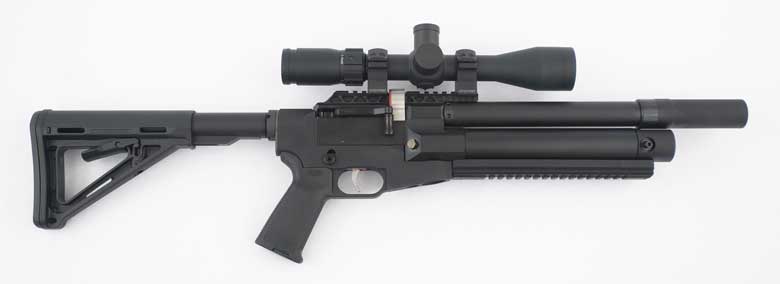
The American Air Arms EVOL Mini is an outstanding, compact hunting air rifle that grows on you with use. The more I shot it, the more I liked it!
It will be loved by the hunter who wants an airgun that’s simple, unbreakable, accurate and oozes quality.

The EVOL Mini is a beautifully designed and manufactured air rifle. It’s designed for great shooting “as is”. There’s no externally adjustable settings – the gun is designed to operate out of the box with a wide range of pellets without adjustment.

So it’s not for airgunners who want to tweak, tinker and tune their gun. It’s extremely compact, balances well and has a fantastic trigger. Power is remarkable for an air rifle of this size and weight. And the consistency is outstanding.

And this is not a bullpup! For many people, this is a big deal!

What more could you want from a hunting gun?

It’s A Great, Compact Hunter! The EVOL Mini.

Let’s put some numbers to that. The EVOL Mini featured here weighs-in at just 7 Lbs 4 Oz. And that includes the scope, rings and a full magazine of pellets. The overall length is just 31 Inches with the Magpul stock fully extended. When the stock’s retracted, it’s less than 28 Inches. Compact, or what!!!

In testing, I found a maximum muzzle energy of 33.64 Ft/Lbs when shooting 25.39 Grain JSB Jumbo Monsters. That’s very decent power for such a compact .22 caliber PCP.

It’s A Great, Compact Hunter! The EVOL Mini.

So the EVOL Mini is for the hunter who just wants to shoot. Unlike many other PCP air rifles of this price, there’s not a seemingly-endless list of controls to adjust power and shot count. In fact, there’s no externally-adjustable controls at all. Just trigger, cocking lever and safety.

The EVOL Mini fills to a maximum of 4,000 PSI. This is coupled with a regulator set pressure of 1,950/2,000 PSI to give strong performance for such a compact airgun. Unusually, there’s a 5,000 PSI burst disk built-in to the design. This is a rarely-encountered feature in airguns but one that’s welcome in the EVOL Mini.

It’s A Great, Compact Hunter! The EVOL Mini.

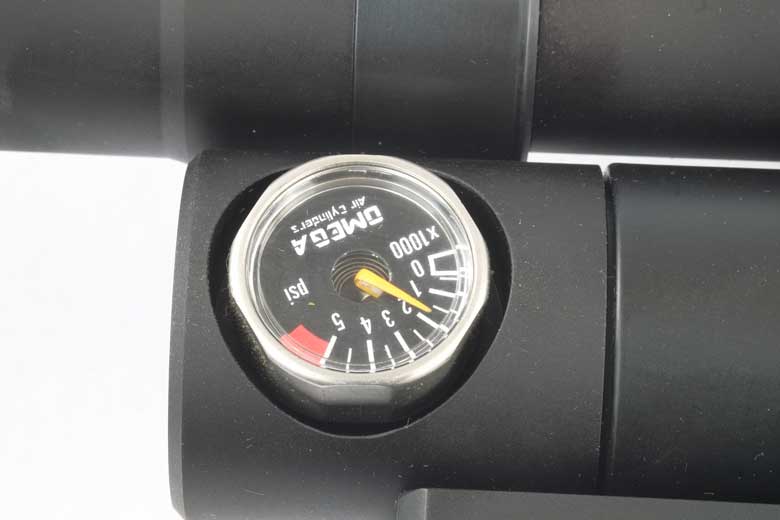
Among the great usability features is the positioning of the front (main) pressure gauge. Although the male quick disconnect fill nipple is positioned at the side of the tube while the pressure gauge is placed on the opposite side.

Here we have a front-mounted pressure gauge that does NOT require you to “look down the barrel” to read it. That’s simply excellent design by Tom Costan, American Air Arms owner.

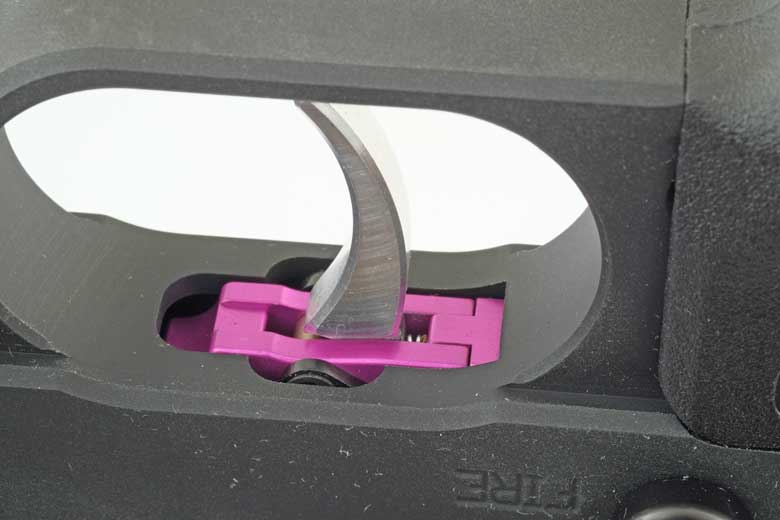
The trigger of my EVOL Mini was set to an average pull weight of just 12.9 Ounces.

First, there’s an incredibly light, smooth first stage. That’s followed by a genuine “glass break” sear release that’s instantaneous, yet completely predictable.

I found this to be a near perfect trigger. However, it is adjustable and the pull weight can be increased if you prefer a heavier trigger for hunting.

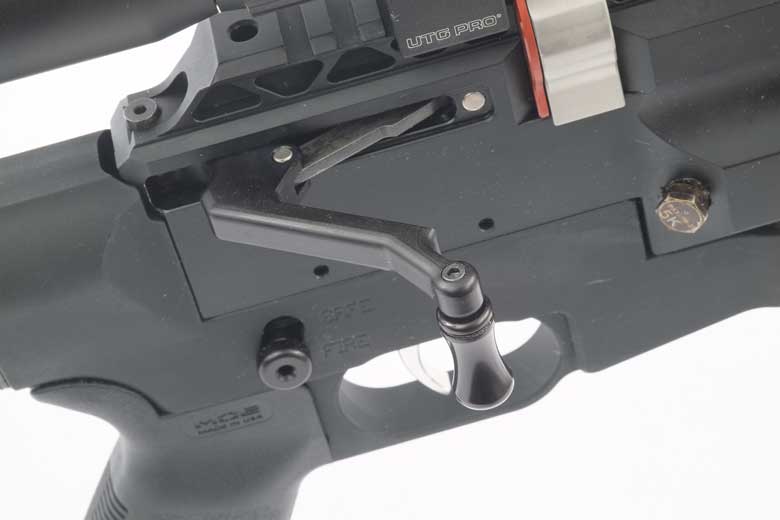
In harmony with all physical aspects of the EVOL Mini, the side lever cocking arm is compact. However this short length has a slight downside…

Although the action is smooth and the knob perfectly-designed, the second half of the stroke becomes quite heavy. This is due to a – presumably – rather stout hammer spring being compressed as the stroke is completed. However I found it quite tolerable and not a problem in use.

The EVOL Mini features an Aluminum magazine is robust and easy-to-load. It snaps down very positively into its position in the magazine well – probably more precisely than any other PCP magazine I’ve ever tested.

Then it’s retained in position by a sprung ball bearing. This has to be good for the consistent, precise pellet feeding that’s a significant contributor to accuracy.

You’ll never be wondering if the mag really is perfectly located with the EVOL Mini!

All of this is very good – in fact excellent. However, you’ll have to keep track of the number of shots taken as there’s no way to see how many shots have been taken – or how many pellets remain in the magazine.

But let’s face it. Most hunters take a relatively low number of shots in a hunt, so this may not be a big deal for you either.

That means that the relatively low consistent shot count of about 30 shots per fill is unlikely to be a disadvantage for most hunters either.

For any air rifle of this power level, the EVOL Mini is very quiet. Yes, there’s no capability for attaching an aftermarket suppressor, but it’s not needed – at least in the my opinion. And why would you want to attach an additional silencer that would significantly increase the length of such a compact air rifle?

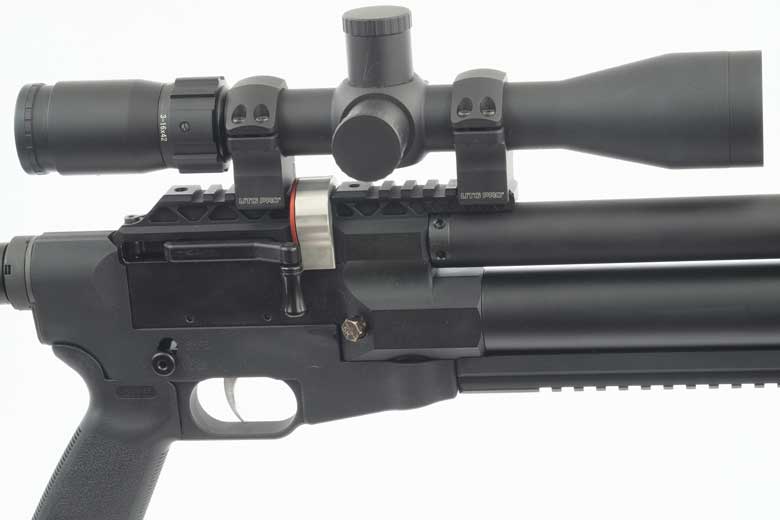
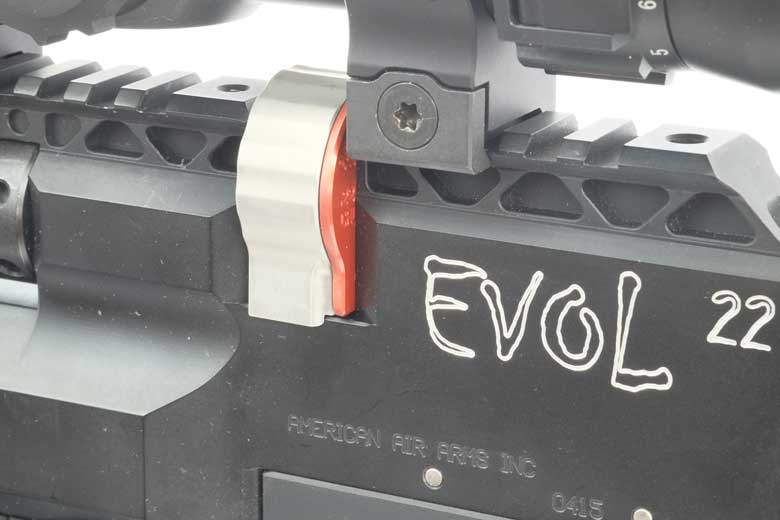
As expected, the EVOL is fitted with a Picatinny top rail for scope mounting. I wanted a relatively short, yet high quality, scope to match the design philosophy of the the gun.

It’s A Great, Compact Hunter! The EVOL Mini.

So, I mounted a Sightron 3-16 x 42 scope using UTG Pro rings from Leapers. The result was very comfortable balance and a harmonious blending of surface finishes.

Like other Sightron scopes, this 3-16 x 42 model has a fine graduated reticle. It displays a sharp, high contrast image and is easily focused by the side-mounted parallax control knob. The covered elevation and windage turrets have 1/4 MOA clicks.

Overall, this scope complemented the EVOL Mini well, although some hunters might want the capability of an illuminated reticle for shots in deep cover.

For light weight, compact, yet stable support, I attached a Spartan Javelin Lite bipod to the front of the incredibly long lower Picatinny rail. As you would expect, this bipod is also available from Airguns of Arizona.

Machining, fit and finish of all metal exterior parts on the EVOL Mini were simply outstanding! I have no doubt that the same quality will be found internally as well.

The pistol grip and collapsible buttstock are – of course – primarily synthetic. These are Magpul parts and are of the expected high quality. The only issue is that the collapsible stock is somewhat loose and “rattly” but that’s down to Magpul rather than American Air Arms.

The EVOL Mini is designed for shooting, pure and simple. It’s amazingly compact and balances beautifully. That trigger is just sublime. Critters beware!!!